Explore the fundamentals of UK railway operations with our online Trainee Train Driver Course. Understand railway safety, signalling systems, trackside signs, train controls, rolling stock and route knowledge. Learn about train preparation, safety-critical communication, human factors, emergency awareness and recruitment assessments. Ideal for aspiring train drivers and rail industry applicants seeking foundational knowledge before applying for employer-led driver training.
Last updated: Nov 18, 2026
(0 Reviews)
10 CPD Points
Highly Rated
Best Selling
Discover the knowledge behind one of Britain’s most safety-critical transport careers. Explore railway signalling, train controls, operational safety, route knowledge and trainee driver recruitment while building an understanding of the responsibilities involved in operating passenger and freight trains.
Course Overview
Train drivers play an essential role in Britain’s railway network, safely transporting passengers and freight while following strict operational rules and procedures. Our Trainee Train Driver Course introduces the fundamentals of UK railway operations, train driving responsibilities and the professional expectations associated with safety-critical railway work. Designed for aspiring train drivers, railway job applicants, transport enthusiasts and individuals considering a career in the rail industry, this flexible online course supports introductory professional development in railway safety, operational awareness and recruitment preparation. Explore how train drivers interact with signalling systems, rolling stock, operational control teams and railway infrastructure to support safe and reliable journeys.
Develop knowledge of the UK railway industry, the responsibilities of passenger and freight train drivers and the importance of compliance with railway safety regulations. Explore railway signalling principles, trackside signs, train controls, traction systems, route knowledge and timetable awareness. Understand the purpose of train preparation, operational checks and fundamental driving principles. The course also introduces safety-critical communication, human factors, situational awareness, emergency procedures and basic fault recognition. Learn about the trainee train driver recruitment process, including application preparation, aptitude and psychometric assessments, medical requirements, interviews and the structured training normally provided by train operating companies.
What makes railway signalling so important, why must drivers develop detailed knowledge of their routes and how do train operating companies assess candidates for safety-critical responsibilities? Strengthen your understanding of railway operations and the professional qualities associated with train driving. Enrol online to explore essential railway terminology, operational safety concepts and trainee driver career preparation. This introductory course provides theoretical knowledge and does not independently qualify learners to operate trains, replace employer-led practical training or award an Office of Rail and Road train driving licence.
What You’ll Learn to Put Into Action
Explain the structure of the UK railway industry and the responsibilities of passenger and freight train drivers.
Understand railway safety regulations, professional competence requirements and operational safety procedures.
Recognise the purpose of railway signalling systems, trackside signs and train protection technologies.
Explore the functions of train controls, rolling stock, traction systems and essential onboard equipment.
Understand route knowledge, railway infrastructure, timetable information and speed restriction awareness.
Develop theoretical knowledge of train preparation, operational checks and fundamental driving principles.
Recognise the importance of safety-critical communication, human factors, situational awareness and emergency escalation.
Explore trainee driver recruitment, aptitude assessments, medical standards, interviews and professional career preparation.
Who Is This Course For?
Aspiring train drivers interested in understanding railway operations before applying for trainee vacancies.
Railway job applicants preparing to explore the responsibilities and recruitment expectations of the train driving profession.
Railway customer service staff, conductors and station employees considering future career development.
Transport and logistics learners interested in railway safety, infrastructure and operational systems.
Rail enthusiasts and career changers seeking an introductory understanding of UK train driving and railway procedures.
Career Path
The UK railway industry offers careers across passenger transport, freight operations, station services, signalling, maintenance and infrastructure management. Train drivers are responsible for following signals, speed limits, operating instructions and authorised routes while maintaining communication with relevant railway staff. Individuals interested in becoming train drivers can apply directly to train operating companies or consider related railway roles to develop industry experience. Previous railway employment is not always required, as train operating companies recruit suitable candidates from different professional backgrounds.
Successful applicants for trainee train driver positions must complete employer selection procedures, occupational psychological assessments, medical examinations and comprehensive practical training. Employers arrange the required examinations and licensing process. Progression into freight driving, driver instruction or railway operations management may become possible with additional competence and experience. Theoretical knowledge from this course may support career exploration but does not guarantee recruitment or replace recognised railway training. Related UK occupations include the following indicative annual salary ranges.
Train Driver: Approximately £28,000–£65,000 per year, following successful training, assessment and licensing.
Train Conductor / Train Guard: Approximately £25,000–£37,000 per year, with appropriate employer training.
Railway Signaller: Approximately £35,000–£55,000 per year, requiring specialist selection and operational competence.
Rolling Stock Engineering Technician: Approximately £30,000–£45,000 per year, with relevant technical qualifications and practical training.
Rail Track Maintenance Worker: Approximately £28,000–£43,000 per year, with appropriate safety and technical training.
Transport Planner: Approximately £26,000–£52,000 per year, with relevant planning qualifications and professional experience.
Why Choose Our Trainee Train Driver Course?
Structured introductory learning supporting professional knowledge development in UK railway operations.
Develop awareness of safety-critical communication, incident response, recruitment assessments and the trainee driver career pathway.
Online multiple-choice assessment or written assignment to evaluate learning.
Certificate options available following successful course completion.
What the Course Covers
Module 01: Introduction to the UK Railway Industry and Train Driver Responsibilities
Discover the structure of Britain’s railway industry and the organisations involved in passenger transport, freight operations, infrastructure management and railway regulation. Explore the responsibilities of train operating companies, Network Rail and the Office of Rail and Road. Understand the professional duties of train drivers, including compliance with operating instructions, maintaining situational awareness and communicating with railway control teams. Examine the importance of punctuality, reliability, concentration and public safety. This introductory module establishes fundamental railway terminology and provides an overview of the professional training and competence required for safety-critical train driving responsibilities.
Module 02: Railway Safety Regulations and Operational Procedures
Explore the importance of railway safety legislation, operational rules and professional responsibility within the UK rail network. Understand the Train Driving Licences and Certificates Regulations 2010, as amended, and the different responsibilities associated with train driving licences and employer-issued certificates. Examine introductory principles of risk management, safety management systems, staff competence and compliance with the railway Rule Book. Develop awareness of fatigue, fitness for duty and the importance of reporting safety concerns. This module emphasises that authorised railway operations require current employer instructions, relevant competence and formal practical assessment.
Module 03: Railway Signalling Systems and Trackside Signs
Understand the purpose of railway signalling and its role in controlling train movements and maintaining safe separation. Explore introductory concepts involving colour-light signals, railway indicators, speed signs, lineside markers and train protection systems. Examine the importance of recognising signalling information, observing speed restrictions and understanding the relationship between signalling and safe railway operations. Develop awareness of modern systems such as the European Rail Traffic Management System and their differences from conventional signalling arrangements. This module introduces signalling terminology without replacing the detailed instruction and assessment required for authorised operational use.
Module 04: Train Controls, Rolling Stock and Traction Systems
Discover the basic components of railway rolling stock and the functions of key train systems. Explore introductory concepts involving driver controls, traction equipment, braking systems, cab displays, doors and onboard safety equipment. Understand the differences between diesel, electric and other forms of rail traction. Examine how train types, operating characteristics and technical limitations influence the competence required of drivers. This module introduces the importance of equipment awareness, fault reporting and vehicle-specific training while avoiding unsupervised operating instructions for safety-critical train controls.
Module 05: Route Knowledge, Timetables and Railway Infrastructure
Explore the importance of route knowledge and how it contributes to safe and efficient train operations. Understand the significance of station locations, permitted speeds, gradients, junctions, signalling arrangements and other infrastructure characteristics. Examine introductory concepts relating to working timetables, planned journeys and operational notices. Develop awareness of how route familiarity supports anticipation and safe decision-making under changing conditions. This module highlights the importance of formal route learning and employer assessment, recognising that general geographical awareness does not independently establish the route competence required to drive trains.
Module 06: Train Preparation, Operational Checks and Driving Principles
Understand the purpose of train preparation and operational checks before a service enters operation. Explore introductory concepts involving equipment condition, cab readiness, safety systems, journey information and the reporting of identified defects. Examine the professional principles associated with acceleration, braking awareness, station approaches and maintaining attention during train movements. Develop awareness of why operational checks and driving arrangements depend on the train type, route and authorised procedures. This module focuses on theoretical understanding and does not teach learners to conduct live train preparation or driving activities independently.
Module 07: Railway Communication, Human Factors and Safety-Critical Decision-Making
Explore the role of effective communication, concentration and professional judgement in safety-critical railway operations. Understand the importance of clear communication between train drivers, signallers, guards and operational control teams. Examine human factors including fatigue, distraction, workload, situational awareness and decision-making under pressure. Develop awareness of structured safety communication, accurate information exchange and recognising uncertainty. This module highlights how professional behaviour, fitness for duty and compliance with authorised procedures contribute to reducing operational risks and maintaining public safety.
Module 08: Emergency Procedures, Incident Response and Fault Awareness
Understand the importance of recognising operational abnormalities and responding appropriately to railway safety concerns. Explore introductory concepts involving equipment failures, signalling irregularities, unexpected train stoppages, passenger incidents and emergency communication. Examine the responsibilities of train drivers, signallers and control teams during disrupted operations. Develop awareness of prioritising safety, reporting accurate information and following authorised emergency arrangements. This module reinforces the importance of employer-specific training and formal competence, without substituting for practical emergency instruction or operational fault-handling procedures.
Module 09: Trainee Train Driver Recruitment, Assessments and Career Preparation
Explore the recruitment process used by UK train operating companies when selecting trainee train drivers. Understand application requirements, competency-based interviews, aptitude testing, psychometric assessments and the importance of meeting occupational medical standards. Examine the qualities employers may assess, including attention, communication, concentration and safety awareness. Develop awareness of the Level 3 Train Driver Apprenticeship, workplace training, route competence and formal examinations. This final module encourages realistic career planning and explains that completing an introductory online course does not guarantee recruitment or exemption from any employer assessment.
Accreditation & Recognition
The Trainee Train Driver Course supports structured introductory learning in UK railway operations, railway safety, signalling awareness, rolling stock, route knowledge, operational communication and recruitment preparation. It introduces theoretical knowledge relevant to aspiring railway professionals, with learning evaluated through an online multiple-choice assessment or written assignment. Course-specific CPD accreditation should be confirmed against EduXpress’s approved arrangements. This course does not independently provide an Ofqual-regulated Train Driver Level 3 Apprenticeship qualification, an ORR-issued train driving licence, an employer-issued train driving certificate or recognised practical driving competence.
Structured online learning supporting introductory railway knowledge and continuing professional development.
Supports career preparation and theoretical understanding of safety-critical railway responsibilities.
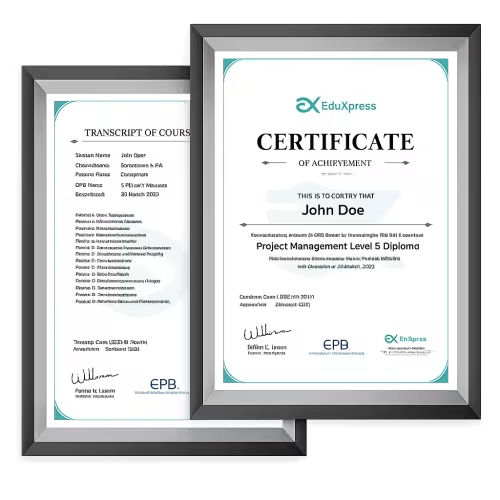
Digital EduXpress course certificate available after successful completion.
Optional printed certificate available for £24.99.
Your understanding is assessed through an online multiple-choice assessment or written assignment covering the UK railway industry, train driver responsibilities, safety regulations, railway signalling, trackside signs, train controls, rolling stock, traction systems, route knowledge, timetables, train preparation, operational checks, safety-critical communication, human factors, emergency awareness and trainee driver recruitment. The assessment evaluates introductory theoretical knowledge. It is not equivalent to the psychometric, occupational psychological, medical, technical, operational and practical examinations required for professional train driving.
Following successful completion, you can order an EduXpress digital course certificate documenting your achievement in Trainee Train Driver Course. An optional printed certificate is available for £24.99. Your certificate recognises introductory online learning and may support your personal professional development record. It does not grant permission to drive trains, establish fitness for safety-critical duties or replace the training, competence assessments and licensing arrangements required by railway operators and the Office of Rail and Road.
Frequently Asked Questions
What qualifications do you need to become a train driver in the UK?
Train operating companies commonly expect applicants to have a suitable standard of English and maths, often equivalent to GCSE grades 9 to 4, although specific recruitment criteria vary. Candidates must also complete relevant employer assessments and meet medical and occupational psychological requirements. Successful recruits undertake formal railway training and examinations. For mainline operations in Great Britain, train drivers require an ORR-issued licence and an appropriate employer-issued certificate confirming their competence for specific rolling stock and routes.
Can you become a train driver in the UK without previous railway experience?
Yes. Some train operating companies recruit trainee drivers from outside the railway industry. Applicants may come from customer service, logistics, engineering, administration or other professional backgrounds. Employers assess suitability through recruitment exercises, interviews, psychometric assessments and medical examinations. Experience requiring concentration, communication and responsibility may be useful, but it is not always a formal prerequisite. Successful candidates must still complete the railway operator’s training programme and demonstrate the required practical and theoretical competence.
What is the minimum age to become a train driver in Great Britain?
The minimum age for qualifying as a mainline train driver in Great Britain was lowered from 20 to 18 in 2026. Applicants must still meet the relevant training, medical, psychological and professional competence requirements. Individual train operating companies may have specific recruitment conditions and may allow applications before a candidate is old enough to complete the qualification process. Candidates should check the current vacancy information and training arrangements published by the employer.
Do UK train drivers need both a train driving licence and a train driving certificate?
Mainline train drivers in Great Britain generally require both. The Office of Rail and Road issues the train driving licence after the relevant conditions have been met. A train operator or infrastructure manager issues the certificate, which identifies the rolling stock and routes for which the driver has demonstrated competence. The licence is personal to the driver, while the certificate is associated with the issuing railway organisation. Different requirements apply to some non-mainline systems, including metros and heritage railways.
What tests are included in trainee train driver psychometric assessments?
Trainee train driver selection may include assessments of sustained attention, concentration, memory, information processing, reaction to relevant information and the ability to follow instructions. Some operators also use structured interviews or exercises designed to assess safety-related behaviours and decision-making. The exact assessment stages vary by employer and are informed by railway industry standards. Candidates should follow the instructions provided by the recruiting operator and avoid assuming that practising sample questions guarantees a pass.
What medical and eyesight requirements apply to UK train drivers?
Train driving is safety-critical work, so candidates must meet relevant medical fitness requirements. Assessments consider matters such as vision, colour perception, hearing and other health factors that could affect safe operation. Occupational psychological fitness is also assessed under the licensing framework. Recognised medical and psychological professionals undertake the relevant examinations. Specific criteria and individual circumstances must be assessed through the official process; an online course or informal eyesight check cannot establish fitness to drive trains.
Why are railway signals and trackside signs important for train drivers?
Railway signalling systems and trackside signs communicate information needed for safe train movements, including movement authority, speed restrictions and infrastructure conditions. Drivers must correctly recognise and respond to the signals and instructions applicable to their routes and operating systems. Different railway technologies may present information in different ways. Formal driver training includes detailed instruction and assessment. General awareness of signalling terminology does not provide the practical competence needed to interpret signals or operate trains independently.
What is route knowledge, and why must train drivers learn their routes?
Route knowledge is the detailed understanding of railway infrastructure and operating characteristics along a particular route. It includes relevant signals, speed changes, gradients, junctions, stations and other features affecting train operation. Route familiarity helps drivers anticipate upcoming conditions and maintain situational awareness. Drivers must receive suitable route training and demonstrate competence before operating on authorised routes. Learning a route requires more than studying maps or timetables, as practical railway experience and formal assessment are essential.
What happens when a train develops a fault or railway signalling fails?
Railway operators maintain formal procedures for responding to equipment faults, signalling irregularities and disrupted services. The appropriate response depends on the circumstances, the train involved and the applicable operating instructions. Qualified drivers work with signallers and control teams to manage risks, report information and follow authorised directions. Emergency procedures must not be improvised or based on general online advice. Employer-specific training ensures that drivers understand the correct actions and restrictions for the systems they operate.
How long does it take to train as a qualified train driver in the UK?
Employer-led trainee train driver training commonly takes approximately one to two years, although the exact period depends on the operator, training programme and individual progression. Training includes theoretical railway knowledge, practical train handling, route learning, supervised experience and formal assessments. Candidates must also meet relevant medical and occupational psychological requirements. Completing introductory online railway learning does not shorten or replace mandatory employer assessments, and successful recruitment into a trainee driver programme is a separate process.