Statistics & Probability for Data Science & Machine Learning
By 2026, over 70% of UK data-driven roles require strong skills in statistics and probability to interpret complex datasets effectively. In a market where digital skills are the baseline expectation, that gap limits earning potential, career options, and the ability to add real value. The Statistics & Probability for Data Science & Machine Learning course from EduXpress is a fully CPD-accredited, online programme that builds practical, immediately applicable digital skills – designed for UK learners ready to close the gap and perform at the level the market demands.
This course covers essential statistical concepts and probability theories necessary for data science and machine learning applications. You will build knowledge in descriptive statistics, distributions, hypothesis testing, regression analysis, and advanced algorithms, gaining confidence to apply these skills in real-world scenarios.
Flexible online CPD learning allows you to study at your own pace, supported by tutors during weekdays. Upon completing the assessment, you may order a CPD-accredited certificate to enhance your professional portfolio or CV.
Learning Outcomes of Statistics & Probability for Data Science & Machine Learning
Upon completion of this Statistics & Probability for Data Science & Machine Learning from EduXpress, learners will be able to:
Why Choose Our Statistics & Probability for Data Science & Machine Learning Course?
Who is This Statistics & Probability for Data Science & Machine Learning For?
Certification: Statistics & Probability for Data Science & Machine Learning
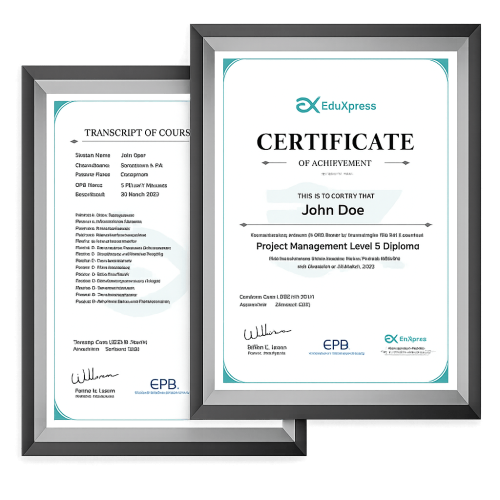
Upon successful completion of the final assessment, you will get a chance to order a CPD-accredited certificate confirming your achievement. This certificate is available in PDF as well as hard copy format, making it suitable for adding to your professional portfolio or CV. Please note this certificate does not guarantee employment or entitlement to regulated roles.
Career Path
Frequently asked questions
Everything you need to know about the Statistics & Probability for Data Science & Machine Learning
1. What are the prerequisites for this Statistics & Probability course?
The prerequisites include a basic understanding of algebra, arithmetic, and introductory programming knowledge. Familiarity with concepts like variables and functions helps learners grasp statistical theories and probability models more effectively. This foundation ensures you can apply statistical methods confidently in data science and machine learning contexts.
2. How does this course help in mastering data science and machine learning?
This course builds a strong foundation in statistics and probability, which are essential for analyzing data patterns and making predictions. By learning key concepts such as distributions, hypothesis testing, and Bayesian inference, learners can enhance their data modeling, improve algorithm performance, and make data-driven decisions in real-world machine learning projects.
3. Is this course suitable for beginners in data science and machine learning?
Yes, this course is designed for beginners with some basic math skills. It starts with fundamental statistical concepts and gradually introduces complex probability theories, making it accessible for learners new to data science and machine learning. Clear explanations and practical examples ensure a smooth learning curve for all levels.
4. What tools or software are used in this Statistics & Probability course?
The course primarily uses Python programming with libraries such as NumPy, Pandas, and SciPy for statistical analysis and probability simulations. These tools are industry standards in data science, enabling learners to apply theoretical knowledge to practical coding exercises and real datasets efficiently.
5. How long does it take to complete this Statistics & Probability course?
The course typically takes 6 to 8 weeks to complete, depending on your pace and prior knowledge. Each module includes video lectures, quizzes, and hands-on projects, allowing learners to absorb concepts thoroughly and apply statistical methods confidently in data science and machine learning tasks.
6. Can I apply the skills learned in this course to real-world data science problems?
Absolutely. The course emphasizes practical applications of statistics and probability in real-world data science and machine learning scenarios. By working on case studies and projects, learners develop the ability to analyze datasets, build predictive models, and interpret results, making their skills directly applicable to industry challenges.
7. Does the course cover advanced probability topics like Bayesian inference?
Yes, advanced probability topics such as Bayesian inference and Markov chains are covered in detail. These concepts are crucial for developing robust machine learning models and understanding uncertainty in data. The course explains these topics with practical examples to ensure clear comprehension and effective application.
8. Will I receive a certificate after completing the course?
Yes, learners receive a certificate of completion upon successfully finishing all modules and assessments. This certificate validates your proficiency in statistics and probability for data science and machine learning, enhancing your professional profile and career opportunities in the data-driven industry.
9. How does this course integrate statistics with machine learning algorithms?
The course integrates statistics by teaching how probabilistic models underpin machine learning algorithms like regression, classification, and clustering. Understanding statistical assumptions and distributions helps learners optimize algorithms, evaluate model performance, and improve predictive accuracy in various machine learning tasks.
10. Is there any support available if I have questions during the course?
Yes, dedicated learner support is available through discussion forums, Q&A sessions, and instructor feedback. This interactive environment encourages collaboration and helps resolve doubts promptly, ensuring a comprehensive understanding of statistics and probability concepts relevant to data science and machine learning.