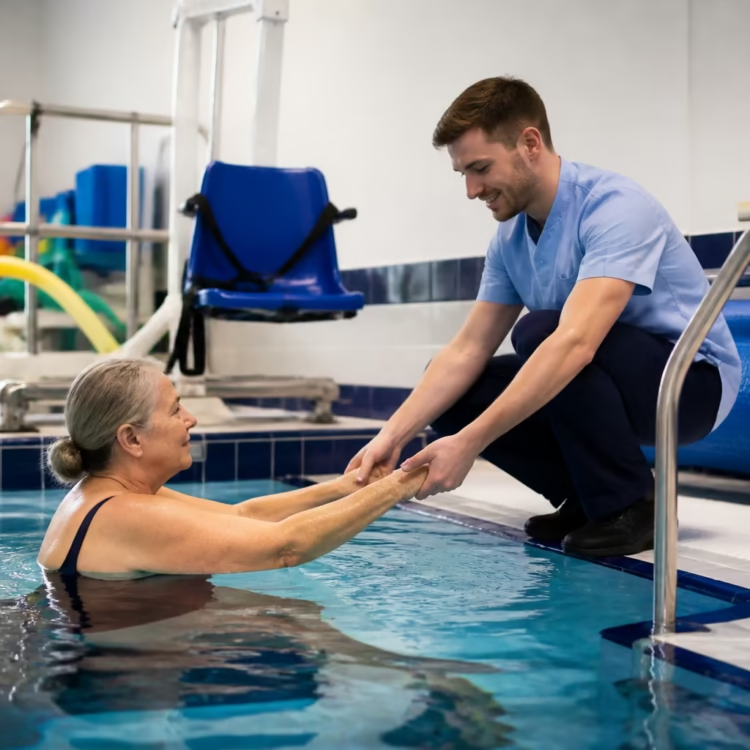
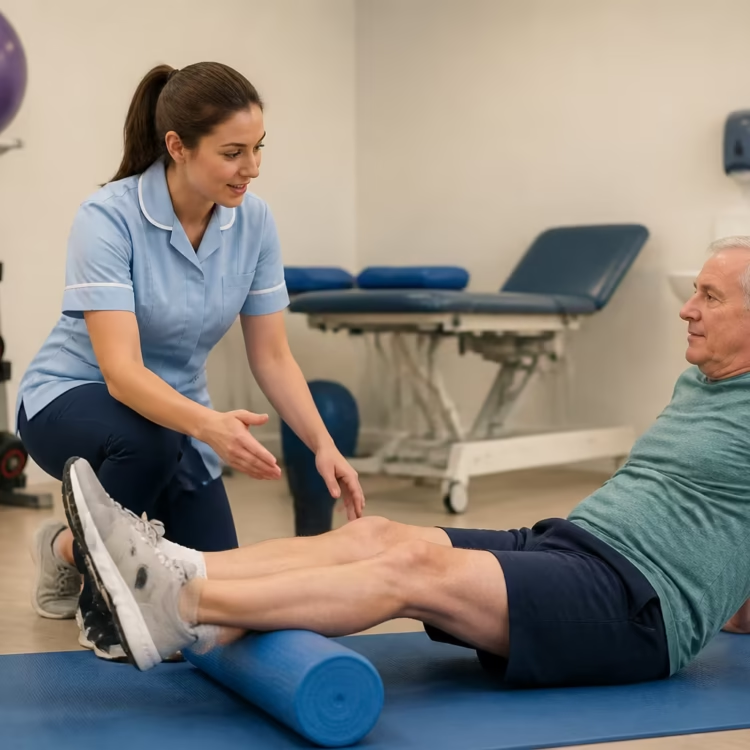
Transform your passion for movement into meaningful professional development. Explore the principles of Pilates, develop your understanding of controlled exercise techniques and build essential teaching knowledge to support strength, flexibility, posture, body awareness and physical wellbeing.
Pilates Instructor Training: Techniques, Matwork & Teaching Skills is a comprehensive online training course designed to develop knowledge of Pilates principles, movement techniques and effective exercise instruction. The course explores anatomy, physiology, matwork, equipment-based Pilates, exercise adaptations, teaching methods and mindful movement.
Pilates combines controlled movements, breathing, concentration and postural awareness to support physical conditioning and functional movement. Effective Pilates instruction requires an understanding of exercise technique, individual abilities, movement limitations and appropriate progression to create supportive and accessible learning environments.
Our Pilates Instructor Training course introduces foundational and advanced Pilates concepts, alongside anatomy, mat-based exercises and equipment awareness. You will also explore teaching communication, exercise modifications, special population considerations, movement sequencing and mindfulness to strengthen your understanding of professional Pilates practice.
What You’ll Learn to Put Into Action
- Understand the origins, philosophy and foundational principles of Pilates as a controlled movement and physical conditioning method.
- Explore breathing techniques, concentration, centring, precision, control and movement flow within Pilates practice.
- Develop knowledge of human anatomy, physiology, muscular function, joint movement and postural alignment.
- Understand foundational and progressive mat Pilates exercises, movement preparation and appropriate exercise sequencing.
- Explore equipment-based Pilates principles, including reformers, resistance equipment and smaller exercise accessories.
- Develop awareness of exercise adaptations and safety considerations for individuals with different abilities and support needs.
- Explore Pilates teaching methods, session planning, exercise demonstration, verbal cueing and constructive participant feedback.
- Understand advanced movement combinations, exercise progression and the importance of maintaining appropriate technique.
- Explore mindfulness, breathing awareness, concentration and the relationship between controlled movement and physical wellbeing.
Who Is This Course For?
- Aspiring Pilates instructors and individuals preparing for further practical Pilates teaching qualifications.
- Fitness instructors, gym instructors, personal trainers and group exercise professionals seeking complementary movement knowledge.
- Yoga practitioners, wellness coaches and exercise enthusiasts interested in expanding their understanding of Pilates.
- Sports coaching professionals and individuals working within fitness, leisure and wellness environments.
- Existing Pilates practitioners looking to refresh their theoretical knowledge of anatomy, movement principles and teaching methods.
- Jobseekers, career changers and individuals interested in developing foundational knowledge for a career in fitness and wellbeing.
Why Choose Our Pilates Instructor Training Course?
- Recognised CPD certification to support continuing professional development.
- Comprehensive coverage of foundational and advanced Pilates principles and teaching techniques.
- Develops knowledge of human anatomy, physiology, posture and functional movement.
- Explores matwork exercises, equipment-based Pilates and movement progression.
- Covers exercise adaptations and safety considerations for participants with different abilities and needs.
- Develops awareness of effective instruction, session planning, communication and participant engagement.
- Explores mindfulness, controlled breathing and body awareness within Pilates practice.
- 24/7 lifetime access to course materials.
- Flexible self-paced online study and efficient online assessment with instant results.
- Full tutor support on weekdays, Monday to Friday.
Career Path
Knowledge gained through Pilates Instructor Training can support professional development across fitness instruction, Pilates studios, personal training, leisure services and wellness environments. Understanding movement principles, anatomy, exercise adaptations and teaching methods provides valuable foundational knowledge for progression towards specialist fitness and Pilates instruction qualifications.
- Pilates Instructor: Variable earnings depending on experience, class rates and employment arrangements
- Fitness Instructor: £21,000–£27,000 per year
- Personal Trainer: Variable earnings depending on experience, client base and employment arrangements
- Group Exercise Instructor: Earnings according to class schedules, experience and employer
- Freelance Pilates Teacher: Variable earnings based on session fees, client demand and business arrangements
What the Course Covers
Module 01: Introduction To Pilates
Explore the origins, history and development of Pilates as a method of physical conditioning and controlled movement. Understand the philosophy introduced by Joseph Pilates and how the practice has evolved into different contemporary approaches used within fitness, exercise instruction and wellness environments.
Develop awareness of the relationship between Pilates, body awareness, muscular conditioning, flexibility and postural control. Examine the differences between matwork and equipment-based practice, alongside the responsibilities associated with introducing participants to appropriate exercises within safe, supportive and professionally managed learning environments.
Module 02: Fundamentals of Pilates
Explore the fundamental principles commonly associated with Pilates, including breathing, concentration, centring, control, precision and flow. Understand how these principles interact to support controlled movement, coordinated muscular activity, postural awareness and purposeful exercise performance across different Pilates techniques.
Develop knowledge of movement preparation, alignment, breathing coordination and appropriate exercise progression. Examine the importance of maintaining controlled technique, recognising individual movement limitations and avoiding unnecessary muscular tension. Understand how foundational movement skills provide a basis for more complex Pilates exercises and combinations.
Module 03: Anatomy and Physiology in Pilates
Explore essential anatomical and physiological concepts relevant to Pilates practice, including the skeletal system, muscular system, joints, spinal movement and respiratory function. Understand how different muscle groups contribute to stability, mobility, balance and coordinated movement during physical activity.
Develop awareness of core musculature, pelvic alignment, joint movement, muscular activation and the relationship between breathing and physical performance. Examine how anatomical knowledge can inform exercise selection, movement observation and appropriate modifications while recognising the professional boundaries between exercise instruction and clinical assessment.
Module 04: Mat Pilates
Explore mat-based Pilates exercises that use bodyweight, controlled movement and coordinated breathing to develop muscular conditioning, mobility and body awareness. Understand the purpose of foundational exercises, movement preparation, appropriate starting positions and the importance of selecting exercises according to individual abilities.
Develop knowledge of matwork sequencing, exercise variations, movement transitions and progressive challenges. Examine how effective instruction, appropriate positioning and controlled technique can support participant confidence and engagement. Recognise the importance of observing movement quality and adapting exercises rather than encouraging participants to exceed comfortable movement ranges.
Module 05: Equipment-Based Pilates
Explore the purpose and characteristics of equipment used within Pilates practice, including reformers, specialist apparatus, resistance bands, exercise balls and Pilates rings. Understand how equipment can provide support, resistance, movement feedback and additional exercise challenges according to the intended activity.
Develop awareness of equipment selection, safe positioning, resistance considerations and professional supervision responsibilities. Examine the importance of manufacturer instructions, routine equipment checks and appropriate apparatus-specific training. Recognise that safe independent instruction on specialist Pilates equipment requires practical competence beyond theoretical online learning.
Module 06: Pilates for Special Populations
Explore considerations associated with Pilates participation among older adults, beginners, pregnant and postnatal individuals, and people with different mobility levels or health-related support needs. Understand how individual circumstances, exercise history and functional abilities can influence appropriate movement selection and session planning.
Develop awareness of exercise screening, movement adaptations, professional boundaries and circumstances requiring specialist advice or referral. Examine the importance of inclusive communication and appropriate progression while recognising that pregnancy, rehabilitation and complex health conditions may require additional specialist qualifications and individualised professional guidance.
Module 07: Teaching Pilates
Explore effective Pilates teaching principles, including session preparation, exercise demonstration, verbal instruction, movement observation and participant engagement. Understand how clear communication, appropriate pacing and structured learning activities can help participants understand exercise objectives and develop confidence in their movement abilities.
Develop awareness of session planning, individual exercise adaptations, constructive feedback and professional instructor responsibilities. Examine the importance of maintaining inclusive learning environments, obtaining consent before physical guidance and respecting individual boundaries. Understand how reflective practice and participant feedback can inform ongoing teaching development.
Module 08: Advanced Techniques and Combinations
Explore advanced Pilates movement concepts, exercise combinations and progressive challenges that build upon foundational technique. Understand how variations in movement complexity, resistance, stability and coordination can influence exercise demands and require greater awareness of participant readiness and individual movement capabilities.
Develop knowledge of movement sequencing, exercise transitions, progression and regression principles. Examine the importance of preserving control, precision and appropriate alignment when introducing more challenging activities. Recognise that advanced exercise selection should reflect demonstrated competence, individual abilities and suitable professional supervision rather than difficulty alone.
Module 09: Mindfulness and Pilates
Explore the relationship between mindfulness, concentration, breathing awareness and controlled physical movement within Pilates practice. Understand how paying attention to movement quality, bodily sensations and breathing patterns can encourage greater awareness of individual capabilities and support a more focused exercise experience.
Develop awareness of incorporating mindful movement principles into Pilates sessions through appropriate pacing, supportive communication and purposeful exercise transitions. Examine how mindfulness can complement physical conditioning and general wellbeing while recognising the distinction between exercise-based relaxation practices and professional psychological or therapeutic interventions.
Accreditation & Recognition
Pilates Instructor Training: Techniques, Matwork & Teaching Skills is a CPD-accredited online course designed to support continuing professional development in Pilates principles, exercise instruction and movement awareness. It provides structured learning in anatomy, matwork, equipment-based Pilates, teaching methods and exercise adaptations.
After successfully completing the course assessment, learners can order a recognised CPD-accredited certificate as evidence of their learning achievement. The certificate can complement professional CVs, fitness training records and continuing professional-development portfolios across exercise instruction, personal training and wellness environments.
- Recognised CPD certification focused on Pilates principles, movement techniques and exercise instruction.
- Comprehensive coverage of anatomy, mat Pilates, equipment awareness, teaching methods, exercise adaptations and mindfulness.
- 100% online and self-paced study with lifetime access to course materials.
- Online assessment designed to check understanding of the subjects covered.
- Option to order a CPD-accredited digital certificate after successful completion.
- Printed certificate available for £24.99.
Assessment & Certification: Pilates Instructor Training
The course includes an online assessment designed to evaluate your understanding of Pilates principles, movement techniques, anatomy and effective teaching considerations. Learners can complete the assessment as part of flexible online study, with efficient assessment and instant results available upon completion.
The assessment covers Pilates foundations, anatomy, physiology, matwork and equipment-based exercise principles. It also examines understanding of special population considerations, teaching methods, exercise progression, advanced movement combinations, mindful movement and professional responsibilities within Pilates instruction.

After successfully passing the assessment, you can order a PDF version of the CPD-accredited certificate to record your learning achievement in Pilates instruction and movement principles. An optional printed certificate is available for £24.99. Certification can support your professional CV, fitness training records and continuing professional-development portfolio.
Frequently Asked Questions
What is Pilates Instructor Training?
What is Pilates?
Who developed Pilates?
What are the six principles of Pilates?
The following six principles are commonly used to describe the foundations of Pilates practice.
Breathing
Coordinating breathing with movement to support exercise rhythm, awareness and appropriate muscular activity.
Concentration
Maintaining attention to movement quality, body positioning and exercise technique.
Centring
Developing awareness of the body’s central musculature and its contribution to controlled movement.
Control
Performing exercises deliberately rather than relying on uncontrolled momentum or excessive force.
Precision
Paying attention to accurate movement execution, alignment and appropriate exercise positioning.
Flow
Developing smooth, coordinated movement and purposeful transitions between exercises.
Different Pilates teaching traditions may interpret or organise these principles differently. Together, they provide a useful framework for understanding controlled and mindful exercise.
What is the difference between mat Pilates and reformer Pilates?
| Feature | Mat Pilates | Reformer Pilates |
|---|---|---|
| Equipment | Exercise mat and optional small accessories. | Specialist reformer apparatus. |
| Resistance | Primarily bodyweight and gravity. | Adjustable springs and apparatus-based resistance. |
| Accessibility | Generally requires less specialist equipment and space. | Requires access to suitable specialist equipment. |
| Exercise Adaptations | Body positioning, movement range and exercise variations. | Apparatus settings, resistance and exercise configurations. |
| Instructor Training | Appropriate matwork teaching competence. | Additional apparatus-specific practical competence. |
Both approaches use controlled movement and Pilates principles. The most appropriate method depends on individual goals, abilities, equipment access and the instructor’s professional competence.
What is the difference between Pilates and yoga?
What does a Pilates instructor do?
What qualifications do I need to become a Pilates instructor in the UK?
Can I become a Pilates instructor through an online course?
Is this the same as a Level 3 Diploma in Teaching Mat Pilates?
What is CIMSPA in the fitness industry?
Is this Pilates Instructor Training course CIMSPA endorsed?
Why is anatomy important for Pilates instructors?
What muscles are involved in Pilates?
Pilates exercises can involve multiple muscle groups, depending on the movement, exercise position, resistance and intended training objective.
- Abdominal muscles: Contribute to trunk movement and stability.
- Spinal muscles: Support spinal movement and postural control.
- Gluteal muscles: Contribute to hip movement and pelvic stability.
- Pelvic floor muscles: Contribute to pelvic support and coordinated function.
- Shoulder and upper back muscles: Support upper-body positioning and movement.
- Lower limb muscles: Contribute to balance, mobility and controlled lower-body movement.
Muscular involvement varies between exercises, and effective movement typically depends on coordinated activity rather than isolating a single muscle group.
What is the powerhouse in Pilates?
What is neutral spine in Pilates?
Why is breathing important in Pilates?
What are the most common mat Pilates exercises?
Common matwork exercises and movement variations include the following examples.
| Exercise | General Movement Focus |
|---|---|
| The Hundred | Breathing coordination and trunk conditioning. |
| Roll-Up | Controlled trunk movement and coordination. |
| Single Leg Stretch | Trunk control and coordinated leg movement. |
| Shoulder Bridge | Hip extension and controlled pelvic movement. |
| Spine Stretch | Controlled spinal movement and body awareness. |
| Swimming | Posterior muscular conditioning and coordination. |
| Side Kick Series | Hip movement, lateral control and stability. |
These exercises have different physical demands and may not be appropriate for every participant. Exercise selection and progression should reflect individual abilities, screening findings and suitable professional guidance.
What equipment is used in Pilates?
Pilates can involve simple matwork accessories or specialist apparatus, depending on the teaching approach and exercise objectives.
- Pilates mat: Provides a suitable surface for floor-based exercises.
- Resistance bands: Provide adjustable resistance or movement assistance.
- Pilates ring: Offers resistance and movement feedback during selected exercises.
- Exercise ball: Supports different movement and stability challenges.
- Reformer: Uses a moving carriage, springs and other components to support or challenge movement.
- Cadillac or Trapeze Table: Provides specialist apparatus-based exercise options.
- Pilates Chair: Uses spring-based resistance for particular movement activities.
- Ladder Barrel: Supports selected mobility, conditioning and movement exercises.
Specialist apparatus requires appropriate practical instruction, equipment-specific knowledge and suitable safety procedures.
Can I teach reformer Pilates after completing this course?
What is exercise screening in Pilates?
What is a PAR-Q in Pilates instruction?
What are the main benefits of practising Pilates?
Appropriately selected Pilates exercises can support various aspects of physical fitness and general wellbeing.
- Muscular strength and endurance.
- Flexibility and joint mobility.
- Balance and movement coordination.
- Postural and body awareness.
- Controlled breathing and concentration.
- Functional movement confidence.
- General physical conditioning and exercise participation.
Individual benefits depend on exercise selection, consistency, physical ability and other personal circumstances. Pilates should not be presented as a guaranteed treatment or cure for medical conditions.
Can Pilates help improve posture?
Can Pilates help with lower back pain?
Can pregnant women participate in Pilates?
Is Pilates suitable for older adults?
Can Pilates instructors provide injury rehabilitation?
What is the difference between general Pilates and clinical Pilates?
How do Pilates instructors adapt exercises for different abilities?
What is the difference between exercise progression and regression?
Exercise Progression
Increasing an exercise’s challenge through appropriate changes in resistance, coordination, movement complexity or stability demands.
Exercise Regression
Reducing exercise demands through greater support, simpler movement patterns, reduced resistance or other appropriate modifications.
Both approaches help instructors adapt exercises to individual capabilities. Progression should depend on demonstrated readiness and controlled performance rather than following a predetermined timetable.
How do you plan a Pilates class?
A structured Pilates session should reflect participant needs, exercise objectives, available equipment and the instructor’s professional competence. The following framework provides an illustrative session-planning model.
Review relevant screening information, individual needs, equipment suitability and session objectives.
Introduce appropriate preparatory movements, breathing awareness and body positioning.
Deliver a balanced selection of suitable conditioning, mobility and controlled movement activities.
Monitor participant responses and provide suitable instruction, feedback and exercise modifications throughout the session.
Conclude with appropriate lower-intensity movements, participant feedback and reflection on future exercise needs.
This framework should be adapted to the specific class rather than treated as a fixed exercise prescription for every participant.
What is cueing in Pilates instruction?
What skills make an effective Pilates instructor?
Effective Pilates instruction combines technical understanding, practical teaching competence and interpersonal skills.
- Knowledge of anatomy, physiology and movement principles.
- Accurate exercise demonstration and observation.
- Clear verbal instruction and effective cueing.
- Session planning and appropriate exercise sequencing.
- Exercise adaptation and participant-centred teaching.
- Patience, empathy and inclusive communication.
- Safety awareness and recognition of professional limitations.
- Reflective practice and continuing professional development.
Developing these skills requires a combination of theoretical learning, practical experience, professional feedback and ongoing education.
What is mindfulness in Pilates?
Can Pilates support mental wellbeing?
Is Pilates Instructor Training suitable for personal trainers?
Can yoga teachers benefit from Pilates Instructor Training?
Do Pilates instructors need insurance in the UK?
Do Pilates instructors need first aid training?
How much does a Pilates instructor earn in the UK?
Where can Pilates instructors work?
Can I start my own Pilates business?
Is Pilates Instructor Training suitable for beginners?
Do I need Pilates equipment to complete this online course?
Can I complete Pilates Instructor Training online?
How long does it take to complete Pilates Instructor Training?
Do I need previous Pilates teaching experience to enrol?
Will I receive a certificate after completing Pilates Instructor Training?
Why Study Pilates Instructor Training: Techniques, Matwork & Teaching Skills?
Effective Pilates instruction requires an understanding of movement principles, human anatomy, exercise adaptation and professional communication. Developing knowledge across these areas can help aspiring instructors and fitness professionals better understand controlled exercise, participant needs and appropriate teaching responsibilities.
Pilates Instructor Training brings together foundational Pilates principles, anatomy, physiology, matwork, equipment-based exercise and effective teaching methods. The course also explores special population considerations, advanced movement combinations, exercise progression and mindfulness to support well-rounded professional development.
With flexible online study, lifetime access, recognised CPD certification, online assessment and weekday tutor support, our Pilates Instructor Training course provides a structured approach to learning. Enrol today and strengthen your understanding of Pilates techniques, mindful movement and effective exercise instruction across fitness and wellness environments.
Curriculum
- 1 Section
- 9 Lessons
- 10 Weeks
- Pilates Instructor Training: Techniques, Matwork & Teaching Skills9 Items
- 1.1Module 01: Introduction To Pilates
- 1.2Module 02: Fundamentals of Pilates
- 1.3Module 03: Anatomy and Physiology in Pilates
- 1.4Module 04: Mat Pilates
- 1.5Module 05: Equipment-Based Pilates
- 1.6Module 06: Pilates for Special Populations
- 1.7Module 07: Teaching Pilates
- 1.8Module 08: Advanced Techniques and Combinations
- 1.9Module 09: Mindfulness and Pilates