



Knowing two languages is the starting point; interpreting requires the judgement to transfer meaning accurately while the conversation is still moving.
Interpreter Diploma Level 3 explores the techniques behind effective spoken-language interpreting across community, healthcare, legal, business, educational, conference and remote environments. The focus is not simply on replacing one word with another. Interpreters have to listen for meaning, understand context, retain information, choose the appropriate register and reproduce the speaker’s message without quietly rewriting it.
Interpreting is also different from written translation. The National Careers Service describes interpreters as professionals who convert spoken communication from one language into another in person, by telephone or online. It identifies conference, business and public-service interpreting as three major professional areas and highlights language ability, active listening, memory, attention to detail and verbal communication among the core skills used in the role.
Professional expectations are becoming more clearly defined in the UK. On 5 October 2026, the Ministry of Justice’s new Language Services contracts and Interpreter Qualifications Framework came into effect. The framework distinguishes Community Level 3, centred on basic consecutive interpreting and predictable, non-specialist situations, from Professional Level 6, which covers high-level consecutive and simultaneous interpreting, specialist legal contexts, sight translation and written translation.
Across thirteen modules, this course develops the foundations that sit behind that wider profession. You will move from language and consecutive interpreting skills into simultaneous techniques, specialist legal and medical settings, business and conference work, education, public services and remote interpreting. Memory training and professional-development modules then help connect individual techniques into a more disciplined approach to interpreting practice.
What You’ll Learn to Put Into Action
- Listen for meaning, intention and register rather than translating speech mechanically word by word.
- Use structured note-taking, chunking and recall techniques during consecutive interpreting assignments.
- Apply introductory simultaneous-interpreting techniques while managing listening, processing and spoken delivery at the same time.
- Maintain impartiality, confidentiality and professional boundaries when interpreting sensitive or high-stakes conversations.
- Prepare terminology and contextual knowledge for legal, healthcare, business, academic and public-service assignments.
- Manage numbers, names, dates, technical terms and culturally specific expressions with greater accuracy.
- Adapt interpreting technique for face-to-face, telephone and video assignments while protecting privacy and communication quality.
- Use memory, anticipation and retention strategies to reproduce longer stretches of speech more reliably.
- Evaluate your language strengths, specialist knowledge and professional-development needs when planning progression within interpreting.
Who Is This Course For?
- Bilingual or multilingual learners interested in developing structured interpreting skills.
- Community workers who regularly support communication between people using different languages.
- Learners interested in legal, healthcare, business or public-service interpreting.
- Existing interpreters who want to strengthen technique, memory and professional practice.
- People considering further specialist or professional interpreter qualifications in the UK.
Why Choose Our Interpreter Diploma Level 3?
- Recognised CPD certification supporting continuing professional development.
- Covers consecutive and simultaneous interpreting techniques.
- Explores legal, healthcare, business, conference and community contexts.
- Includes telephone and video interpreting for modern remote assignments.
- Develops terminology preparation, memory, retention and active-listening skills.
- Addresses confidentiality, impartiality, accuracy and professional boundaries.
- Reflects current UK interpreting routes and 2026 developments in Ministry of Justice language services.
- 100% online, self-paced study with 12 months’ access.
- Includes online assessment, optional reflective portfolio and weekday tutor support.
Career Path
Interpreters may work freelance, through language-service agencies or within organisations requiring specialist language support. Common areas include community and public services, healthcare, legal services, business meetings, conferences and remote interpreting. With experience and further specialist qualifications, interpreters may move into higher-level legal or conference assignments, interpreter coordination, language-service management, training or their own interpreting business.
- Interpreter: approximately £15.11 per hour average UK base rate
- Community / Public Service Interpreter: rates vary by language, assignment, agency, qualifications and experience
- Legal or Specialist Interpreter: rates vary according to professional standard, assignment complexity and contracting arrangements
- Conference Interpreter: frequently freelance, with fees influenced by event type, language combination, preparation and experience
Indeed’s UK data in October 2026 reports an average interpreter base rate of approximately £15.11 per hour, while the National Careers Service describes interpreter earnings and working hours as variable because freelance and assignment-based work is common.
What the Course Covers
Module 01: Introduction to Interpreting
This opening module establishes what interpreting actually involves. You will distinguish spoken interpreting from written translation and explore the main professional settings in which interpreters work, including public services, business meetings and conferences.
Interpreting is primarily about transferring meaning between people who do not share the same language. That requires more than bilingual vocabulary. The interpreter needs to understand the speaker’s intended meaning, retain it accurately and reproduce it in a way that reflects the original message, tone and level of formality.
You will also examine professional boundaries. The Ministry of Justice’s current interpreter code requires interpreters to act impartially and convey what has been said without changing or omitting content, while avoiding advice or opinions that fall outside the interpreting role.
The module finishes by introducing consecutive, simultaneous, community, conference, business, telephone and video interpreting so that you can understand where the techniques in later modules fit within the wider profession.
Module 02: Language Skills for Interpreters
Fluency alone does not guarantee accurate interpreting. This module develops the language awareness needed to move between languages while preserving meaning. You will explore register, tone, idioms, colloquial language, regional variation, terminology and culturally specific expressions.
The National Careers Service notes that interpreters need to communicate quickly, smoothly and accurately and understand informal speech, slang, regional differences and the cultures associated with the languages they use.
You will practise identifying when a literal translation would distort the intended meaning and when terminology needs preparation before an assignment. Particular attention is given to numbers, names, dates, acronyms and specialist vocabulary because small errors in these details can materially change a message.
The module also introduces active language maintenance. Professional interpreters need to keep both working languages current rather than assuming that everyday conversational fluency will automatically cover changing legal, healthcare, technical or business terminology.
Module 03: Consecutive Interpreting Techniques
Consecutive interpreting involves listening to part of a speaker’s message and interpreting it after the speaker pauses. It is common across community, business, healthcare and public-service situations and requires a combination of listening, analysis, memory and controlled note-taking.
You will learn how to break longer speech into meaningful units rather than trying to remember isolated words. Techniques include identifying the main idea, recognising relationships between points, recording key facts and using symbols or abbreviations instead of attempting to write a transcript.
Current Ministry of Justice standards place basic consecutive interpreting at the centre of Community Level 3 interpreting, while more advanced professional work requires a broader interpreting skill profile.
You will also explore turn management, clarification and recovery strategies. Strong consecutive interpreting means knowing when enough information has been received to interpret accurately and when a genuine communication problem needs to be raised rather than guessed around.
Module 04: Simultaneous Interpreting Techniques
Simultaneous interpreting presents a different cognitive challenge: the interpreter listens to one stream of speech while producing the interpreted message only a short distance behind it. This module introduces the coordination, concentration and language-processing skills involved.
You will examine listening-and-speaking overlap, controlled delay, anticipation, segmentation and how sentence structure differences between languages can affect delivery. The goal is not simply to speak quickly but to stay far enough behind the speaker to understand meaning without falling so far behind that memory becomes overloaded.
The Institute of Translation and Interpreting identifies simultaneous interpreting as the principal mode used in conference interpreting, commonly delivered through interpreting booths with interpreters working collaboratively.
You will also learn why simultaneous interpreting demands significant preparation and linguistic competence. Under the current MoJ framework, high-level simultaneous interpreting forms part of the Professional Level 6 skill profile rather than the basic Community Level 3 profile.
Module 05: Legal and Courtroom Interpreting
Legal interpreting can influence whether a person understands proceedings, instructions, allegations or evidence. This module therefore focuses on accuracy, impartiality, terminology and professional boundaries within legal and justice environments.
The timing of this course is particularly relevant. The Ministry of Justice introduced new Language Services contracts and an updated Interpreter Qualifications Framework on 5 October 2026. Under that framework, Community Level 3 assignments cover predictable, non-specialist work, while Professional Level 6 applies to specialist legal contexts and high-level interpreting work.
You will examine legal terminology, court roles, formal register, oaths and affirmations, conflicts of interest and the importance of interpreting the entire message without giving legal advice. The new MoJ Code of Conduct requires contracted interpreters to remain impartial, disclose relevant conflicts and refuse work where their linguistic or specialist competence is insufficient.
You will also consider the professional-development route into higher-level legal work. The Chartered Institute of Linguists’ Level 6 Diploma in Public Service Interpreting remains a major professional qualification, with its Law pathway recognised by the Ministry of Justice for relevant justice-sector interpreting.
Module 06: Medical and Healthcare Interpreting
Healthcare interpreting involves communication where misunderstanding can affect consent, treatment, diagnosis, medication or patient safety. This module introduces the terminology, sensitivity and role boundaries required when interpreting between healthcare professionals and patients.
NHS England’s 2025 improvement framework states that people who speak little or no English can face poorer access to healthcare and greater risks of adverse outcomes. It places particular emphasis on accurate interpreting, confidentiality, informed consent and reducing reliance on informal interpreters or unassessed translation technology where safety may be affected.
You will examine consultation structure, medical terminology preparation, symptom descriptions, medication information and the challenges created by sensitive or distressing conversations. You will also consider why interpreters must reproduce what the patient and clinician actually say rather than independently simplifying, explaining or diagnosing.
NHS guidance supports access to formal interpreting services and highlights the importance of confidential conversations without relying unnecessarily on family members or carers as interpreters.
Module 07: Business and Corporate Interpreting
Business interpreters may work during negotiations, supplier meetings, training sessions, product discussions, site visits or executive conversations. This module explores how commercial context changes the preparation and communication demands placed on the interpreter.
You will consider company terminology, product names, financial figures, contractual language and the importance of researching the organisation before the assignment. A technically correct interpretation may still fail if the interpreter does not understand the context in which specialist terminology is being used.
The Institute of Translation and Interpreting describes business interpreting as an area that can overlap with both conference and public-service skills, depending on the nature of the assignment.
You will also examine confidentiality, professional presentation and neutrality during negotiations. The interpreter’s role is to enable communication between the parties, not to become an additional negotiator or privately improve one side’s argument.
Module 08: Conference and Event Interpreting
This module examines interpreting for conferences, lectures, international meetings, trade events and other situations where speakers may address larger audiences. Simultaneous delivery is particularly common because participants usually need to hear the interpretation with minimal interruption to the speaker.
You will explore booth preparation, headsets, microphones, speaker materials, terminology lists and cooperation between interpreters. Conference interpreting is often a team activity because sustained simultaneous interpreting places significant demands on concentration and cognitive processing.
ITI notes that conference interpreters may work for international organisations or freelance at conferences, political events, trade fairs and other large meetings. Relay interpreting may also be used where one interpreted language becomes the source for another interpreting booth.
The module also introduces event preparation. Agendas, speaker names, acronyms, specialist topics and presentation slides can all influence interpreting quality, so professional preparation begins well before the microphone is switched on.
Module 09: Educational and Academic Interpreting
Educational interpreting can involve schools, colleges, universities, parent meetings, student-support discussions, admissions conversations or academic events. This module examines how language support interacts with education while maintaining appropriate boundaries.
You will practise working with educational terminology, explanations of progress, attendance, assessments and institutional processes. Communication may involve teachers, parents, students and support staff, so the interpreter needs to remain clear about who is speaking and avoid becoming an independent adviser.
Academic environments can present an additional terminology challenge. Lectures and specialist discussions may involve subject-specific concepts, so pre-assignment preparation becomes essential when an interpreter is expected to follow technical or disciplinary language.
You will also consider confidentiality and safeguarding awareness where children or vulnerable learners are involved, recognising when professional procedures require concerns to be escalated without allowing the interpreter to move outside the appropriate interpreting role.
Module 10: Community and Public Service Interpreting
Community interpreters help people communicate with services that affect everyday life. Assignments may involve councils, housing, social services, welfare organisations, community organisations, healthcare providers and other public-facing services.
This module develops practical consecutive interpreting, professional boundaries, impartiality and communication across situations where participants may have very different levels of institutional knowledge or confidence.
Community interpreting also has renewed relevance following the Ministry of Justice’s October 2026 framework. The framework defines Community Level 3 as basic consecutive interpreting and out-of-English sight translation in predictable, non-specialist circumstances. Qualified community interpreters used within the MoJ framework also have specific qualification and experience requirements.
You will examine why interpreters should enable access rather than act as advocates unless a separate role has explicitly been assigned. Maintaining that distinction protects both the service user and the interpreter when conversations involve benefits, housing, health, safeguarding or other significant decisions.
Module 11: Telephone and Remote Interpreting
Remote interpreting has become a substantial part of modern language services. This module explores both telephone interpreting and video remote interpreting, where the interpreter may never share the same physical room as the other participants.
Telephone work removes facial expressions and other visual cues, which places greater pressure on listening, speaker identification and turn control. Video restores some visual information but introduces different risks around connectivity, camera position, sound quality and privacy.
The Ministry of Justice currently contracts face-to-face, telephone and video spoken-language interpreting, demonstrating how all three delivery channels now form part of mainstream justice language services. Its 2026 Code of Conduct states that remote interpreters must work in an appropriately secure environment, free from noise and with proper consideration of data security.
You will learn how to introduce yourself remotely, establish speaking order, manage interruptions, ask for repetition appropriately and respond when technical quality makes accurate interpreting impossible.
Module 12: Advanced Memory and Retention Techniques
An interpreter cannot rely on memory in the same way as someone casually remembering a conversation. Information needs to be retained accurately enough to reproduce relationships, chronology, numbers, names and meaning without adding material that was never spoken.
This module develops active listening, chunking, visualisation, association, structured note-taking and anticipation. You will learn to separate ideas into logical units and identify links such as cause and effect, contrast, sequence and conclusion.
Particular attention is given to details that are easy to lose under pressure: dates, monetary amounts, addresses, names, percentages and lists. You will practise combining memory with minimal notes rather than becoming dependent on trying to write everything down.
You will also explore concentration and recovery. Effective memory training is not about memorising unlimited speech; it is about processing information efficiently enough that the interpreter understands the structure of the message before reproducing it.
Module 13: Professional Development for Interpreters
The final module turns interpreting skill into a development plan. You will consider specialisation, ongoing terminology work, reflective practice, professional associations, networking, agencies, freelancing and the evidence interpreters may need when applying for more demanding assignments.
The National Careers Service identifies several routes into interpreting, including university programmes, community-interpreting courses, volunteering and specialist professional qualifications. It also highlights progression into specialist legal, medical or diplomatic interpreting, interpreting-service management and freelance work.
You will examine professional qualifications such as the CIOL Level 6 Diploma in Public Service Interpreting. The DPSI tests consecutive and simultaneous interpreting alongside sight and written translation and remains a recognised progression route for demanding public-service interpreting.
You will also explore professional registration. NRPSI’s full registration criteria require recognised higher-level interpreting qualifications alongside relevant public-service interpreting experience, while professional codes emphasise confidentiality, impartiality and faithful interpretation.
The module finishes with continuing professional development. Languages, terminology, technology and commissioning standards change, so professional interpreters need to keep both linguistic and specialist-sector knowledge current throughout their careers.
Accreditation & Recognition
Interpreter Diploma Level 3 is a CPD-accredited online course designed to strengthen interpreting knowledge, spoken-language techniques and professional awareness across community and specialist contexts.
The curriculum develops transferable skills including consecutive interpreting, introductory simultaneous technique, terminology preparation, memory, confidentiality, remote interpreting and professional communication. These areas provide useful foundations for learners who want to strengthen existing bilingual skills or prepare for further interpreter development.
- Recognised CPD certification in interpreting-related professional development.
- Covers consecutive and simultaneous interpreting principles.
- Includes legal, healthcare, business and conference contexts.
- Explores education, community and public-service interpreting.
- Includes telephone and video remote interpreting techniques.
- Develops memory, terminology preparation and retention strategies.
- 100% online, self-paced study with 12 months’ access.
- Includes an online multiple-choice assessment and optional reflective portfolio.
- CPD-accredited digital certificate available after successful completion, with an optional printed certificate available for £24.99.
Assessment & Certification: Interpreter Diploma Level 3
The course includes an online multiple-choice assessment covering interpreting principles, language skills, consecutive and simultaneous techniques, specialist interpreting settings, professional ethics, remote interpreting, memory and career development.
The optional reflective portfolio provides an opportunity to apply the learning to realistic situations. You might analyse how you would prepare terminology for a hospital appointment, create a consecutive-interpreting note system, reflect on a legal role-boundary scenario or compare the challenges of telephone and face-to-face interpreting.
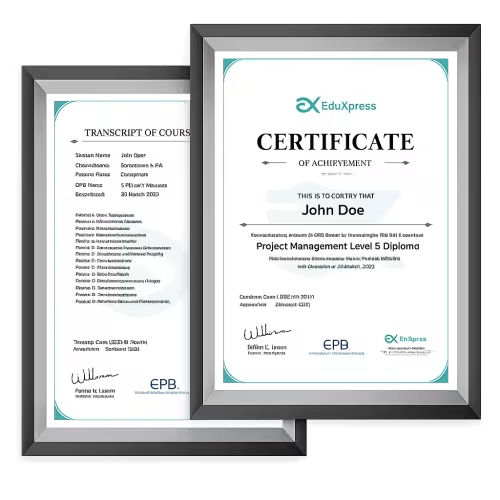
After successful completion, you can order a CPD-accredited digital certificate to record your learning achievement and continuing professional development in interpreting. An optional printed certificate is also available for £24.99.
Frequently Asked Questions
What qualifications do I need to become an interpreter in the UK?
Can I become an interpreter without a degree?
Is being bilingual enough to become an interpreter?
What is the difference between an interpreter and a translator?
What is consecutive interpreting?
What is simultaneous interpreting?
What is community interpreting?
What does Level 3 mean for community interpreting under the new Ministry of Justice framework?
What qualifications do I need to become a court interpreter?
What is the DPSI qualification?
What qualifications do I need to become an NHS interpreter?
Why are professional interpreters important in healthcare?
Can a family member act as an interpreter at an NHS appointment?
Do interpreters have to keep information confidential?
Can an interpreter give advice during an assignment?
Can interpreters work from home?
What is telephone interpreting?
How much do interpreters earn in the UK?
What skills does a good interpreter need?
How can I improve my memory for interpreting?
Do interpreters need to join NRPSI?
Can interpreters specialise in one field?
Why Study Interpreter Diploma Level 3?
Interpreting becomes difficult at exactly the moment ordinary bilingual conversation stops being enough. A speaker talks for three minutes without pausing. A doctor uses an unfamiliar clinical term. A solicitor asks a carefully worded question. A business executive gives three percentages and two deadlines in the same sentence. The interpreter still has to deliver the meaning accurately.
Interpreter Diploma Level 3 is structured around those demands. Language skills establish the foundation; consecutive and simultaneous modules develop the core interpreting techniques; and the specialist modules show how context changes the terminology, ethics and preparation required. Remote interpreting and memory training address two of the most practical challenges facing interpreters working today.
The course also reflects a profession that is becoming more clearly structured. The Ministry of Justice’s new October 2026 framework now distinguishes Community Level 3 work from Professional Level 6 interpreting, while CIOL’s Level 6 DPSI remains an established route into higher-level public-service work. Understanding that progression can help learners make better decisions about where to develop next.
With 12 months’ online access, recognised CPD certification, assessment and weekday tutor support, this course gives bilingual and multilingual learners a structured way to move beyond informal language assistance and think more like an interpreter: listening analytically, retaining meaning, controlling delivery, respecting role boundaries and preparing carefully for the context in which communication takes place.
Curriculum
- 1 Section
- 13 Lessons
- Lifetime
- Interpreter Diploma Level 313 Items
- 1.1Module 01: Introduction to Interpreting
- 1.2Module 02: Language Skills for Interpreters
- 1.3Module 03: Consecutive Interpreting Techniques
- 1.4Module 04: Simultaneous Interpreting Techniques
- 1.5Module 05: Legal and Courtroom Interpreting
- 1.6Module 06: Medical and Healthcare Interpreting
- 1.7Module 07: Business and Corporate Interpreting
- 1.8Module 08: Conference and Event Interpreting
- 1.9Module 09: Educational and Academic Interpreting
- 1.10Module 10: Community and Public Service Interpreting
- 1.11Module 11: Telephone and Remote Interpreting
- 1.12Module 12: Advanced Memory and Retention Techniques
- 1.13Module 13: Professional Development for Interpreters