Educational Psychology and Development
By 2026, over 70% of UK education professionals recognise the need to understand learner development to improve outcomes. That gap limits outcomes for every learner in the room and holds back the educators and trainers who genuinely want to do better by them. The Educational Psychology and Development course from EduXpress is a fully CPD-accredited, online programme that gives UK educators and trainers the structured expertise to raise the quality of their practice and make a measurable difference to the learners they support.
This course covers key psychological theories, developmental stages, and practical applications relevant to education. Learners build skills in assessing behaviour, motivation, and learning difficulties to enhance their professional practice. The course develops confidence and applied understanding of educational psychology principles.
Flexible online CPD learning lets you study around your schedule with full tutor support. Assessments are straightforward, and you can obtain a CPD-accredited certificate to demonstrate your progress. EduXpress provides a professional, user-friendly learning experience tailored to UK learners.
Learning Outcomes of Educational Psychology and Development
Upon completion of this Educational Psychology and Development from EduXpress, learners will be able to:
Why Choose Our Educational Psychology and Development Course?
Who is This Educational Psychology and Development For?
Certification: Educational Psychology and Development
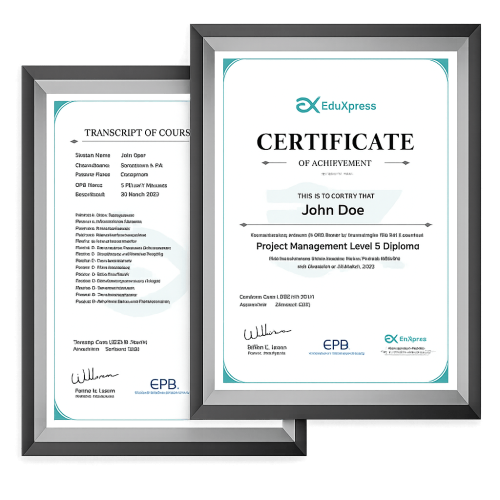
Upon successful completion of the final assessment, you will get a chance to order a CPD-accredited certificate confirming your achievement. This certificate is available in PDF as well as hard copy format, making it suitable for adding to your professional portfolio or CV.
Career Path
Frequently asked questions
Everything you need to know about the Educational Psychology and Development
1. What is educational psychology and why is it important for learners?
Educational psychology is the study of how people learn and develop in educational settings. It is important for learners because it helps educators understand cognitive, emotional, and social processes, enabling effective teaching strategies. This knowledge improves student engagement, motivation, and academic success across diverse learning environments.
2. Who should enroll in the Educational Psychology and Development course?
This course is ideal for educators, school counselors, education students, and professionals interested in child development. Anyone seeking to enhance their understanding of learning theories, developmental stages, and psychological principles in education will benefit. It supports career growth in teaching, educational planning, and learner support roles.
3. What key topics are covered in the Educational Psychology and Development course?
The course covers cognitive development, learning theories, motivation, social and emotional development, assessment techniques, and inclusive education strategies. It also explores developmental milestones and psychological factors affecting learning, equipping learners with practical tools to foster effective educational environments.
4. How can knowledge from this course improve teaching practices?
Applying educational psychology principles enhances teaching by tailoring instruction to student needs, promoting active learning, and managing classroom behavior effectively. Understanding developmental stages and motivation strategies allows educators to create supportive, engaging environments that boost student achievement and well-being.
5. Is prior knowledge of psychology required to take this course?
No prior psychology knowledge is necessary to enroll in this course. It is designed to introduce foundational concepts in educational psychology and development clearly and accessibly. Beginners and experienced educators alike will find the course content structured to build understanding progressively.
6. How is the course delivered and what learning materials are included?
The course is delivered through online modules featuring video lectures, readings, quizzes, and interactive activities. Learners receive downloadable resources, case studies, and practical assignments to reinforce understanding. Flexible access allows for self-paced study tailored to individual schedules.
7. Can this course help in understanding special educational needs (SEN)?
Yes, the course includes comprehensive content on identifying and supporting learners with special educational needs. It covers inclusive teaching strategies and psychological approaches to address diverse learning challenges, helping educators create equitable learning opportunities for all students.
8. What career opportunities can this course lead to?
Completing this course can open doors to careers in teaching, educational psychology assistance, school counseling, curriculum development, and educational consultancy. It provides foundational expertise valued in education sectors across the UK, US, Canada, Australia, and other English-speaking regions.
9. How can I apply the developmental theories learned in real classroom settings?
Developmental theories from this course guide educators in recognizing age-appropriate learning abilities and challenges. Applying these theories helps design differentiated instruction, monitor progress effectively, and support social-emotional growth, resulting in improved classroom management and student outcomes.
10. Are there assessment methods included to evaluate learner progress?
Yes, the course integrates formative and summative assessments such as quizzes, reflective assignments, and case study analyses. These assessments track learner comprehension and application of educational psychology concepts, ensuring mastery and readiness for practical implementation in educational contexts.