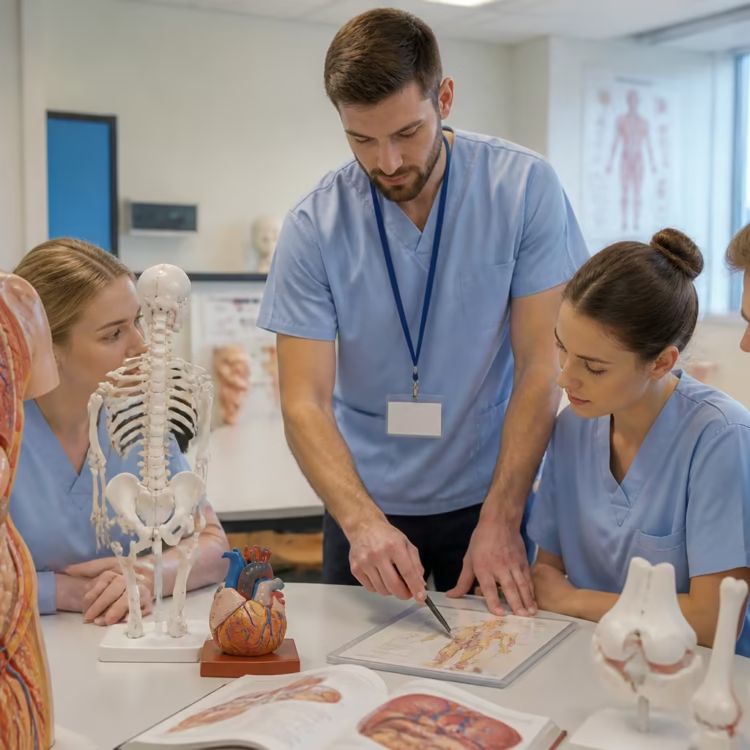
Core Stability
By 2026, over 60% of UK fitness and rehabilitation professionals report a growing need for specialised core stability expertise to support client health. That gap has a direct impact on care quality – and for the people depending on well-trained professionals, it is not a gap they can afford. The Core Stability course from EduXpress is built for UK health and care professionals who are ready to move from awareness to genuine expertise – a fully CPD-accredited, online programme that delivers the structured knowledge sector standards demand and employers recognise.
This course covers essential core stability techniques, including anti-extension, anti-rotation, and hip and scapula exercises. Learners build knowledge and applied understanding to improve client outcomes and professional capability in core strength and injury prevention.
Flexible online CPD learning from EduXpress means you can study at your own pace with full tutor support. The course includes a clear assessment and the option to obtain a CPD-accredited certificate to enhance your professional portfolio.
Learning Outcomes of Core Stability
Upon completion of this Core Stability from EduXpress, learners will be able to:
Why Choose Our Core Stability Course?
Who is This Core Stability For?
Certification: Core Stability
Upon successful completion of the final assessment, you will get a chance to order a CPD-accredited certificate confirming your achievement. This certificate is available in PDF as well as hard copy format, making it suitable for adding to your professional portfolio or CV. Please note, this certificate does not guarantee employment or entitlement to regulated roles.
Career Path
✓ Core Stability Training
Frequently asked questions
Everything you need to know about the Core Stability
1. What is core stability and why is it important?
Core stability refers to the strength and control of muscles in your abdomen, lower back, hips, and pelvis. It is crucial for maintaining balance, improving posture, and preventing injuries during physical activities. Developing core stability enhances overall functional fitness and supports daily movements with greater efficiency and safety.
2. Who can benefit from a core stability training program?
Anyone looking to improve balance, posture, and injury prevention can benefit from core stability training. This course is ideal for athletes, fitness enthusiasts, office workers, and seniors seeking enhanced functional strength. Strengthening the core helps reduce back pain and supports better performance in sports and everyday activities.
3. How long does it take to see results from core stability exercises?
Typically, noticeable improvements in core stability can be seen within 4 to 6 weeks of consistent exercise. Regular practice, combined with proper technique, helps build muscle endurance and control. Results vary based on individual fitness levels, but gradual progress leads to enhanced balance and reduced injury risk.
4. Are there any prerequisites for joining the core stability course?
No prior experience is required to join this core stability course. It is designed for beginners through advanced learners, with modifications provided to suit different fitness levels. Participants should be able to perform basic movements and have clearance from a healthcare professional if they have existing health conditions.
5. Can core stability training help reduce lower back pain?
Yes, core stability training is effective in reducing lower back pain by strengthening the muscles that support the spine. Improved muscle control and endurance help alleviate pressure on the lower back, enhancing posture and movement mechanics. This course includes targeted exercises to build a resilient and pain-free core.
6. What equipment is needed for the core stability course?
Minimal equipment is required; a yoga mat, stability ball, or resistance bands can enhance workouts but are optional. The course focuses on bodyweight exercises that can be performed at home or in the gym. Clear instructions will guide learners on how to safely use any additional equipment when applicable.
7. How often should I practice core stability exercises for best results?
For optimal core strength and stability, practicing exercises 3 to 4 times per week is recommended. Consistency is key to building muscle endurance and improving neuromuscular control. The course provides a structured schedule and progression plan to help learners establish a sustainable routine.
8. Is the core stability course suitable for rehabilitation purposes?
Yes, this core stability course incorporates safe, low-impact exercises suitable for rehabilitation under professional guidance. Strengthening the core supports recovery from injuries by improving muscle coordination and spinal support. Learners with specific medical concerns should consult healthcare providers before starting any new exercise program.
Curriculum
- 3 Sections
- 0 Lessons
- Lifetime
- Core Stability0 Items
- Order Your Certificate!0 Items
- Leave a Review!0 Items