Certified Information Systems Security Professional (CISSP)
The demand for skilled, qualified professionals in this field continues to grow across the UK – and the employers doing the hiring are increasingly clear about what they expect: structured knowledge, recognised credentials, and practical ability. In a market where digital skills are the baseline expectation, that gap limits earning potential, career options, and the ability to add real value. The Certified Information Systems Security Professional (CISSP) course from EduXpress is a fully CPD-accredited, online programme that builds practical, immediately applicable digital skills – designed for UK learners ready to close the gap and perform at the level the market demands.
Learning Outcomes of Certified Information Systems Security Professional (CISSP)
Upon completion of this Certified Information Systems Security Professional (CISSP) from EduXpress, learners will be able to:
Why Choose Our Certified Information Systems Security Professional (CISSP) Course?
Who is This Certified Information Systems Security Professional (CISSP) For?
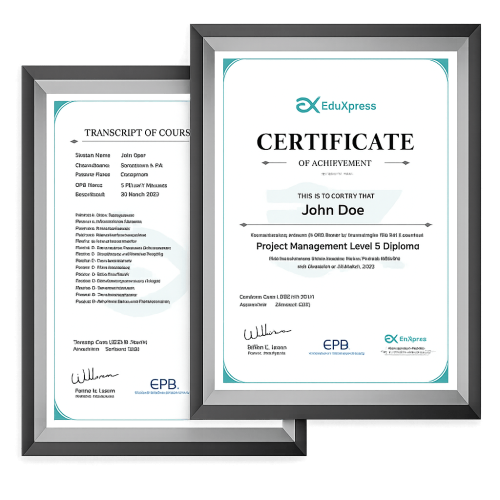
Certification: Certified Information Systems Security Professional (CISSP)
Career Path
Frequently asked questions
Everything you need to know about the Certified Information Systems Security Professional (CISSP)
1. What is the Certified Information Systems Security Professional (CISSP) certification?
The CISSP certification is a globally recognized credential in information security, validating expertise in designing, implementing, and managing cybersecurity programs. It demonstrates proficiency across eight security domains, making it essential for professionals seeking advanced roles in information security management and risk mitigation worldwide.
2. Who should enroll in the CISSP certification course?
The CISSP course is ideal for experienced cybersecurity professionals, including security analysts, IT managers, and risk consultants. It suits individuals aiming to advance their careers in information security, network security, and governance, especially those targeting leadership roles in organizations across the United States and internationally.
3. How long does it take to complete the CISSP training course?
Completing the CISSP training typically requires 4 to 6 weeks of study, depending on prior knowledge and learning pace. The course covers comprehensive security domains, preparing learners thoroughly for the CISSP exam, which enhances career opportunities in cybersecurity across various global markets.
4. What are the prerequisites for taking the CISSP exam?
Candidates must have a minimum of five years of cumulative paid work experience in at least two of the eight CISSP domains. Alternatively, a four-year college degree or an approved credential can substitute for one year of experience, ensuring candidates possess foundational knowledge for effective cybersecurity management.
5. How is the CISSP exam structured?
The CISSP exam consists of 100 to 150 multiple-choice and advanced innovative questions, administered over three hours. It evaluates knowledge across all eight CISSP domains, ensuring candidates demonstrate comprehensive security expertise required for professional roles in information security worldwide.
6. What career benefits does the CISSP certification offer?
Earning the CISSP certification enhances job prospects, credibility, and earning potential in cybersecurity fields. It qualifies professionals for senior roles such as security manager, consultant, and chief information security officer, particularly in competitive markets like the US, Canada, and Europe.
7. Can the CISSP certification be renewed?
Yes, CISSP certification must be renewed every three years through the (ISC)² Continuing Professional Education (CPE) program. Professionals earn CPE credits by participating in relevant activities, ensuring up-to-date knowledge and compliance with evolving cybersecurity standards internationally.
8. Is the CISSP course suitable for beginners in cybersecurity?
The CISSP course is designed for professionals with prior experience in information security. Beginners should consider foundational courses first, as CISSP content requires understanding of complex security principles and practical experience to succeed in the certification exam.
9. How can I prepare effectively for the CISSP certification exam?
Effective CISSP exam preparation involves structured study using official guides, practice tests, and training courses. Joining study groups and attending webinars can also enhance understanding. Consistent review of the eight CISSP domains is crucial for passing the exam and achieving certification.
10. Where can I find official CISSP training and resources?
Official CISSP training and resources are available through (ISC)² authorized training partners and the (ISC)² website. These platforms provide comprehensive study materials, practice exams, and instructor-led courses tailored to help learners succeed in the CISSP certification worldwide.