British Sign Language (BSL) is an important visual language used by Deaf people and the wider signing community across the UK. Developing BSL knowledge can help learners communicate more effectively, build confidence and promote greater accessibility and inclusion in everyday, educational, workplace and support settings.
This British Sign Language (BSL) Level 1 & 2 Diploma introduces learners to fundamental BSL communication and develops knowledge of vocabulary and everyday conversations. The course covers fingerspelling, personal information, family, colours, numbers, money, time, transport, weather, directions, hobbies, work, food and drink, describing people and animals, and health-related communication.
Whether you are beginning your BSL journey, working with people in communication-focused environments or looking to add an additional skill to your CV, this course provides flexible online learning designed to support your personal and professional development.
Learning Outcomes
- Understand the role and importance of British Sign Language in communication.
- Develop an introductory understanding of BSL structure and everyday signing.
- Learn fundamental BSL vocabulary and common signs.
- Understand the purpose and use of fingerspelling in BSL.
- Develop confidence with basic BSL communication techniques.
- Learn vocabulary for discussing family and personal relationships.
- Practise asking and responding to simple questions.
- Develop knowledge of signs used when exchanging personal information.
- Learn BSL vocabulary for colours and common descriptions.
- Understand how numbers and money can be communicated using BSL.
- Develop vocabulary relating to time, dates and months.
- Learn useful BSL vocabulary for transport and travel.
- Develop the ability to understand and communicate basic directions.
- Learn vocabulary relating to weather and everyday conditions.
- Develop signing vocabulary for hobbies, interests and leisure activities.
- Understand common BSL vocabulary used in workplace and employment contexts.
- Learn signs and vocabulary associated with food and drink.
- Develop confidence when describing people and animals using BSL.
- Learn basic vocabulary relating to illnesses, health and wellbeing.
- Build a broader foundation of everyday BSL vocabulary for personal and professional communication.
Who Is This Course For?
- Beginners who want to learn the fundamentals of British Sign Language.
- People who want to improve communication with Deaf people, family members, friends or colleagues.
- Care, healthcare and support workers who want to develop additional communication skills.
- Teachers, teaching assistants, childcare professionals and education support staff.
- Customer service, hospitality, retail and other people-facing professionals.
- Anyone looking to develop an additional communication skill for personal or career development.
Why Choose Our British Sign Language (BSL) Level 1 & 2 Diploma Course?
- Instantly accessible CPD-accredited digital certificate on successful completion of this course.
- 24/7 access to the course material for lifetime.
- Study at your own pace.
- No hidden fees or exam charges.
- Efficient assessment and instant results.
- Full tutor support on weekdays Monday to Friday.
Career Path
Developing BSL knowledge can complement careers where communication, accessibility, inclusion and interaction with people are important. The course may support learners seeking to strengthen their CV for people-focused roles across education, care, healthcare, customer service and community settings. Actual salaries vary according to experience, location, employer, qualifications and responsibilities.
- Teaching Assistant: £22k–£30k per year
- Early Years Practitioner: £24k–£36k per year
- Care Worker: £23k–£30k per year
- Healthcare Support Worker: £24k–£32k per year
- Customer Service Advisor: £23k–£32k per year
- Community Support Worker: £24k–£34k per year
Module Descriptions: British Sign Language (BSL) Level 1 & 2 Diploma
Module 01: Introduction to British Sign Language
This module introduces British Sign Language and its importance as a visual language used within Deaf communities across the UK. You will explore the role of BSL in communication, accessibility and inclusion.
You will also develop an understanding of the foundations of BSL and how learning sign language can support more effective communication in personal, educational, workplace and community settings.
Module 02: BSL Basics and Fingerspelling
This module introduces fundamental BSL vocabulary, basic signing techniques and fingerspelling. You will learn why fingerspelling is useful and how it can support communication when signing names, places and words for which a specific sign may not be known.
You will also develop familiarity with basic BSL communication and begin building confidence with everyday signs and fingerspelling.
Module 03: Family, Questions, and Simple Conversations
This module develops vocabulary for talking about family and introduces common questions and simple conversational exchanges. You will explore signs that can help you communicate basic information and participate in everyday interactions.
You will also practise understanding how simple questions and responses can be structured in everyday BSL communication.
Module 04: Personal Information Exchange
This module focuses on communicating basic personal information using BSL. Topics include useful vocabulary and expressions for exchanging information during introductions and everyday conversations.
You will also develop confidence with communication relating to personal details and common introductory interactions.
Module 05: Colours
This module introduces BSL vocabulary associated with colours and everyday descriptions. You will learn useful signs for identifying and discussing different colours in common communication situations.
You will also develop vocabulary that can be combined with other descriptive signs when communicating about people, objects and surroundings.
Module 06: Numbers and Money
This module explores BSL vocabulary for numbers and money. You will learn useful signing concepts for communicating numerical information and discussing prices, payments and everyday financial situations.
You will also develop greater confidence when using numbers in practical communication contexts.
Module 07: Time and Months
This module introduces vocabulary relating to time, dates and months. You will explore signs that can help you communicate information about schedules, appointments, dates and everyday routines.
You will also build a foundation for discussing when events happen and understanding common time-related communication.
Module 08: Transport
This module develops BSL vocabulary connected with transport and travel. You will learn useful signs for discussing different forms of transport and common travel situations.
You will also develop communication skills that can be useful when discussing journeys, travel arrangements and transportation in everyday settings.
Module 09: Weather
This module introduces common BSL vocabulary for describing weather and everyday environmental conditions. You will explore useful signs for discussing different types of weather and related observations.
You will also develop practical vocabulary that can be incorporated into simple everyday conversations.
Module 10: Directions
This module focuses on BSL vocabulary used for giving and understanding directions. You will explore signs that can support communication about locations, routes and movement from one place to another.
You will also build confidence using directional vocabulary in practical travel and everyday communication situations.
Module 11: Hobbies
This module introduces vocabulary for discussing hobbies, interests and leisure activities. You will learn useful signs for talking about the activities you enjoy and asking others about their interests.
You will also develop vocabulary that can help make everyday conversations more engaging and personal.
Module 12: Work
This module develops BSL vocabulary related to work and employment. You will explore signs and communication concepts that can be useful when discussing occupations, workplaces and common professional topics.
You will also build vocabulary that may support communication in workplace and career-related settings.
Module 13: Food and Drink
This module introduces BSL vocabulary for food, drinks and everyday eating situations. You will explore signs that can be used when discussing different foods, beverages and preferences.
You will also develop useful vocabulary for everyday conversations in homes, workplaces, hospitality settings and social situations.
Module 14: Family Vocabulary
This module expands your BSL vocabulary relating to family members and relationships. You will develop a broader range of signs for discussing family structures and people within your personal life.
You will also strengthen your ability to combine family vocabulary with basic descriptions and conversational exchanges.
Module 15: Describing People and Animals
This module focuses on vocabulary and communication used to describe people and animals. You will explore useful descriptive signs that can help communicate appearance, characteristics and other basic information.
You will also develop confidence using descriptive vocabulary as part of everyday BSL conversations.
Module 16: Illnesses and Health
This module introduces BSL vocabulary relating to illnesses, health and wellbeing. You will learn communication concepts that can help when discussing basic health-related information and common conditions.
You will also develop useful vocabulary for everyday health communication while understanding that the course does not provide clinical or medical training.
MCQ Assessment
The MCQ Assessment provides an opportunity to review and assess your understanding of the key concepts and vocabulary covered throughout the course. Questions are designed to reinforce learning across the different BSL topics.
You will also be able to identify areas of understanding as part of your overall learning and assessment experience.
Final Assessment
The Final Assessment evaluates your overall understanding of the British Sign Language (BSL) Level 1 & 2 Diploma course content. It provides an opportunity to demonstrate your knowledge of the vocabulary, communication topics and concepts covered across the modules.
You will also receive your course result following completion of the assessment, subject to the applicable assessment requirements.
Certification: British Sign Language (BSL) Level 1 & 2 Diploma
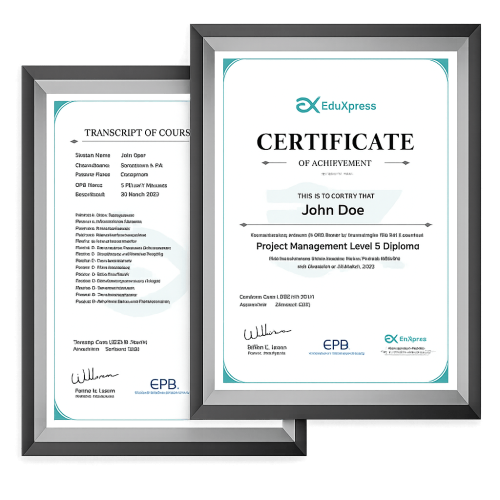
On successful completion of the British Sign Language (BSL) Level 1 & 2 Diploma, learners can receive a CPD-certified certificate confirming completion of the course. The programme includes 16 learning modules together with an MCQ Assessment and Final Assessment covering fundamental BSL communication, fingerspelling and everyday vocabulary.
This certificate is a record of CPD learning and course completion. It is not, by itself, a regulated British Sign Language qualification, professional registration or formal authorisation to work as a BSL interpreter, translator, teacher or other regulated or specialist professional role.
The course is designed to develop knowledge and confidence in BSL communication, but practical language proficiency may require additional structured practice, interaction with fluent BSL users, formal assessment, recognised qualifications and other training depending on your intended role or employer requirements.
The regular price of the Digital Certificate is £12.99, while the Printed Certificate is £24.99
Please note: Completing this online course does not automatically demonstrate conversational fluency or practical BSL competence. Learners seeking to use BSL professionally may need additional recognised training, practical language development, supervised or assessed communication practice and any qualifications or requirements specified by employers or relevant professional bodies.
Frequestly Asked Questions
What is the British Sign Language (BSL) Level 1 & 2 Diploma?
It is an online CPD-certified course designed to introduce learners to British Sign Language and develop knowledge of everyday BSL vocabulary and communication topics.
What does the course cover?
The course covers BSL basics, fingerspelling, family, questions, personal information, colours, numbers, money, time, months, transport, weather, directions, hobbies, work, food and drink, describing people and animals, and illnesses and health.
Is this course suitable for complete beginners?
Yes. The course begins with an introduction to BSL and fundamental signing and fingerspelling concepts, making it suitable for learners starting their BSL journey.
What is fingerspelling?
Fingerspelling is a method of representing letters using handshapes. It can be useful for signing names, places and words where a specific sign may not be known or appropriate.
Will I learn everyday BSL vocabulary?
Yes. The course includes vocabulary covering everyday subjects such as family, colours, numbers, time, transport, weather, directions, hobbies, work, food, people, animals and health.
Will I learn how to have simple conversations?
The course introduces vocabulary and concepts for questions, personal information and simple conversations. Learners should practise regularly to develop practical communication confidence.
Does the course cover family vocabulary?
Yes. Family and family-related vocabulary are covered in dedicated modules, including Module 03 and Module 14.
Does the course cover numbers and money?
Yes. Module 06 focuses on numbers and money and introduces relevant vocabulary for everyday communication.
Does the course cover time and dates?
Yes. Module 07 covers time and months and introduces vocabulary useful for discussing dates, schedules and everyday routines.
Will I learn BSL vocabulary for transport?
Yes. Module 08 focuses on transport and provides vocabulary relevant to travel and everyday transportation.
Does the course teach directions?
Yes. Module 10 covers directions and introduces vocabulary for discussing locations, routes and movement.
Does the course cover work-related BSL?
Yes. Module 12 focuses on work and introduces vocabulary relevant to occupations, workplaces and professional communication.
Will I learn signs for food and drink?
Yes. Module 13 covers food and drink and introduces useful vocabulary for everyday eating and social situations.
Does the course cover describing people and animals?
Yes. Module 15 introduces descriptive vocabulary for communicating about people and animals.
Does the course cover health and illnesses?
Yes. Module 16 introduces BSL vocabulary relating to illnesses, health and wellbeing.
How many modules are included?
The course contains 16 learning modules, followed by an MCQ Assessment and a Final Assessment.
Is the course CPD certified?
Yes. The course provides a CPD-certified certificate on successful completion, subject to the applicable course requirements.
Does the certificate make me a qualified BSL interpreter?
No. Completing this online course does not by itself provide a regulated or recognised professional qualification as a BSL interpreter or translator.
Can I become a BSL teacher after completing this course?
The course can provide introductory knowledge, but it does not by itself provide the specialist qualifications, language proficiency, teaching training or professional requirements that may be needed to teach BSL.
Will this course make me fluent in BSL?
The course provides a foundation in BSL vocabulary and communication topics. Fluency and practical proficiency require continued practice, interaction and potentially further recognised BSL study and assessment.
Can I use this course for my career development?
Yes. BSL knowledge can complement people-focused roles in areas such as care, healthcare, education, customer service and community support and can be included as additional learning on your CV.
Can healthcare and care workers take this course?
Yes. The course can help care and healthcare workers develop additional communication knowledge. However, it does not replace role-specific professional training or employer requirements.
Can teachers and teaching assistants take this course?
Yes. The course may be useful for education professionals who want to develop additional communication skills and support inclusive interactions.
Can I study the course online?
Yes. The course is designed for flexible online study, allowing learners to work through the material at their own pace.
How long will I have access to the course?
You receive 24/7 access to the course material for lifetime, allowing you to revisit the learning content at your convenience.
Is tutor support available?
Yes. Full tutor support is available on weekdays from Monday to Friday.
Are there hidden fees or exam charges?
No hidden fees or exam charges are included for the course assessment. Certificate charges apply according to the available certificate options.
Does the course include an assessment?
Yes. The course includes an MCQ Assessment and a Final Assessment to review and assess your understanding of the course material.
Does this course provide practical BSL assessment?
The course is delivered online and should not be treated as a substitute for formal practical BSL assessment, live communication practice or recognised proficiency assessment.
Can I work as a professional interpreter after completing this course?
No. Professional interpreting requires a much broader level of language proficiency, specialist training, practical experience and relevant qualifications or professional requirements. This course alone does not provide that authorisation.
Why Study British Sign Language (BSL) Level 1 & 2 Diploma?
Learning British Sign Language can help you develop a valuable additional communication skill while promoting greater accessibility and inclusion. BSL knowledge can be useful in personal interactions as well as in education, care, healthcare, customer service, community and other people-focused environments.
This course provides a broad foundation in BSL through topics including fingerspelling, family, personal information, questions, colours, numbers, money, time, transport, weather, directions, hobbies, work, food and drink, descriptions, illnesses and health. With flexible online learning and a CPD-certified certificate, it provides a convenient way to expand your knowledge and strengthen your CV.
Whether you are a beginner, a care or healthcare worker, education professional, customer-facing employee or simply interested in learning BSL, this course can help you build a foundation for further development. Enrol in the British Sign Language (BSL) Level 1 & 2 Diploma today and start developing your BSL communication knowledge online.
Curriculum
- 1 Section
- 17 Lessons
- Lifetime
- British Sign Language (BSL) Level 1 & 217 Items
- 1.1Module 01: Introduction to British Sign Language17 Minutes
- 1.2Module 02: BSL Basics and Fingerspelling
- 1.3Module 03: Family, Questions, and Simple Conversations
- 1.4Module 04: Personal Information Exchange
- 1.5Module 05: Colours
- 1.6Module 06: Numbers and Money
- 1.7Module 07: Time and Months
- 1.8Module 08: Transport
- 1.9Module 09: Weather
- 1.10Module 10: Directions
- 1.11Module 11: Hobbies
- 1.12Module 12: Work
- 1.13Module 13: Food and Drink
- 1.14Module 14: Family Vocabulary
- 1.15Module 15: Describing People and Animals
- 1.16Module 16: Illnesses and Health
- 1.17Order Your Certificate