


Aftertreatment Technologies: Basic to Advanced
By 2026, over 75% of UK automotive maintenance professionals will need updated skills in emissions control due to stricter environmental regulations. In a market where digital skills are the baseline expectation, that gap limits earning potential, career options, and the ability to add real value. The Aftertreatment Technologies: Basic to Advanced course from EduXpress is a fully CPD-accredited, online programme that builds practical, immediately applicable digital skills – designed for UK learners ready to close the gap and perform at the level the market demands.
This course covers essential topics such as NOx control, diesel particulate filters, and air-fuel ratio sensors. Learners will develop knowledge, practical skills, and confidence to understand and work with modern aftertreatment technologies. The content is designed to build applied understanding relevant to current automotive and environmental standards.
Flexible online CPD learning allows you to study at your own pace with tutor support available on weekdays. Assessment options include an online test with efficient results and the opportunity to obtain a CPD-accredited certificate to support your professional portfolio.
Learning Outcomes of Aftertreatment Technologies: Basic to Advanced
Upon completion of this Aftertreatment Technologies: Basic to Advanced from EduXpress, learners will be able to:
Why Choose Our Aftertreatment Technologies: Basic to Advanced Course?
Who is This Aftertreatment Technologies: Basic to Advanced For?
Certification: Aftertreatment Technologies: Basic to Advanced
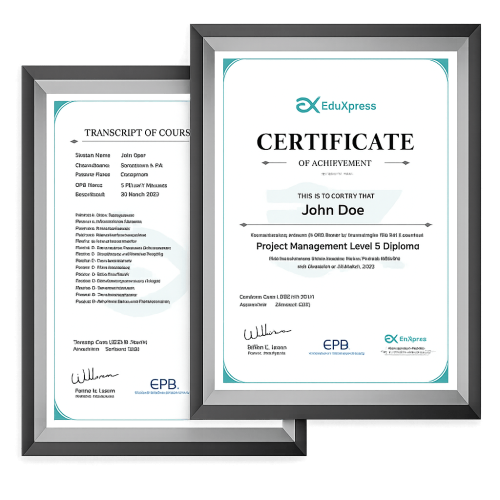
Upon successful completion of the final assessment, you will get a chance to order a CPD-accredited certificate confirming your achievement. This certificate is available in PDF as well as hard copy format, making it suitable for adding to your professional portfolio or CV. Please note this certification does not guarantee employment or entitlement to regulated roles.
Career Path
✓ Aftertreatment Technologies Basic to Training
Frequently asked questions
Everything you need to know about the Aftertreatment Technologies: Basic to Advanced
1. What are aftertreatment technologies in vehicle emissions control?
Aftertreatment technologies are systems designed to reduce harmful emissions from vehicle exhausts. They include components like catalytic converters, diesel particulate filters, and selective catalytic reduction systems. These technologies improve air quality by minimizing pollutants such as NOx, CO, and particulate matter, essential for meeting environmental regulations and advancing sustainable transportation.
2. Who should enroll in the Aftertreatment Technologies course?
This course is ideal for automotive engineers, environmental professionals, technicians, and students interested in vehicle emissions control. It caters to learners seeking foundational knowledge and advanced insights into aftertreatment systems, making it suitable for professionals aiming to enhance their expertise in emission reduction technologies within the automotive and environmental sectors.
3. How does selective catalytic reduction (SCR) reduce NOx emissions?
Selective catalytic reduction (SCR) reduces nitrogen oxides (NOx) by injecting a urea-based additive into the exhaust stream, which reacts with NOx over a catalyst to form harmless nitrogen and water. This advanced aftertreatment technology is highly effective for diesel engines and is crucial for meeting stringent emission standards globally, contributing to cleaner air and compliance.
4. What are the benefits of learning aftertreatment technologies online?
Learning aftertreatment technologies online offers flexible access to comprehensive, up-to-date content on emission control systems. It enables learners worldwide to gain practical and theoretical knowledge through interactive modules, enhancing skills in designing, operating, and maintaining aftertreatment systems. Online courses also support career growth in automotive and environmental engineering fields.
5. Are there prerequisites for enrolling in this aftertreatment technologies course?
Basic understanding of automotive engineering, engine operation, or environmental science is recommended but not mandatory. The course is structured to guide beginners from fundamental concepts to advanced applications of aftertreatment systems. Prior knowledge enhances learning speed, but the curriculum supports all learners aiming to master emission control technologies.
6. How does this course address global emission standards?
The course comprehensively covers international emission standards such as Euro 6, EPA Tier regulations, and China VI norms. It explains how aftertreatment technologies adapt to meet these requirements, ensuring learners understand compliance strategies. This global perspective equips professionals to design and implement emission control solutions suitable for diverse regulatory environments.
7. What practical skills will I gain from this course?
You will acquire skills in selecting, operating, troubleshooting, and maintaining various aftertreatment components like diesel particulate filters and catalytic converters. The course includes case studies and simulations to enhance problem-solving abilities, preparing learners to optimize emission control systems effectively in real-world automotive and industrial applications.
8. Can this course help me advance my career in environmental or automotive industries?
Yes, this course provides specialized knowledge crucial for roles in vehicle emission control, environmental compliance, and automotive engineering. Mastery of aftertreatment technologies enhances your professional profile, making you valuable to employers focused on sustainability and regulatory adherence. It supports career advancement in a competitive, evolving industry sector.
Curriculum
- 3 Sections
- 0 Lessons
- Lifetime
- Aftertreatment Technologies: Basic to Advanced0 Items
- Order Your Certificate!0 Items
- Leave a Review!0 Items