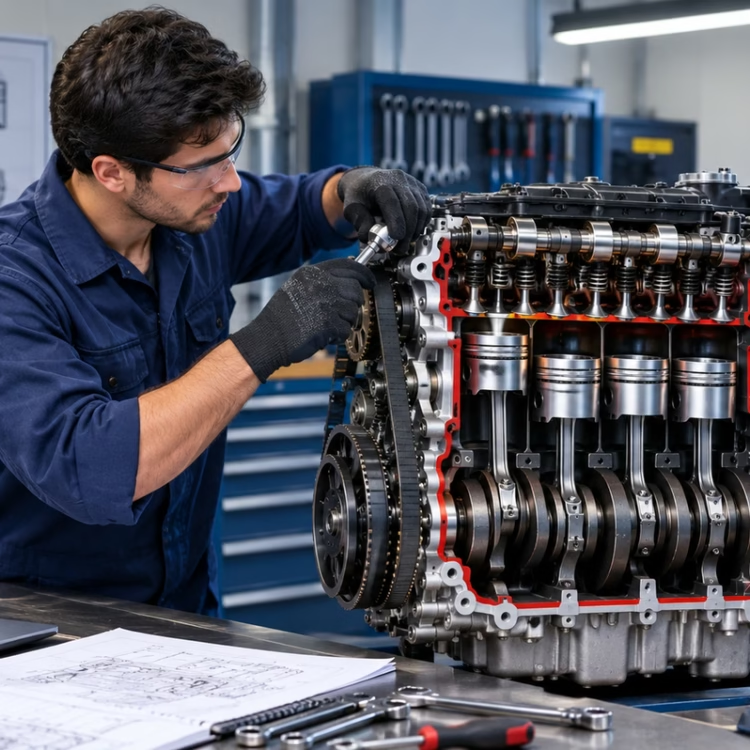
Aerospace Engineering
By 2026, the UK aerospace sector is expected to face a significant demand for skilled engineers to support innovation and sustainability in aviation. In a market where digital skills are the baseline expectation, that gap limits earning potential, career options, and the ability to add real value. The Aerospace Engineering course from EduXpress is a fully CPD-accredited, online programme that builds practical, immediately applicable digital skills – designed for UK learners ready to close the gap and perform at the level the market demands.
This course covers essential topics including aerodynamics, aircraft classification, propulsion systems, flight mechanics, and performance analysis. It helps learners build applied understanding and confidence in aerospace engineering principles relevant to UK industry standards.
Our flexible online CPD learning allows you to study at your own pace with full tutor support during weekdays. Upon completing the course and assessment, you can obtain a CPD-accredited certificate to demonstrate your commitment to professional development.
Learning Outcomes of Aerospace Engineering
Upon completion of this Aerospace Engineering from EduXpress, learners will be able to:
Why Choose Our Aerospace Engineering Course?
Who is This Aerospace Engineering For?
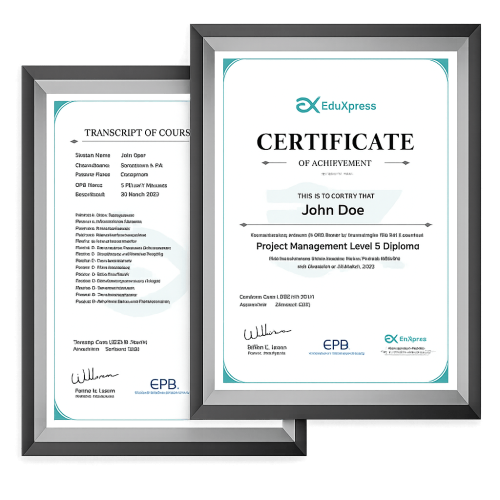
Certification: Aerospace Engineering
Upon successful completion of the final assessment, you will get a chance to order a CPD-accredited certificate confirming your achievement. This certificate is available in PDF as well as hard copy format, making it suitable for adding to your professional portfolio or CV. The certificate reflects your CPD learning but does not guarantee employment or entitlement to regulated roles.
Career Path
Frequently asked questions
Everything you need to know about the Aerospace Engineering
1. What is aerospace engineering?
Aerospace engineering is the field of engineering focused on the design, development, and testing of aircraft, spacecraft, and related systems. This discipline combines principles of aerodynamics, materials science, propulsion, and structural analysis to create efficient and safe aerospace vehicles. It is essential for careers in aviation, space exploration, and defense industries.
2. What topics are covered in an aerospace engineering course?
An aerospace engineering course covers aerodynamics, propulsion systems, aircraft structures, flight mechanics, avionics, and aerospace materials. Students also learn about spacecraft design, control systems, and thermodynamics. This comprehensive curriculum prepares learners for practical challenges in aerospace design, manufacturing, and research within the global aerospace industry.
3. What skills are needed to become an aerospace engineer?
Key skills for aerospace engineers include strong analytical abilities, proficiency in mathematics and physics, problem-solving, and computer-aided design (CAD). Effective communication and teamwork are also vital. These skills enable engineers to innovate aerospace technologies, optimize performance, and ensure safety in aircraft and spacecraft development.
4. How long does it take to complete an aerospace engineering degree?
A typical aerospace engineering degree takes four years to complete at the undergraduate level. For advanced specialization, a master’s degree requires an additional one to two years. Duration may vary depending on the country, institution, and study mode, including full-time, part-time, or online learning options.
5. What career opportunities are available after completing this course?
Graduates of aerospace engineering can pursue careers as aircraft design engineers, propulsion specialists, flight test engineers, and aerospace project managers. Opportunities also exist in space agencies, defense contractors, and private aerospace firms. This course equips students for roles in research, development, manufacturing, and maintenance within the aerospace sector.
6. Is the aerospace engineering course suitable for international students?
Yes, the aerospace engineering course is designed to accommodate international students, with many universities offering tailored support and global industry connections. Coursework often includes internationally recognized standards and practices, making it accessible and relevant for learners worldwide interested in aerospace careers.
7. Are there any prerequisites for enrolling in an aerospace engineering program?
Prerequisites typically include a strong foundation in mathematics, physics, and chemistry. Some programs may also require prior coursework in computer science or engineering basics. Meeting these requirements ensures students can grasp complex aerospace concepts and succeed in rigorous technical training.
8. Can I study aerospace engineering online?
Many accredited institutions now offer aerospace engineering courses online, providing flexible learning options for remote students. Online programs incorporate interactive lectures, virtual labs, and project-based assignments, enabling learners to gain essential aerospace knowledge and skills without geographical constraints.
9. What software tools are commonly taught in aerospace engineering?
Common aerospace engineering software includes CAD programs like CATIA and SolidWorks, simulation tools such as ANSYS and MATLAB, and flight dynamics software. Mastery of these tools enhances design accuracy, performance analysis, and system optimization critical for aerospace engineering projects.
10. How does aerospace engineering contribute to environmental sustainability?
Aerospace engineering drives environmental sustainability by developing fuel-efficient engines, lightweight materials, and alternative propulsion technologies. Engineers also focus on reducing emissions and noise pollution in aircraft design, contributing to greener aviation and space exploration aligned with global environmental goals.
Curriculum
- 3 Sections
- 0 Lessons
- Lifetime
- Aerospace Engineering0 Items
- Order Your Certificate!0 Items
- Leave a Review!0 Items