Behind every well-organised finance department are accurate records, timely payments and reliable financial information. Discover the bookkeeping, payroll, VAT and digital accounting skills that support successful business operations.
Accounts Assistant develops an understanding of the accounting principles, bookkeeping procedures and financial administration skills used in businesses and organisations across the United Kingdom. Accounts assistants support finance departments by recording financial transactions, processing invoices, maintaining ledgers, reconciling bank accounts and helping to keep financial information organised. Their work contributes to accurate reporting, effective cash flow management and the smooth operation of everyday business finances.
Working in an accounts department involves much more than entering numbers into a spreadsheet. A supplier invoice must be checked before payment, customer balances need to be monitored, payroll information must be handled accurately and bank transactions should agree with the accounting records. Understanding double-entry bookkeeping, financial controls and the importance of clear documentation helps accounts assistants identify discrepancies, maintain reliable records and support colleagues responsible for financial reporting.
Our Accounts Assistant course explores bookkeeping fundamentals, financial transactions, the accounting equation, double-entry accounting, ledgers, journals and trial balances. Across fifteen structured modules, learners also examine payroll administration, accounts payable, accounts receivable, VAT, taxation, bank reconciliation, financial statements, year-end procedures, vendor management, invoice processing and digital accounts payable technologies. The curriculum connects essential accounting knowledge with practical financial administration principles, supporting learners who want to build their confidence in bookkeeping and accounts support roles.
What You’ll Learn to Put Into Action
- Understand bookkeeping principles, accounting terminology and the responsibilities of an accounts assistant.
- Identify and record business transactions using appropriate financial documentation.
- Apply the accounting equation and understand how double-entry bookkeeping maintains balanced records.
- Explore journals, ledgers, posting procedures and the preparation of trial balances.
- Understand payroll administration, PAYE, National Insurance deductions and relevant employer reporting responsibilities.
- Develop knowledge of accounts payable, supplier invoices, payment approvals and accounts receivable.
- Recognise UK VAT principles, digital record-keeping requirements and the role of tax documentation.
- Understand bank reconciliation, financial statement preparation and year-end accounting adjustments.
- Explore vendor management, invoice verification, payment processing and automated accounting technologies.
Who Is This Course For?
- Beginners interested in developing bookkeeping and accounting administration knowledge.
- Aspiring accounts assistants, finance assistants and accounts clerks.
- Office administrators seeking to strengthen their financial record-keeping skills.
- Small business owners and entrepreneurs interested in understanding everyday accounting procedures.
- Payroll administrators, invoice processing staff and purchasing assistants.
- Accounts payable and accounts receivable employees seeking broader accounting knowledge.
- Business, accounting and finance students preparing for further professional development.
- Career changers exploring opportunities in bookkeeping and financial administration.
Why Choose Our Accounts Assistant Course?
- Recognised CPD certification to support continuing professional development.
- Fifteen structured modules covering bookkeeping, accounting procedures and financial administration.
- Introduces the accounting equation, double-entry bookkeeping and accurate transaction recording.
- Explores financial journals, general ledgers and trial balance preparation.
- Develops understanding of payroll administration and UK PAYE responsibilities.
- Covers accounts payable, accounts receivable, supplier payments and customer balances.
- Builds awareness of VAT, taxation records and digital bookkeeping requirements.
- Explains bank reconciliation and identifying differences between financial records and bank statements.
- Introduces financial statements, closing entries and year-end accounting procedures.
- Explores supplier management, invoice approval controls and payment verification.
- Covers accounting software, automated processing and modern financial administration workflows.
- 24/7 lifetime access to course materials.
- Flexible self-paced online study.
- Efficient online assessment with instant results.
- Full tutor support on weekdays, Monday to Friday.
Career Path
Knowledge gained through Accounts Assistant can support professional development in bookkeeping, finance administration, payroll, credit control and accounting support. Organisations of different sizes require employees who can maintain accurate financial records, process invoices, reconcile transactions and support the preparation of financial information. These responsibilities are relevant to finance departments in retail, healthcare, construction, hospitality, professional services, manufacturing and the public sector.
The course provides useful subject knowledge for individuals interested in junior accounts and finance support roles. With practical experience, accounting software knowledge and further professional development, learners may explore progression into bookkeeping, accounting technician, credit control and finance officer positions. Understanding both traditional accounting procedures and digital payment technologies can also complement existing responsibilities in business administration and financial operations.
- Administrative Assistant (Finance Support): £21,000–£28,000 per year
- Credit Controller: £21,000–£32,000 per year
- Bookkeeper / Accounts Clerk: £24,000–£35,000 per year
- Accounting Technician: £24,000–£35,000 per year
- Finance Officer: £26,000–£38,000 per year
What the Course Covers
Module 01: Introduction to Bookkeeping
Begin by exploring bookkeeping and its importance in maintaining accurate financial information. Understand the purpose of recording business income, expenditure, assets and liabilities, alongside the role of bookkeeping in supporting financial reporting and business decisions. Examine the responsibilities of bookkeepers and accounts assistants, including recording transactions, organising receipts, managing supporting documentation and maintaining reliable accounting records.
Learn about basic accounting terminology, different types of business transactions and the distinction between bookkeeping and broader accounting activities. Explore the accounting cycle, financial record-keeping practices and the importance of maintaining a clear audit trail. Develop awareness of cash and accrual accounting concepts, professional confidentiality, accuracy and the role of internal controls in reducing the likelihood of errors. Understand how consistent bookkeeping supports day-to-day financial administration and provides information for preparing financial statements.
Module 02: Understanding Financial Transactions
Explore financial transactions and how they are identified, classified and recorded within an organisation. Understand common activities such as making sales, purchasing goods, paying suppliers, receiving customer payments and recording business expenses. Examine source documents including sales invoices, purchase invoices, receipts, bank statements, credit notes and payment confirmations, and learn why appropriate evidence is essential for accurate financial records.
Learn about recognising income, expenditure, assets, liabilities and capital transactions. Explore the importance of transaction dates, document references, descriptions and correct account classification. Develop awareness of how errors such as duplicate entries, missing receipts and incorrect amounts can affect financial information. Examine the relationship between transactions and accounting records, alongside the importance of authorisation procedures, secure documentation and checking financial information before it is entered into an accounting system.
Module 03: The Accounting Equation and Double-Entry System
Understand the accounting equation and its role as the foundation of financial accounting. Explore the relationship between assets, liabilities and equity, expressed as assets equal liabilities plus equity. Examine how everyday business transactions affect the different elements of the equation and why accounting records must remain balanced. Learn about the principles of double-entry bookkeeping, including debit and credit entries and the different account categories used to record financial activities.
Learn how common transactions are recorded through corresponding debit and credit entries. Explore examples involving cash purchases, credit sales, supplier payments, customer receipts and business expenses. Develop awareness of how accounting entries influence asset, liability, capital, income and expense accounts. Examine the importance of selecting appropriate accounts, identifying recording errors and understanding how double-entry principles provide a structured system for preparing ledgers, trial balances and financial statements.
Module 04: Managing Ledgers and Journals
Explore the purpose of accounting journals and ledgers in recording and organising financial information. Understand how transactions may first be recorded in journals before being posted to the relevant ledger accounts. Examine the general ledger, sales ledger and purchase ledger, alongside the role of a chart of accounts in classifying transactions. Learn how journal entries provide a record of accounting movements and support a clear financial audit trail.
Learn about posting transactions, calculating account balances and reviewing ledger information for accuracy. Explore common adjusting journals, correction entries and the importance of appropriate documentation and authorisation. Develop awareness of control accounts and how subsidiary records can be checked against the general ledger. Understand how properly maintained journals and ledgers support trial balance preparation, management reporting, invoice tracking and more reliable financial administration.
Module 05: Preparing Trial Balance
Understand the purpose of a trial balance and how it summarises debit and credit balances from the general ledger. Explore the steps involved in extracting ledger balances, arranging accounts into debit and credit columns and checking whether the totals agree. Examine how trial balance preparation fits into the wider accounting cycle and contributes to the preparation of financial statements.
Learn about identifying common accounting errors, including incorrect postings, transposed amounts and missing entries. Explore why an agreeing trial balance provides a useful arithmetic check but does not establish that every transaction has been recorded correctly. Develop awareness of reviewing unusual balances, tracing differences to original records and preparing correction journals where appropriate. Understand how trial balances support period-end accounting reviews and provide a starting point for further financial adjustments.
Module 06: Payroll Management Basics
Explore payroll administration and the financial responsibilities involved in paying employees accurately. Understand gross pay, net pay, salaries, hourly wages, overtime and common payroll deductions. Examine the principles of Pay As You Earn (PAYE), Income Tax, National Insurance contributions and workplace pension deductions. Learn how payroll information connects with employee records, authorised changes, timesheets and the organisation’s financial accounts.
Learn about payroll calculations, checking employee payment details and understanding the importance of accurate records. Explore the role of HM Revenue and Customs (HMRC), Real Time Information reporting and Full Payment Submissions, which are generally submitted on or before employees’ paydays. Develop awareness of payroll confidentiality, reconciliation, identifying discrepancies and recording payroll-related transactions. Understand how accounts assistants may support payroll teams by maintaining reliable information and following established authorisation and reporting procedures.
Module 07: Handling Accounts Payable
Understand accounts payable and its role in managing money owed by an organisation to suppliers. Explore the purchase-to-payment process, including purchase orders, supplier invoices, goods received documentation, payment terms and outstanding balances. Examine how accounts payable staff verify invoices, record supplier liabilities and maintain accurate purchase ledger information.
Learn about invoice approval, matching supporting documents, identifying duplicate invoices and monitoring upcoming payment obligations. Explore supplier statements, accounts payable ageing reports and reconciling outstanding balances. Develop awareness of preventing incorrect or unauthorised payments, verifying supplier information and communicating effectively with purchasing teams. Understand how reliable accounts payable procedures help maintain supplier relationships, support cash flow planning and protect the accuracy of financial records.
Module 08: Handling Accounts Receivable
Explore accounts receivable and the procedures used to manage money owed to an organisation by customers. Understand credit sales, customer invoicing, payment terms, customer account balances and the importance of timely payment collection. Examine how sales ledger records support the monitoring of outstanding invoices and provide information about business cash flow.
Learn about allocating incoming payments, reconciling customer accounts and preparing accounts receivable ageing reports. Explore credit notes, customer statements, late payments and professional communication regarding outstanding balances. Develop awareness of managing payment discrepancies, recording adjustments and recognising potential bad debts. Understand how accurate receivables management contributes to reliable financial reporting, supports customer relationships and helps organisations maintain sufficient working capital.
Module 09: VAT and Taxation in Bookkeeping
Understand the role of Value Added Tax (VAT) in UK bookkeeping and business transactions. Explore VAT registration, taxable supplies, input VAT, output VAT and the distinction between standard-rated, reduced-rated, zero-rated and exempt transactions. Examine how VAT may be recorded on sales and purchase invoices and how accurate tax information supports VAT calculations and returns.
Learn about VAT records, tax codes, supporting documentation and the principles of Making Tax Digital for VAT. Explore the importance of using compatible software, keeping appropriate digital records and understanding the organisation’s VAT accounting arrangements. Develop awareness of the UK VAT registration threshold, the standard 20% VAT rate and the importance of distinguishing tax treatment according to the transaction. Understand how accounts assistants support accurate bookkeeping and provide information needed by those responsible for tax compliance.
Module 10: Bank Reconciliation Process
Explore bank reconciliation and its importance in verifying the accuracy of an organisation’s financial records. Understand how the balance shown in accounting records is compared with the balance reported by the bank. Examine common causes of differences, including outstanding payments, deposits in transit, bank charges, interest, direct debits and timing differences.
Learn about matching bank statement transactions with ledger entries, identifying missing transactions and investigating unexplained amounts. Explore reconciliation statements, bank feeds and the role of accounting software in supporting transaction matching. Develop awareness of errors, duplicate entries and unusual payments that may require further review. Understand how regular bank reconciliation contributes to accurate cash balances, stronger financial controls and reliable financial reporting.
Module 11: Preparing Financial Statements
Understand the purpose of financial statements and how they communicate an organisation’s financial performance and position. Explore the statement of profit or loss, the statement of financial position and the information they contain. Examine income, expenses, assets, liabilities and equity, alongside how accounting records contribute to preparing financial reports.
Learn about organising trial balance information, recognising the effects of accounting adjustments and understanding how financial statements connect with one another. Explore revenue, expenditure, depreciation, accruals and prepayments at an introductory level. Develop awareness of the difference between profitability and cash availability, and how financial statements help managers and other users review business performance. Understand the supporting role of accounts assistants in preparing schedules, checking balances and maintaining accurate records for financial reporting.
Module 12: End-of-Year Procedures and Closing Accounts
Explore accounting period-end and year-end procedures and their importance in preparing reliable financial information. Understand how organisations review ledger balances, complete reconciliations, check outstanding invoices and identify entries requiring adjustment. Examine the purpose of accruals, prepayments, depreciation and other accounting adjustments that may be necessary before final accounts are prepared.
Learn about closing temporary accounts, reviewing the trial balance and organising supporting financial schedules. Explore cut-off procedures, checking transactions recorded around the year-end date and reconciling control accounts. Develop awareness of preparing information for accountants, auditors and management reporting. Understand the importance of distinguishing a company’s accounting year-end from the UK personal tax year and maintaining clear records to support accurate reporting and compliance responsibilities.
Module 13: Vendor Management
Understand vendor management and its relationship with purchasing, accounts payable and financial administration. Explore supplier onboarding, maintaining vendor information, verifying payment details and recording agreed terms. Examine how accurate supplier records help organisations manage purchasing arrangements, communicate with vendors and process invoices efficiently.
Learn about reviewing vendor accounts, monitoring supplier performance and resolving differences between purchase orders, deliveries and invoices. Explore supplier statements, credit terms, approved changes and maintaining appropriate records of communication. Develop awareness of internal controls for creating and amending supplier information, particularly changes to bank account details. Understand how responsible vendor management helps reduce processing errors, supports reliable payment operations and contributes to positive commercial relationships.
Module 14: Invoice & Payment Processing
Explore invoice and payment processing and how organisations manage financial obligations from receipt through to settlement. Understand the essential components of invoices, including supplier details, invoice numbers, dates, amounts, tax information and payment terms. Examine checking invoice accuracy, confirming goods or services, verifying authorisation and selecting the correct accounting treatment before recording a payable.
Learn about preparing payment schedules, checking due dates, recording payments and reconciling supplier balances. Explore payment methods, supporting documentation and the importance of maintaining an audit trail. Develop awareness of duplicate invoice detection, separation of duties, payment authorisation and invoice-related fraud risks. Understand how accurate invoice processing contributes to timely supplier payments, reliable bookkeeping and effective financial control.
Module 15: Technologies in Accounts Payable Processing
Explore the technologies used in modern accounts payable departments and how digital systems support financial administration. Understand the role of accounting software, electronic invoices, document management systems and automated approval workflows. Examine how optical character recognition (OCR) and data extraction technologies can assist with capturing invoice details and reducing repetitive manual entry.
Learn about digital purchase order matching, electronic approval processes, supplier portals and automated payment scheduling. Explore the benefits and limitations of bank feeds, workflow automation and cloud-based accounting systems. Develop awareness of access controls, data protection, duplicate detection and the importance of verifying information produced by automated systems. Understand how accounts assistants can support accurate digital processing, investigate exceptions and maintain suitable oversight of financial transactions as accounting technologies evolve.
Accreditation & Recognition
Accounts Assistant is a CPD-accredited online course designed to support continuing professional development in bookkeeping, accounting administration and financial record keeping. The structured curriculum covers financial transactions, double-entry bookkeeping, trial balances, payroll, accounts payable, accounts receivable, VAT, bank reconciliation and financial reporting.
After successfully completing the course assessment, learners can order a recognised CPD-accredited certificate as evidence of their learning achievement. The certificate can be included within a CV, professional development record or learning portfolio. It highlights knowledge gained in accounting procedures, bookkeeping, financial controls, supplier management and digital accounts administration.
- Recognised CPD certification focused on bookkeeping and financial administration.
- Fifteen structured modules covering accounting records, payroll, VAT, reconciliations and invoice processing.
- 100% online and self-paced study with lifetime access to course materials.
- Online assessment designed to check understanding of the subjects covered.
- Option to order a CPD-accredited digital certificate after successful completion.
- Printed certificate available for £24.99.
Assessment & Certification: Accounts Assistant
The course includes an online assessment designed to evaluate your understanding of bookkeeping, accounting principles and financial administration procedures. Learners can complete the fifteen modules through flexible self-paced online study before taking the assessment. The curriculum provides structured coverage of financial transactions, double-entry accounting, payroll, VAT, financial reconciliation and accounts payable processing.
The assessment covers bookkeeping fundamentals, accounting transactions, the accounting equation, double-entry bookkeeping, journals, ledgers, trial balances, payroll management, accounts payable, accounts receivable, VAT, taxation records, bank reconciliation, financial statements, year-end accounting procedures, vendor management, invoice processing and digital accounts payable technologies. Successful completion demonstrates understanding of the essential accounting and financial administration principles introduced throughout the course.
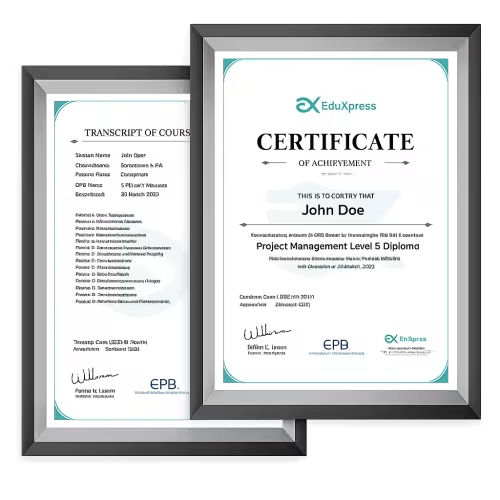
After successfully passing the online assessment, learners can order a PDF version of the CPD-accredited certificate to demonstrate their learning achievement and commitment to continuing professional development. An optional printed certificate is available for £24.99. The certificate highlights knowledge developed in bookkeeping, financial transactions, payroll administration, VAT, bank reconciliation and digital accounting workflows.
Frequently Asked Questions
What is the Accounts Assistant course?
Who should study this course?
Is Accounts Assistant suitable for beginners?
Can I study bookkeeping and accounting online?
What does an accounts assistant do?
What is the difference between bookkeeping and accounting?
What is the accounting equation?
What is double-entry bookkeeping?
What are journals and ledgers in accounting?
What is a trial balance?
Does the course include payroll management?
What is PAYE in UK payroll?
What is accounts payable?
What is accounts receivable?
What is the difference between accounts payable and accounts receivable?
Does the course cover UK VAT?
What is the UK VAT registration threshold?
What is Making Tax Digital for VAT?
What is bank reconciliation?
Why is bank reconciliation important?
What financial statements are covered?
What happens during year-end accounting procedures?
What is vendor management in accounting?
How are supplier invoices processed?
What is three-way matching in accounts payable?
What accounting technologies are covered in the course?
What is OCR in invoice processing?
Can accounting software automatically process invoices?
What career opportunities are related to Accounts Assistant?
Can I progress from accounts assistant to accounting technician?
Will I receive a certificate after completing Accounts Assistant?
Why Study Accounts Assistant?
Accurate accounting is essential to effective business management. Every supplier invoice, customer payment, bank transaction and payroll entry forms part of a wider financial picture. When these activities are recorded carefully and managed consistently, organisations can understand their financial position, meet payment obligations and make better-informed decisions. Learning the principles behind these responsibilities provides a valuable starting point for anyone interested in working in finance administration.
Accounts Assistant brings together fifteen learning modules covering bookkeeping, financial transactions, double-entry accounting, ledgers, journals and trial balances. The course also explores payroll management, accounts payable, accounts receivable, VAT, bank reconciliation, financial statements, year-end procedures, vendor management, invoice processing and modern digital accounts payable technologies.
With flexible online study, lifetime access, recognised CPD certification, online assessment and weekday tutor support, Accounts Assistant provides a structured opportunity to develop your understanding of financial administration. Enrol today and build the knowledge behind accurate bookkeeping, organised financial records, efficient payment processes and confident support for everyday accounting operations.
Curriculum
- 1 Section
- 17 Lessons
- Lifetime
- Accounts Assistant Training17 Items
- 1.1Module 01: Introduction to Bookkeeping13 Minutes
- 1.2Module 02: Understanding Financial Transactions16 Minutes
- 1.3Module 03: The Accounting Equation and Double-Entry System15 Minutes
- 1.4Module 04: Managing Ledgers and Journals15 Minutes
- 1.5Module 05: Preparing Trial Balance16 Minutes
- 1.6Module 06: Payroll Management Basics16 Minutes
- 1.7Module 07: Handling Accounts Payable15 Minutes
- 1.8Module 08: Handling Accounts Receivable14 Minutes
- 1.9Module 09: VAT and Taxation in Bookkeeping17 Minutes
- 1.10Module 10: Bank Reconciliation Process15 Minutes
- 1.11Module 11: Preparing Financial Statements15 Minutes
- 1.12Module 12: End-of-Year Procedures and Closing Accounts16 Minutes
- 1.13Module 13: Vendor Management16 Minutes
- 1.14Module 14: Invoice & Payment Processing13 Minutes
- 1.15Module 15: Technologies in Accounts Payable Processing18 Minutes
- 1.16Order Your Certificate!
- 1.17Loved Your Course? Share Your Experience