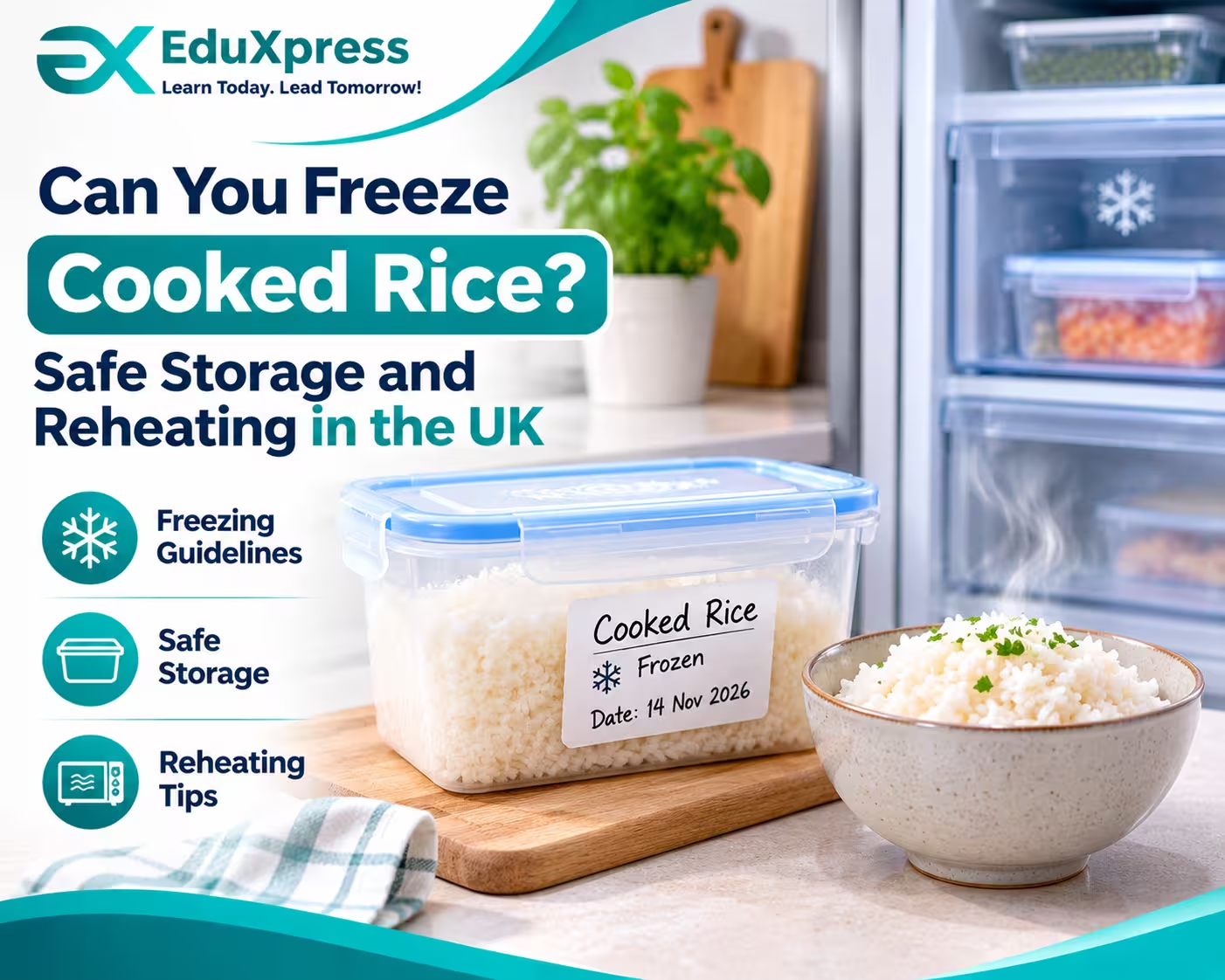
Yes, you can freeze cooked rice—but the key safety decision happens before it reaches the freezer. Rice must be cooled rapidly, portioned hygienically and frozen promptly. Freezing will preserve rice that has been handled properly; it will not rescue rice that was left warm for too long.
This UK guide takes you from the cooking pot to the plate with practical examples, a “freeze or discard” decision table, storage labels and reheating guidance. It also explains why advice for rice is stricter than general leftover guidance, and why a normal smell does not prove that old rice is safe.
Can You Freeze Cooked Rice Safely?
Cooked white, brown, basmati and jasmine rice can generally be frozen. The important conditions are safe handling and rapid cooling, not the name of the variety. A useful rule is to make the freezing decision while cooking: if you know half the batch is for later, prepare clean containers before the rice finishes.
A freezer around −18°C slows microbial activity and protects quality, but it does not sterilise food. If rice has already spent an extended period at room temperature, putting it in the freezer cannot reverse that history.
For rice that has already been refrigerated, the NHS recommends eating it within 24 hours. Freezing as soon as it is cool is the clearest plan for leftovers intended for a later date. Do not make a habit of keeping rice in the fridge for days and then freezing it as a way to reset the clock.
Why Can Leftover Rice Cause Food Poisoning?
Uncooked rice can contain Bacillus cereus spores. Cooking can kill many bacteria but may not destroy these spores. If cooked rice sits at a temperature that permits bacterial growth, spores can germinate and bacteria may multiply. Some strains produce toxins that cause vomiting or diarrhoea.
The key distinction is between reheating food that was stored safely and reheating food that was stored badly. Thorough reheating helps kill susceptible bacteria, but it does not reliably remove heat-stable toxins that have already formed. Even rice that is reheated until piping hot can therefore be unsafe if its earlier handling was poor.
To understand why cooling temperatures matter, see our Food Safety Temperature Danger Zone guide.
Foodborne illness can involve nausea, stomach cramps, vomiting or diarrhoea. Symptoms alone cannot confirm which organism caused them. If someone cannot keep fluids down, develops dehydration, has bloody diarrhoea or becomes seriously unwell, follow the NHS advice on seeking care. This matters especially for young children, older adults and people with additional health risks.
How to Cool Cooked Rice Within One Hour
The FSA recommends cooling rice as quickly as possible, ideally within one hour. In practice, the easiest mistake is leaving a deep pan of hot rice with its lid on while clearing the kitchen. Plan the cooling stage before the meal starts.
- Divide: Move the portion for freezing into several clean shallow containers rather than one deep tub.
- Release heat: Spread the rice in a thin layer, using utensils and surfaces that have been cleaned.
- Cool promptly: Stand the closed or protected container in cold water where appropriate, keeping water away from the food.
- Cover and freeze: Once cooled, pack securely and place in the freezer promptly, ideally within an hour of cooking.
You do not need to let rice sit uncovered for a long time to reach “room temperature”. Instead, aim for fast, controlled cooling while protecting it from contamination. Avoid leaving rice in a switched-off rice cooker, covered steamer or saucepan.
How to Freeze Cooked Rice Step by Step
The following home-kitchen workflow is designed for ordinary plain rice. Make sure hands, utensils and containers are clean, especially if the cooked rice will later be eaten without additional cooking ingredients.
| Stage | What to do | Why it matters |
|---|---|---|
| Before cooking | Set out several freezer-safe containers or bags. | Prevents delay after cooking. |
| As rice finishes | Set aside the portions that will not be eaten now. | Avoids repeatedly handling the whole batch. |
| Rapid cooling | Spread thinly in clean shallow dishes; use an appropriate cold-water bath. | Heat escapes faster from small portions. |
| Packing | Seal cooled rice in individual meal-sized portions; press freezer bags flat. | Limits waste and reduces thawing time. |
| Labelling | Write “cooked rice”, preparation date and portion count. | Makes the freezing history visible. |
| Freezing | Place in a freezer around −18°C promptly. | Keeps the batch in safe storage. |
Keep the rice away from drips from raw food during preparation; cooking it first does not eliminate the risk of later contamination.
How Long Does Cooked Rice Keep in the Freezer?
For household meal planning, three months is a useful freezer-storage target suggested by Love Food Hate Waste. This is primarily a quality and stock-management recommendation for properly frozen rice, not a point at which bacteria suddenly start growing inside an adequately working freezer.
Rice that has been sealed flat, labelled and used in rotation is usually more enjoyable than an unmarked bag rediscovered much later. Keep the freezer near −18°C and avoid repeatedly opening it or leaving frozen portions on the kitchen worktop.
If the freezer has broken down or a package has partially thawed, do not make the decision from the written date alone. Consider the actual temperatures reached, how long the food has been thawing and the applicable food safety guidance. If you cannot establish a safe history, discard rather than refreeze.
How to Defrost Frozen Rice Safely
The default method is to transfer a frozen portion into a covered container in the fridge. Allow enough time for the centre to thaw, keep it separate from raw ingredients and use it within 24 hours of becoming fully defrosted. The FSA also describes microwave defrosting immediately before cooking or reheating where the appliance and product instructions support that method.
Do not leave a bag of rice on the worktop all afternoon to thaw. The outside can become warm while the middle remains icy. That uneven temperature is a particular problem when rice has already been cooked and is waiting for its one permitted reheating.
For dinner planning, move tomorrow’s portion to the fridge the evening before. Defrosting is not a reason to hold the food for several additional days.
How to Reheat Frozen Cooked Rice Without Cold Spots
Rice that was cooled and frozen properly should be reheated only once, until steaming hot throughout. Stirring is important: microwave ovens can leave a hot outer ring and a cooler centre. A single fixed heating time is unreliable because portion size, microwave power and the starting temperature all vary.
| Method | Practical approach | Safety check |
|---|---|---|
| Microwave | Use a microwave-safe covered dish, heat in stages, stir and allow standing time as directed. | Check the centre and edges are steaming hot. |
| Hob | Heat in a suitable pan, stirring frequently; use a small amount of water for texture if needed. | No cool patches should remain. |
| With a freshly cooked dish | Only add previously frozen rice when the full dish can be heated safely and served straight away. | Avoid repeated cycles of cooling and reheating. |
The NHS advises thorough reheating, giving 70°C for two minutes, or an equivalent safe heat treatment, as one way to establish that rice has been reheated properly. For everyday domestic cooking, ensure it is visibly steaming hot through the whole portion. Eat immediately rather than returning warmed rice to the fridge for another meal.
Can You Freeze Basmati, Brown, Jasmine and Other Rice?
The safety method stays essentially the same across rice varieties; differences are mostly in texture. White long-grain rice often separates easily after reheating, while short-grain or risotto rice tends to become softer or stickier. Brown rice may need more moisture for a pleasant texture because of its structure.
| Rice or dish | Freezer result to expect | Best practical use |
|---|---|---|
| Basmati or long-grain | Often remains relatively separate if cooled and packed promptly. | Quick curries and lunch portions. |
| Jasmine rice | May clump slightly after freezing. | Stir thoroughly during reheating. |
| Brown rice | Can taste a little firm or dry. | Reheat with attention to even heating and moisture. |
| Sticky or sushi-style rice | Texture may change noticeably. | Better in a hot dish than as precision-shaped sushi. |
| Risotto | Can become softer as starch absorbs moisture. | Best judged on texture, not safety shortcuts. |
An original way to reduce waste is to label each portion with its intended use: “curry side”, “soup addition” or “fried rice base”. That helps a household choose the right portion without thawing more than needed. Just remember that any later cooking with the rice still counts towards the reheating limit.
Can You Freeze Fried Rice, Risotto or Rice With Meat?
Cooked rice within a mixed dish can be frozen if the entire dish was prepared hygienically, cooled rapidly and frozen promptly. The extra ingredients create additional considerations. Chicken, prawns, egg, vegetables and sauces may have different cooking, cooling or allergen requirements, so use the safest handling method for the whole meal.
For egg-fried rice, ask whether it was freshly cooked and then cooled or made from rice already cooked, chilled and reheated. If it has already been reheated once, do not treat freezing as permission to heat it again. For risotto, freeze promptly in small containers and expect some loss of its original creamy texture.
Making a chicken-and-rice meal? Our guide to reheating chicken safely explains the separate storage and reheating checks for poultry.
A useful batch-cooking habit is to freeze plain cooked rice separately from sauces or cooked proteins when practical. You can then select exactly the quantities needed for a single meal and heat the components appropriately.
Is It Safe to Freeze Leftover Takeaway Rice?
Takeaway rice needs more caution because the customer may not know whether the restaurant cooked it freshly or prepared and reheated it earlier. The FSA advises extra care and notes that some food businesses pre-cook rice and reheat it before serving.
If you cannot establish the cooling and reheating history, do not assume the leftovers are suitable for freezing and another reheating. A hot delivered meal may have travelled for some time, and an opened carton left out during dinner adds more uncertainty. The most reliable choice is to order the amount you expect to eat or ask the food business about its handling process.
Likewise, it is impossible to tell from the smell or appearance alone whether bacterial toxins may have developed.
Freeze, Eat Now or Discard? A Rice Safety Decision Table
Use this original scenario table as a household decision aid. The purpose is to connect real situations to the food’s handling history, rather than to judge safety by colour, smell or texture.
| Your situation | Best decision | Reason |
|---|---|---|
| Just cooked; small portions cooled quickly | Freeze promptly. | Clear, controlled cooling history. |
| Chilled promptly; still within 24 hours | Eat within the period; freeze earlier next time. | The fridge does not extend rice storage indefinitely. |
| Sat on the worktop overnight | Discard. | Unsafe time at room temperature. |
| Has already been reheated once | Do not chill for a second reheating. | Rice should be reheated only once. |
| Freezer bag has no date or reliable history | Discard if safe handling cannot be confirmed. | Uncertainty cannot be fixed by heating. |
| Takeaway rice with unknown earlier reheating | Avoid freezing for another reheating. | May already have undergone a reheat cycle. |
Notice that a batch is not automatically safe because the freezer is cold. The decisive question is what happened before freezing. A simple dated label and a consistent kitchen routine make this judgement far easier.
How to Batch-Cook Rice for Lunches Without Wasting Food
Suppose you cook six portions for a family meal but need only two today. Before cooking, set out four clean freezer containers. As soon as cooking finishes, serve the two immediate portions and move the other four into shallow dishes for rapid cooling. Label them with the cooking date, freezing date, portion size and the fact that they have not yet been reheated.
That workflow is safer and more convenient than leaving the full pot on the cooker for guests to help themselves from later. Individual portions minimise waste, keep the freezer organised and reduce the temptation to heat an entire large batch and save it again.
If you cook rice every week, keep a first-in, first-out section in the freezer. Place newer packs behind older ones, and check the fridge and freezer temperatures periodically. This gives food waste reduction a reliable routine rather than relying on memory.
What Changes When a Café or Caterer Freezes Cooked Rice?
Food businesses need documented controls suited to their processes and hazards, rather than relying on domestic kitchen habits. The Food Standards Agency’s Safer Food, Better Business rice method advises chilling cooked rice quickly, generally within one hour, keeping it refrigerated and using it within 24 hours when not frozen.
A catering operation preparing large batches may need dedicated shallow trays, suitable chilling capacity, temperature checks, staff training and records of corrective action. Its HACCP-based food safety system should explain what to do if rice misses a cooling target or equipment fails. Staff should not invent a new shelf life from personal judgement.
For a practical internal review, managers can document the cooking finish time, start and finish of cooling, storage temperature, label details and intended service. Consult the FSA’s business guidance and local environmental health advice for the operation’s specific controls.
Common Rice Freezing Mistakes That Are Easy to Avoid
- Keeping rice in a lidded deep pan: use shallow portions to release heat faster.
- Waiting until tomorrow to decide about freezing: plan portions when cooking.
- Assuming the freezer kills every germ: freezing slows growth but does not sterilise food.
- Reheating a second time: serve only what you intend to eat.
- Trusting a pleasant smell: toxins may be present without obvious warning signs.
- Using an enormous freezer tub: smaller portions simplify thawing and reheating.
- Ignoring mixed-dish ingredients: rice with egg, fish or meat needs safe handling as a complete meal.
A visible kitchen note—“cool fast, freeze fast, reheat once”—can make the routine easier for everyone in a shared household.
Frequently Asked Questions About Freezing Cooked Rice
Final Checklist: Safe Rice From Pan to Plate
If you remember one thing, make it this: the freezer protects rice that was cooled safely; it cannot repair a risky earlier storage history. Decide how much rice to freeze as you cook, use shallow portions, cool rapidly and label clearly. Keep the fridge at 0–5°C and the freezer near −18°C.
When it is time to eat, defrost in the fridge, heat thoroughly once and serve immediately. If you do not know whether the rice was cooled promptly, left out overnight or previously reheated, discard it. These simple habits make it easier to save food and reduce avoidable food-poisoning risks.
Official Sources and Further Reading
- Food Standards Agency – Home Food Fact Checker: rice and reheating
- NHS – Starchy foods and carbohydrates: storing and reheating rice
- Food Standards Agency – How to chill, freeze and defrost food safely
- Love Food Hate Waste – Can I freeze rice?
- Food Standards Agency – Food hygiene for your business
- NHS – Food poisoning symptoms and when to seek help