Environmental Impact Assessment Basics
By 2026, over 70% of UK businesses will face increasing environmental regulations requiring clear impact assessments. Left unaddressed, that gap limits professional credibility, career progression, and the ability to perform at the level the role actually demands. The Environmental Impact Assessment Basics course from EduXpress is a fully CPD-accredited, online programme designed for UK learners ready to build structured expertise, meet sector standards, and advance with the kind of grounded, practical knowledge that employers value.
This course covers key topics such as legal frameworks, assessment methodologies, impact analysis, and stakeholder engagement. It supports building your knowledge, skills, and confidence in environmental impact assessment, helping you apply this understanding effectively in your professional role.
Studying online with EduXpress gives you the flexibility to learn at your own pace. You will have tutor support throughout the week and access to assessments that validate your learning. On successful completion, you can obtain a CPD-accredited certificate to add to your professional portfolio.
Learning Outcomes of Environmental Impact Assessment Basics
Upon completion of this Environmental Impact Assessment Basics from EduXpress, learners will be able to:
Why Choose Our Environmental Impact Assessment Basics Course?
Who is This Environmental Impact Assessment Basics For?
Certification: Environmental Impact Assessment Basics
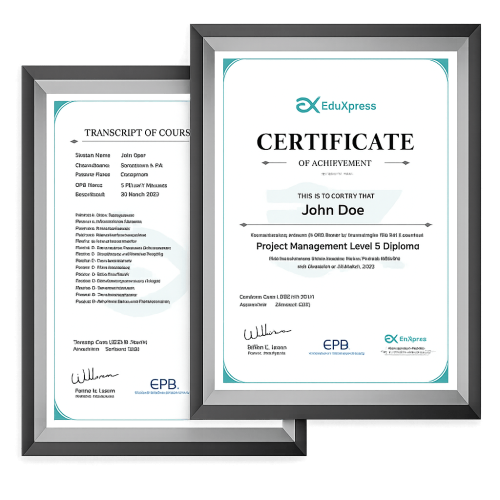
Upon successful completion of the final assessment, you will get a chance to order a CPD-accredited certificate confirming your achievement. This certificate is available in PDF as well as hard copy format, making it suitable for adding to your professional portfolio or CV. This certification supports your ongoing professional development but does not guarantee employment or entitlement to regulated work.
Career Path
Frequently asked questions
Everything you need to know about the Environmental Impact Assessment Basics
1. What is an Environmental Impact Assessment (EIA)?
An Environmental Impact Assessment (EIA) is a systematic process used to evaluate the potential environmental effects of a proposed project or development. It helps identify, predict, and mitigate negative impacts on air, water, soil, wildlife, and communities, ensuring sustainable decision-making and regulatory compliance in environmental management practices.
2. Why is Environmental Impact Assessment important?
Environmental Impact Assessment is important because it promotes sustainable development by preventing environmental harm before project implementation. It ensures legal compliance, protects natural resources, and enhances public participation. EIA supports informed decision-making, reducing risks to ecosystems and human health, making it a critical tool for environmentally responsible project planning.
3. Who conducts an Environmental Impact Assessment?
An Environmental Impact Assessment is conducted by qualified environmental consultants or interdisciplinary teams with expertise in ecology, geology, social sciences, and engineering. These professionals gather data, analyze potential impacts, and prepare comprehensive reports to guide stakeholders and regulatory agencies in evaluating project sustainability and environmental compliance.
4. What are the main steps in the Environmental Impact Assessment process?
The main steps in the Environmental Impact Assessment process include screening, scoping, baseline data collection, impact prediction, mitigation planning, public consultation, and reporting. Each stage ensures thorough evaluation of environmental risks, engagement with stakeholders, and development of strategies to minimize adverse effects, supporting transparent and effective project approvals.
5. How does public participation influence Environmental Impact Assessment?
Public participation in Environmental Impact Assessment is essential as it incorporates community knowledge, concerns, and values into the decision-making process. Engaging stakeholders enhances transparency, improves project design, and fosters social acceptance. Effective public involvement ensures that environmental and social impacts are comprehensively addressed, leading to more sustainable and equitable outcomes.
6. What types of projects require an Environmental Impact Assessment?
Projects that typically require an Environmental Impact Assessment include large infrastructure developments, industrial facilities, mining operations, transportation networks, and urban expansion. These projects have the potential to significantly affect natural resources, ecosystems, and local communities, making EIA a mandatory step for environmental protection and regulatory approval in many regions.
7. How long does the Environmental Impact Assessment process take?
The Environmental Impact Assessment process duration varies depending on project complexity, regulatory requirements, and stakeholder involvement. It can range from a few months to over a year. Early planning, thorough data collection, and proactive communication with authorities help streamline the timeline, ensuring timely compliance and effective environmental management.
8. What is the role of mitigation measures in Environmental Impact Assessment?
Mitigation measures in Environmental Impact Assessment aim to avoid, reduce, or compensate for negative environmental impacts identified during the assessment. These strategies include design modifications, pollution controls, habitat restoration, and monitoring programs. Effective mitigation ensures that projects proceed sustainably while minimizing harm to ecosystems and communities.
9. Can Environmental Impact Assessment prevent environmental damage entirely?
Environmental Impact Assessment cannot guarantee the complete prevention of environmental damage but significantly reduces risks by identifying potential impacts early. Through informed planning, mitigation, and monitoring, EIA helps manage and minimize adverse effects, promoting sustainable development and environmental stewardship in project implementation.
10. How is Environmental Impact Assessment regulated in different countries?
Environmental Impact Assessment regulations vary by country but generally follow international guidelines and national environmental laws. Many regions require mandatory EIA for specific projects, with standardized procedures for assessment, public consultation, and approval. Understanding local regulations and compliance requirements is crucial for successful EIA implementation worldwide.
Curriculum
- 3 Sections
- 0 Lessons
- Lifetime
- Environmental Impact Assessment Basics0 Items
- Order Your Certificate!0 Items
- Leave a Review!0 Items