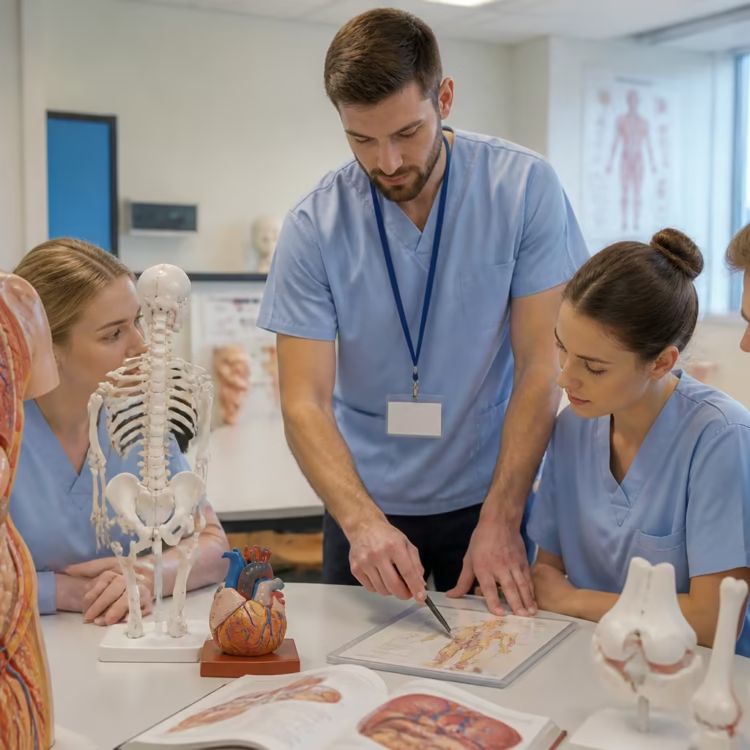
England’s adult social care sector recorded around 96,000 vacancies on a typical day in 2025/26, highlighting the continuing demand for capable, attentive care staff. Observation Skills for Carers helps learners recognise meaningful changes, strengthen professional awareness and support safer decision-making across care-related roles. Built for continuing professional development (CPD), the supplied course information does not identify an external accrediting body.
Across seven modules, you will explore observation fundamentals, child-focused monitoring, planning and documentation, observational approaches, social work contexts, basic health awareness and clinical management observation. The programme connects careful noticing with clearer recording and an appropriate professional response.
If you want greater confidence in spotting concerns, understanding behaviour and communicating findings accurately, this course provides focused learning for your development. Enrol today and build capabilities that can support more responsive, informed and person-centred care.
Key Learning Outcomes of Observation Skills for Carers course
By completing this Observation Skills for Carers course, learners should be able to:
Why Choose Observation Skills for Carers Course From EduXpress?
Who is This Observation Skills for Carers Course For?
Certification: Observation Skills for Carers Course
Upon successful completion of the final assessment, you will get a chance to order a CPD-accredited certificate confirming your achievement. This certificate is available in PDF as well as hard copy format, which will be ideal for adding to your professional portfolio or CV.

Requirements
No formal qualification is required to enrol in this Observation Skills for Carers course. All you need is a smart device, such as a smartphone, tablet or computer, and a stable internet connection to access the course online and begin learning at your own pace.
Career Path: Observation Skills for Carers
Potential career directions include:
Curriculum Description: Observation Skills for Carers Course
Build a foundation in purposeful observation and understand how attentive monitoring supports informed care. Explore how noticing relevant physical, behavioural and environmental changes can contribute to clearer professional communication.
Develop awareness of how children can be observed during everyday activities and interactions. Consider how attentive monitoring can help practitioners understand interests, abilities, behaviour and emerging developmental needs. Observation forms an important part of ongoing early years assessment in England.
Learn how to organise observation activity and record findings in a concise, objective manner. Explore the value of accurate documentation when reviewing development, planning appropriate support and communicating information with relevant people. Early years guidance recommends precise records that avoid unsupported assumptions.
Explore different ways of gathering information through observation and consider how the selected approach can influence what is noticed and recorded. Develop greater awareness of choosing a suitable method according to the purpose, setting and individual being observed.
Examine observation within broader social care and social work contexts. Consider how information about behaviour, circumstances, communication and environmental factors can contribute to assessments, professional discussions and support planning.
Develop awareness of physical and behavioural changes that may indicate a person's needs have altered. Learn why accurate noticing, recording and reporting are important when supporting continuity of care without working beyond your professional responsibilities.
Explore how observation can contribute to monitoring, communication and informed management within clinical or care-related environments. Consider the importance of responding appropriately to relevant changes and sharing information with suitably qualified professionals when required.
FAQs: Observation Skills for Carers Course
Observation is the process of carefully noticing relevant changes in a person's physical condition, behaviour, communication, emotional presentation or surroundings. Effective monitoring helps care teams understand changing needs and maintain person-centred support. CQC guidance requires staff involved in care to remain updated when a person's needs or preferences change.
Carers often spend substantial time interacting directly with the people they support. Careful attention can help identify changes that should be documented, discussed or escalated, while clear records allow other professionals to understand what has occurred and respond appropriately.
Observation helps early years practitioners understand what children know, can do and may need support with. In England, ongoing observation contributes to early years assessment, while professional judgement should consider development across different situations rather than relying on a single isolated event.
A useful record should be concise, factual and specific. Practitioners should describe what was actually seen or heard rather than adding assumptions about why something happened. Recording dates and relevant context can also make information easier to review later.
Methods can vary according to the purpose and setting. Childcare observation, for example, may include planned or spontaneous written notes, comments from parents or colleagues, children's contributions, work samples and other appropriate records of learning.
Yes. Observation can help professionals recognise changing needs, preferences or circumstances so support can be reviewed accordingly. CQC guidance states that care plans should reflect individual needs and that staff providing care should remain informed about relevant changes.
Curriculum
- 3 Sections
- 7 Lessons
- Lifetime
- Observation Skills for Carers7 Items
- 1.1Module 01: Introduction to Observation Skill
- 1.2Module 02: Child Observation
- 1.3Module 03: Child Observation Plan and Documentation
- 1.4Module 04: Observational Methods and Studies
- 1.5Module 05: Social Policy and Social Work Observation
- 1.6Module 06: Basic Health Observation
- 1.7Module 07: Clinical Management Observation
- Order Your Certificate!0 Items
- Leave a Review!0 Items