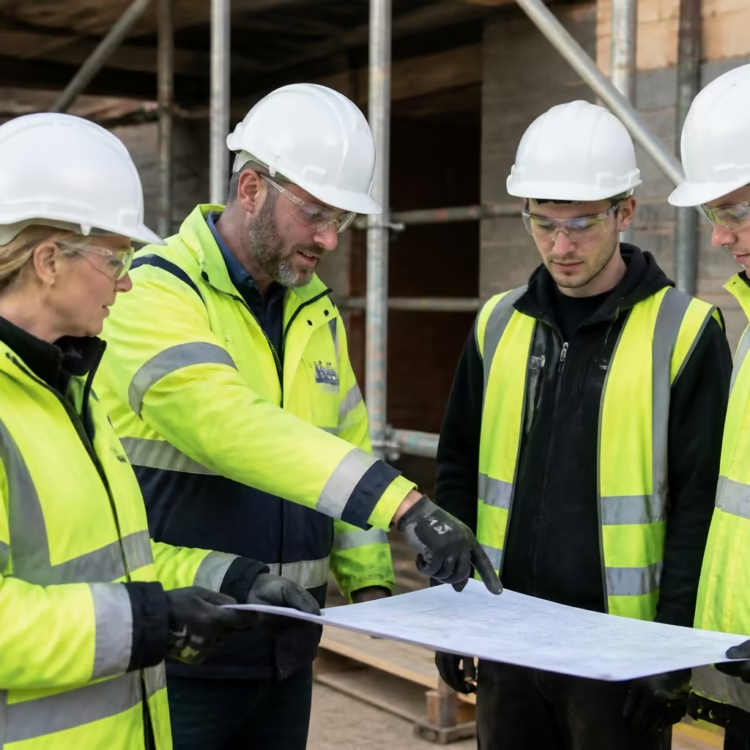



A successful construction project isn’t measured only by the finished building. It depends on decisions made throughout the project about costs, materials, people, quality and safety.
Construction Site Management, Supervision and Safety Diploma explores the principles involved in planning, organising and supervising construction projects. You’ll develop an understanding of site operations, budgeting, materials, structural considerations, health and safety, procurement and the responsibilities involved in managing construction work.
Construction management brings together technical knowledge, commercial planning and coordination between different teams. Projects often involve multiple contractors, suppliers and specialist professionals working towards agreed deadlines and quality standards. Keeping work organised requires an understanding of project schedules, financial constraints, contractual responsibilities and the risks associated with site activities.
The course begins with construction management fundamentals and the organisation of construction projects. You’ll examine cost estimation, budgeting and material management before exploring structural design principles, building services and the equipment commonly associated with construction work.
Safety and legal responsibilities form an important part of the curriculum. You’ll study construction health and safety, the legal aspects of building projects and how relevant UK requirements influence site planning and supervision. These include the Construction (Design and Management) Regulations 2015, commonly known as CDM 2015, which establish responsibilities for managing health and safety throughout construction projects.
Later modules examine construction contracts, procurement, quality management and preliminary site investigation. You’ll also explore how construction claims and disputes arise, how risks are assessed and managed, and how project management software can assist with planning, monitoring and communication.
By connecting these topics, the course helps you understand how construction projects move from initial planning to organised site delivery. Whether you’re building foundational knowledge or strengthening your understanding of construction supervision, you’ll explore the practical decisions that influence project performance, compliance and safe working environments.
What You’ll Learn to Put Into Action
- Understand the principles and responsibilities of construction site management.
- Explain how construction projects are organised, planned and coordinated.
- Recognise the importance of scheduling, resources and site supervision.
- Understand construction cost estimation, budgeting and financial monitoring.
- Explore materials procurement, storage, inventory and resource management.
- Identify fundamental structural design and analysis considerations.
- Recognise common building services, construction equipment and site requirements.
- Understand construction health and safety responsibilities and CDM 2015 principles.
- Explore relevant construction laws, contractual duties and regulatory requirements.
- Understand procurement methods, tendering and construction contract principles.
- Recognise quality management procedures and inspection requirements.
- Explore preliminary site investigations and construction feasibility considerations.
- Understand common construction claims, disputes and resolution approaches.
- Identify project risks and principles for assessing and managing them.
- Explore how construction project management software supports coordination and reporting.
Who Is This Course For?
- Aspiring construction site managers seeking foundational management knowledge.
- Construction supervisors interested in project organisation and site safety.
- Site operatives preparing for future supervisory responsibilities.
- Construction project coordinators and administrative support staff.
- Building and civil engineering students exploring construction management.
- Quantity surveying and estimating learners interested in project costs.
- Property development professionals seeking construction project knowledge.
- Construction workers interested in quality, procurement and risk management.
- Existing industry professionals seeking supplementary continuing professional development.
Career Path
Construction management knowledge is relevant across building contractors, civil engineering businesses, infrastructure projects, commercial developments and property construction. The National Careers Service identifies opportunities in site supervision, construction management, cost estimation and quantity surveying. These roles involve coordinating resources, controlling costs, monitoring standards and helping construction work progress safely and efficiently.
- Construction Manager / Site Manager: £27,000–£65,000 per year
- Construction Site Supervisor: £30,000–£60,000 per year
- Construction Estimator: £22,000–£40,000 per year
- Quantity Surveyor: £26,000–£70,000 per year
- Building Surveyor: £28,000–£65,000 per year
Why Choose Our Construction Site Management, Supervision and Safety Diploma?
- Introduces construction management and professional site responsibilities.
- Explores construction project organisation, scheduling and coordination.
- Develops knowledge of cost estimation, budgeting and financial planning.
- Covers material management and construction resource requirements.
- Introduces structural design, analysis and building services.
- Explores construction health and safety and CDM 2015 principles.
- Develops awareness of construction laws and regulatory obligations.
- Covers contracts, tendering and procurement procedures.
- Introduces construction quality control and inspection concepts.
- Explores preliminary site investigation and assessment.
- Examines construction claims, disputes and risk management.
- Introduces construction project management software.
- Provides 100% online, self-paced learning with lifetime access.
- Includes CPD certification and weekday tutor support.
What the Course Covers
Module 1: Introduction to Construction Management
This module introduces construction management and the responsibilities involved in delivering building projects. You’ll explore the construction project lifecycle, management objectives and the relationships between clients, contractors and professional teams. The lessons examine planning, coordination, supervision and performance monitoring, helping you understand how construction managers balance project costs, schedules, quality requirements and workplace safety throughout development.
Module 2: Organisation of Construction Projects
Construction projects depend on clearly defined responsibilities and effective coordination between different participants. This module explores project organisation, team structures, scheduling and resource allocation. You’ll examine communication between clients, designers, contractors and subcontractors, alongside the importance of planning work sequences. The lessons highlight how organised processes can reduce delays, prevent misunderstandings and support more consistent project delivery.
Module 3: Cost Estimation and Budgeting
Accurate budgeting helps construction teams understand financial requirements before work begins. This module introduces cost estimation methods, project budgets and the main factors influencing construction expenditure. You’ll explore labour, materials, equipment and contingency considerations, alongside basic cost monitoring. The lessons examine how financial planning supports project decisions and why unexpected changes must be assessed against agreed budgets.
Module 4: Material Management
Materials must arrive at the right time, meet specifications and be stored appropriately to support construction activities. This module explores material planning, procurement coordination, inventory management and site storage principles. You’ll consider supply delays, waste reduction and the importance of accurate records. The lessons show how effective material management contributes to cost control, productivity and construction quality.
Module 5: Structural Design and Analysis
Understanding structural principles helps construction managers appreciate how buildings support loads and remain stable. This module introduces structural components, design considerations and basic analysis concepts. You’ll explore the functions of foundations, beams, columns and other supporting elements. The lessons also highlight the importance of following approved designs, technical specifications and guidance from suitably qualified structural engineering professionals.
Module 6: Building Services and Equipment
Modern buildings depend on mechanical, electrical and other services operating alongside their structural systems. This module introduces common building services, construction equipment and installation considerations. You’ll explore how heating, ventilation, electrical distribution and water services interact with construction activities. The lessons examine coordination, equipment selection and the importance of appropriate technical expertise when planning installation work.
Module 7: Construction Safety and Health
Construction work presents hazards that require careful planning, competent supervision and effective control measures. This module explores site health and safety responsibilities, hazard identification and risk prevention. You’ll consider working at height, moving equipment, personal protective equipment and workplace welfare. The lessons introduce safety communication, site procedures and the importance of following relevant legal requirements.
Module 8: Legal Aspects of Construction
Construction projects operate within legal and regulatory frameworks that influence planning, safety and contractual responsibilities. This module introduces relevant legal principles, including construction health and safety duties, building regulations and the CDM Regulations 2015. You’ll examine the responsibilities of project participants and the importance of documentation, compliance and understanding how legal requirements affect construction decisions.
Module 9: Construction Contracts and Procurement
Contracts and procurement arrangements establish how construction work is purchased, delivered and managed. This module introduces tendering, contractor selection, contractual terms and procurement processes. You’ll explore responsibilities relating to project scope, payment, timescales and changes in work. The lessons highlight the importance of clear agreements, accurate records and effective communication between clients, contractors and suppliers.
Module 10: Construction Quality Management
Quality management helps ensure construction work meets agreed specifications, standards and client expectations. This module explores quality planning, inspection, monitoring and identifying defective work. You’ll consider documentation, corrective actions and the roles of different project participants in maintaining standards. The lessons emphasise consistent procedures and the importance of addressing quality concerns before they affect project outcomes.
Module 11: Preliminary Site Investigation and Assessment
Understanding site conditions is important before construction activities begin. This module introduces preliminary investigations, site assessments and the identification of potential constraints. You’ll explore considerations involving ground conditions, access, existing structures, utilities and environmental factors. The lessons explain how early information can influence design, scheduling, costs and safety planning, while highlighting the role of specialist surveys.
Module 12: Construction Claims and Disputes Resolution
Construction disagreements may arise from delays, payment issues, variations or differing interpretations of contractual obligations. This module introduces common claims, dispute causes and methods of resolution. You’ll explore the importance of maintaining records, understanding contract procedures and communicating concerns promptly. The lessons consider negotiation, mediation, adjudication and the value of seeking appropriate professional advice when disputes develop.
Module 13: Construction Risk Management
Construction projects involve financial, operational, technical and safety risks that can affect successful delivery. This module introduces risk identification, assessment, prioritisation and control planning. You’ll examine potential delays, resource shortages, design changes and other project uncertainties. The lessons demonstrate how maintaining risk records, reviewing controls and communicating emerging issues support more informed management decisions throughout construction.
Module 14: Construction Project Management Software
Digital tools can help construction teams organise schedules, track resources and communicate project information. This module introduces the purposes and common features of construction project management software. You’ll explore planning, task allocation, progress monitoring and reporting functions. The lessons consider how accurate data, consistent updates and appropriate software selection can support coordination and informed construction management decisions.
Accreditation & Recognition
Construction Site Management, Supervision and Safety Diploma is designed to support continuing professional development in construction project organisation, site supervision, safety awareness, procurement, quality management and construction risk.
The curriculum reflects key knowledge areas associated with construction management, including cost estimation, material management, legal responsibilities and the coordination of construction projects. It also introduces the health and safety principles reflected in the Construction (Design and Management) Regulations 2015.
- Structured diploma learning in construction site management and supervision.
- Covers construction planning, project organisation and coordination.
- Develops knowledge of cost estimation and budgeting.
- Introduces material management and resource planning.
- Explores structural principles and building services.
- Covers construction health and safety responsibilities.
- Introduces CDM 2015 and relevant construction legislation.
- Explores contracts, tendering and procurement processes.
- Develops awareness of quality management and site assessment.
- Introduces construction claims and dispute resolution.
- Explores risk management and project management software.
- Provides 100% online, self-paced learning with lifetime access.
- Includes online assessment and an optional reflective development portfolio.
Assessment & Certification: Construction Site Management, Supervision and Safety Diploma
Your understanding is assessed through an online multiple-choice assessment covering construction management, project organisation, cost estimation, materials, structural principles, building services, construction safety, legal responsibilities, contracts, procurement, quality management, site investigations, disputes, risk management and project software.
The assessment focuses on theoretical understanding and appropriate construction management decisions. Questions may involve identifying suitable project planning methods, recognising budget considerations, understanding contractor responsibilities, selecting risk control approaches or determining how project records and quality procedures support construction activities.
An optional reflective development portfolio can extend your learning through construction project scenarios, budget planning exercises, site safety case studies, material management examples, quality checklists, risk registers and project scheduling activities.
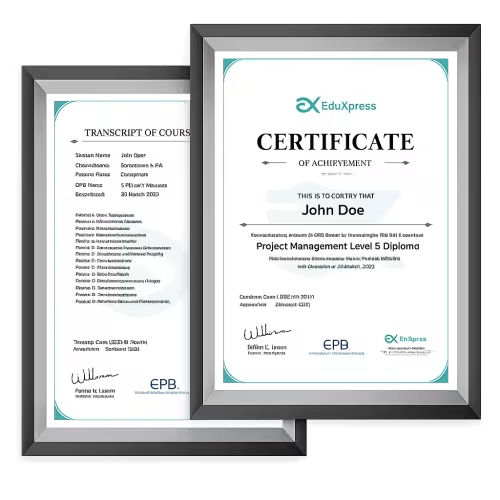
After successful completion, you can order a digital course certificate to record your achievement and professional development in construction site management, supervision and safety. An optional printed certificate is also available for £24.99.
Frequently Asked Questions
What is construction site management?
What does a construction site manager do?
How do I become a construction site manager in the UK?
What qualifications do you need to be a site manager?
Can I become a construction site manager without a degree?
How much does a construction site manager earn in the UK?
What is the difference between a site manager and site supervisor?
What is a construction site supervisor responsible for?
What is SMSTS training in construction?
What is the difference between SMSTS and SSSTS?
Is this construction diploma the same as an SMSTS course?
What are the CDM Regulations 2015?
Who is responsible for health and safety on a construction site?
What is the role of a principal contractor under CDM 2015?
What is a construction phase plan?
What are the main hazards on a construction site?
What is a construction risk assessment?
What does RAMS mean in construction?
What is cost estimation in construction?
How do construction managers control project costs?
What is material management in construction?
What is procurement in construction management?
What are the main types of construction contracts?
What is quality control in construction?
Why is site investigation important before construction?
How are construction disputes resolved in the UK?
Which software is used in construction project management?
Can I study construction site management online?
Is a construction management diploma worth doing?
Do you need a CSCS card to work on a construction site?
Will I receive a certificate after completing the course?
Why Study Construction Site Management, Supervision and Safety Diploma?
Construction projects rarely progress exactly as first planned. A delivery might arrive late, a site inspection may identify unexpected conditions or a design change could affect several contractors at once. Managing these situations requires an understanding of project planning, communication, resources and the relationships between time, cost, quality and safety.
Construction Site Management, Supervision and Safety Diploma explores these responsibilities through a structured introduction to construction project management. Early modules focus on project organisation, cost estimation and material management. These areas matter because inefficient scheduling, inaccurate budgets or unavailable materials can affect the entire construction programme.
Technical understanding is also important. Construction managers frequently work alongside architects, structural engineers, building services specialists and trade contractors. While they may not undertake specialist design calculations themselves, understanding structural principles, equipment requirements and the coordination of building services helps them communicate more effectively with technical teams.
Health and safety is central to construction site management. Construction activities may involve working at height, moving machinery, excavations, electrical installations and other significant hazards. The course introduces relevant safety principles and the responsibilities established under CDM 2015, helping learners understand how planning, supervision and communication contribute to controlling risks.
Construction projects also depend on clear contracts, suitable procurement arrangements and consistent quality standards. Understanding how responsibilities are allocated, materials and services are purchased, and construction work is checked against specifications can help explain why commercial and technical management must work together.
Later topics address preliminary site investigation, claims, disputes and project risk management. Problems are not always avoidable, but early identification, clear records and appropriate escalation can improve how they are managed. The course also introduces project management software and its role in scheduling, monitoring and coordinating information.
With flexible online learning and a curriculum covering management, supervision and safety, this diploma offers an opportunity to strengthen construction industry knowledge. It can support aspiring site managers, supervisors, construction workers and project support professionals who want a broader understanding of the decisions involved in organising and delivering construction work.
Curriculum
- 1 Section
- 14 Lessons
- Lifetime
- Construction Site Management, Supervision and Safety Diploma14 Items
- 1.1Module 1: Introduction to Construction Management
- 1.2Module 2: Organisation of Construction Projects
- 1.3Module 3: Cost Estimation and Budgeting
- 1.4Module 4: Material Management
- 1.5Module 5: Structural Design and Analysis
- 1.6Module 6: Building Services and Equipment
- 1.7Module 7: Construction Safety and Health
- 1.8Module 8: Legal Aspects of Construction
- 1.9Module 9: Construction Contracts and Procurement
- 1.10Module 10: Construction Quality Management
- 1.11Module 11: Preliminary Site Investigation and Assessment
- 1.12Module 12: Construction Claims and Disputes Resolution
- 1.13Module 13: Construction Risk Management
- 1.14Module 14: Construction Project Management Software