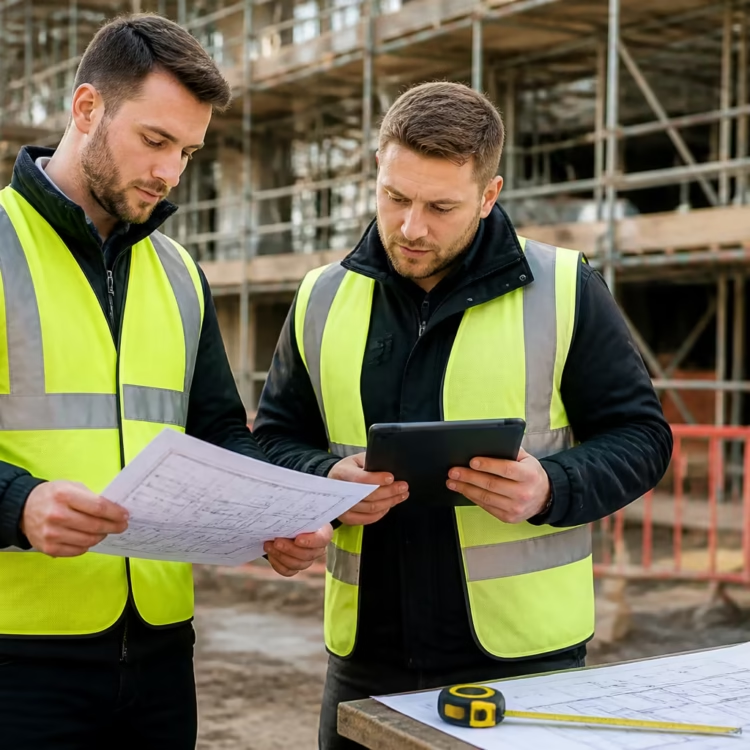



£28,000–£65,000 is the salary range currently listed by the National Careers Service for building surveyors, illustrating the progression available across the profession. Building Surveyor Training develops knowledge of inspections, construction, defects, legislation and reporting for learners exploring property careers. Designed for continuing professional development, it strengthens relevant subject understanding without presenting the course as a separate RICS qualification.
Across 16 modules, you will explore building law, procurement, BIM, technology, historic properties, foundations, walls, floors, roofs, chimneys, joinery, finishes, services, pathology, adaptation, work breakdown structures and professional documentation.
Want to understand properties more confidently and communicate findings clearly? This building surveyor course provides a structured route through essential surveying concepts, supporting further learning, career development and progression across the built environment.
Key Learning Outcomes of Building Surveyor Training
By completing this Hormone Health & Testosterone Certification (CPD Accredited)arners will be able to:
Why Choose Building Surveyor Training From EduXpress?
Who is This Building Surveyor Training For?
Certification: Building Surveyor Training
Upon successful completion of the final assessment, you will get a chance to order a CPD-accredited certificate confirming your achievement. This certificate is available in PDF as well as hard copy format, which will be ideal for adding to your professional portfolio or CV.

Requirements
No formal qualification is required to enrol in this Building Surveyor Training. All you need is a smart device, such as a smartphone, tablet or computer, and a stable internet connection to access the course online and begin learning at your own pace.
Career Path: Building Surveyor Training
Potential career directions include:
Curriculum Description: Building Surveyor Training
Discover the purpose of building surveying, the survey process and the key considerations involved when examining property condition and performance.
Understand fundamental legal concepts affecting buildings, ownership responsibilities and the professional activities carried out within surveying practice.
Explore procurement methods, contractual arrangements and administrative processes that support effective construction project delivery.
Learn how Building Information Modelling supports organised digital information, design coordination and effective built-asset management.
Study construction methods, structural components and materials to develop a stronger understanding of how buildings are designed and assembled.
Examine systematic building survey procedures and the considerations involved when assessing historic and heritage properties.
Explore methods for assessing foundations and wall structures while recognising signs that may require detailed investigation.
Understand inspection considerations relating to flooring systems, roof structures and chimney components within building surveys.
Develop awareness of timber elements, joinery features and signs of deterioration that may influence building condition.
Study internal and external finishes while considering defects, deterioration and maintenance requirements affecting properties.
Gain an introduction to evaluating visible aspects of building services that support functionality, operation and usability.
Explore how building defects develop, how symptoms can be interpreted and how underlying causes affect property performance.
Understand the principles behind building alterations and adaptations designed to meet changing functional and occupancy requirements.
Learn how complex project activities can be organised into structured components to improve planning and coordination.
Understand how professional building survey reports organise observations, findings and recommendations into a clear and logical format.
Consolidate awareness of legal matters relevant to surveying activities, professional responsibilities and property-related decision-making.
Frequently asked questions
Common questions about building surveying, qualifications, RICS pathways and professional opportunities
A building surveyor assesses building condition and provides advice relating to design, construction, repair, maintenance and alterations. Their work may also involve defect investigation, conservation projects, property assessments and preparing professional reports.
✓ Covers property condition, defects and maintenance considerationsNot necessarily. Different routes can lead into surveying careers, including university study, apprenticeships, relevant employment experience and graduate training schemes. Requirements depend on the role, employer and professional pathway being pursued.
✓ Multiple routes may support entry into surveying careersNo. Completing this course does not grant RICS qualification or professional status. RICS pathways, including Associate and Chartered qualifications, have separate education, experience and assessment requirements.
✓ Professional RICS routes have separate requirementsNot automatically. These search terms may refer to different qualifications, training programmes or surveying services. A Level 3 course title should not automatically be interpreted as RICS professional accreditation.
✓ Course levels and professional accreditation are different conceptsThe information included depends on the type of survey requested. Building surveys may cover areas such as property condition, visible defects, repair considerations, maintenance issues and observations about building elements.
✓ Survey depth depends on the inspection service providedBuilding surveying knowledge can support progression towards areas such as building surveying, building control, facilities management, construction management and other property-related disciplines.
Further professional development may also connect with specialist areas including historic buildings, project management, insurance assessments and property services.
✓ Supports exploration of property and construction careersCurriculum
- 3 Sections
- 16 Lessons
- Lifetime
- Building Surveyor Training16 Items
- 1.1Module 01: Building Survey: An Introduction
- 1.2Module 02: Building Law Principles
- 1.3Module 03: Building Procurement and Contract Administration
- 1.4Module 04: Building Information Modelling
- 1.5Module 06: The Procedure of Building Survey and Surveys of Historic Buildings
- 1.6Module 05: Building Technology
- 1.7Module 07: Beginning of the Survey: Foundation and In-depth Survey in Walls
- 1.8Module 08: Ground Level Investigation: Floors and Investigation Above the Ground: Roofs and Chimneys
- 1.9Module 09: Inspection of Joinery and Woodwork
- 1.10Module 10: Finishes and Surfaces of the Building
- 1.11Module 11: Services Inspection
- 1.12Module 12: Building Pathology
- 1.13Module 13: Building Adaption
- 1.14Module 14: Understanding Work Breakdown Structure
- 1.15Module 15: Report Writing
- 1.16Module 16: Legal Aspects
- Order Your Certificate!0 Items
- Leave a Review!0 Items