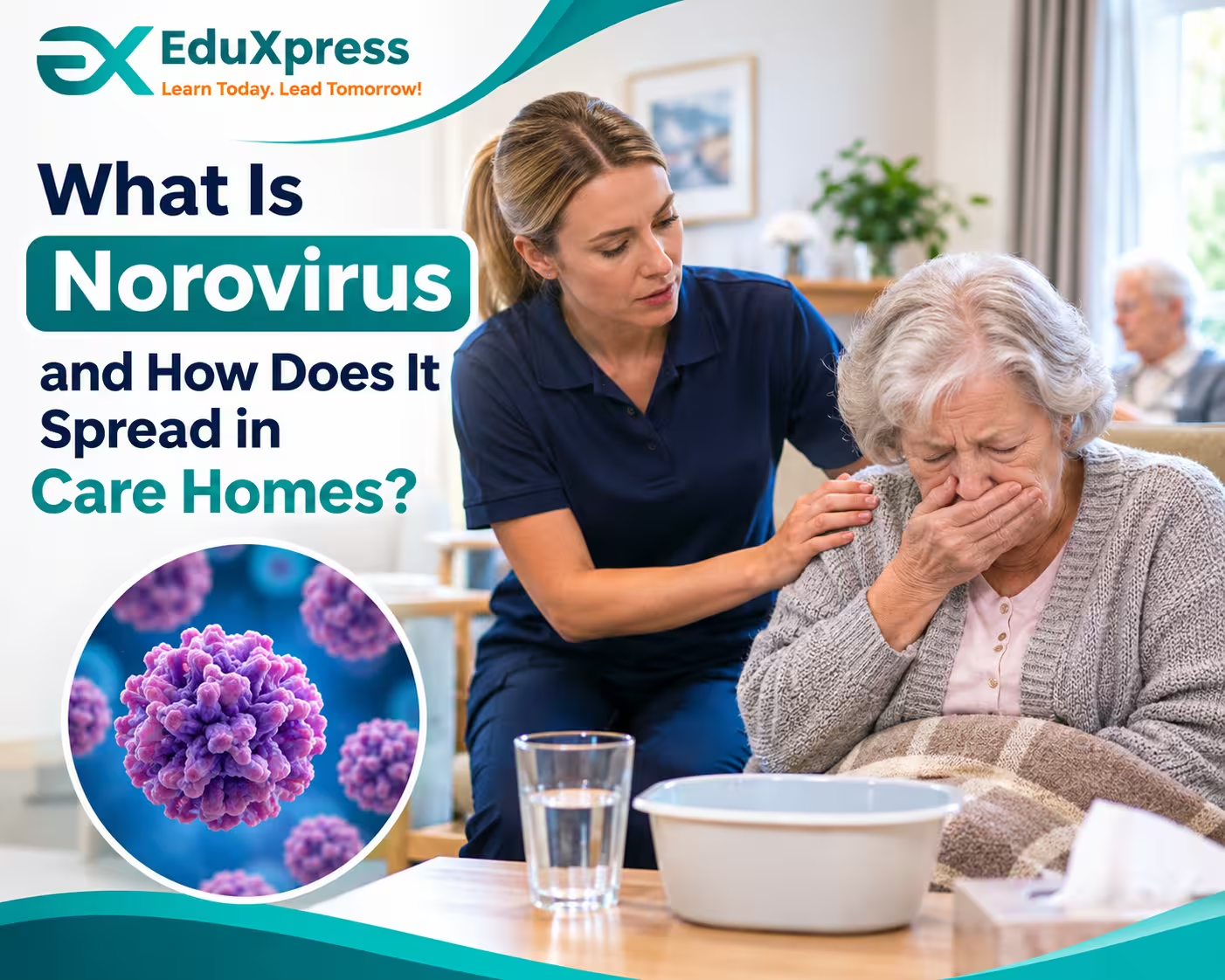
One resident becoming unwell can be the first warning of a wider care-home norovirus outbreak. Recognising symptoms early, protecting residents’ wellbeing and responding consistently across staff teams can limit avoidable spread.
Norovirus can move quickly through a care home because residents share facilities and staff provide close personal support. This England-focused guide explains how transmission occurs, how to recognise an outbreak, what to clean, when workers can return and how to maintain dignified care. It follows the UKHSA adult social care IPC guidance introduced on 28 October 2026.
What Is Norovirus?
Norovirus is a highly contagious virus that causes gastroenteritis, usually with sudden vomiting, diarrhoea and nausea. It is often called the winter vomiting bug, although infection can occur in any month. In most otherwise healthy people the illness is short, but the consequences can be more serious for frail older adults and residents with complex health needs.
The infection is not the same as influenza, and antibiotics do not treat a virus. People can acquire norovirus through close contact, contaminated food, or by transferring virus particles from a surface to their mouth. Care teams should therefore focus on prompt recognition, hydration, cleaning and preventing onward transmission rather than assuming a particular medicine will cure it.
How Does Norovirus Spread in Care Homes?
Norovirus spreads mainly when tiny traces of infected faeces or vomit reach another person’s mouth. A resident may be helped with toileting, a care worker may touch a contaminated door handle, or a food handler may prepare a meal before properly washing their hands. Infection can pass along these everyday routes without anyone noticing contamination.
| Route | Care-home example | Practical interruption |
|---|---|---|
| Person-to-person | Providing personal care to someone who is vomiting | Use appropriate precautions; clean hands thoroughly between care tasks |
| Hands and surfaces | Shared toilet flush, grab rail, call bell or commode | Clean high-touch items and avoid transferring contamination |
| Vomiting event | Droplets contaminate nearby floors, furniture and objects | Keep others away and arrange prompt trained clean-up |
| Food or drinks | An unwell kitchen worker handles ready-to-eat food | Exclude symptomatic handlers; reinforce food hygiene |
The virus may be passed on through contaminated hands, food, drink and equipment. Vomiting can also disperse droplets that settle onto nearby surfaces; this should not be confused with assuming that norovirus behaves exactly like an airborne respiratory virus. UKHSA describes the faecal–oral route as the main mechanism and highlights contamination after vomiting. Read UKHSA’s norovirus section.
Where Does Transmission Happen Most Often?
Care homes combine private bedrooms with shared services, making the route of contamination especially important. Residents may use the same lounge, dining room or adapted bathroom, while staff move between rooms for medicines, mobility assistance and personal care. An apparently small lapse in one area can affect several others.
| Area | Risk to look for | Control measure |
|---|---|---|
| Shared bathrooms | Taps, flush handles, toilet seats and rails | Dedicated facilities where feasible; cleaning after contamination |
| Dining rooms | Shared tables, condiments and food handling | Handwashing, clean serving areas, protect food |
| Bedrooms | Commode, call bell and bedside equipment | Separate or disinfect reusable equipment |
| Laundry | Bedding and clothing soiled with vomit or stool | Bag at point of use; do not shake |
| Staff rooms | Unwell employees and shared touchpoints | Sickness reporting; clean hands before breaks |
Mapping a home’s likely transmission points is useful before an outbreak occurs. Managers can walk through a typical resident journey—from bedroom to bathroom, dining room and activities—and check where handwashing, cleaning materials and staff instructions are actually available.
Symptoms, Incubation and How Long Illness Lasts
Norovirus symptoms usually begin suddenly. Vomiting and watery diarrhoea are the most recognisable signs, sometimes with nausea, stomach cramps, headache, muscle aches or a mild fever. Symptoms often appear around 12 to 48 hours after exposure, although care staff should not try to date an infection from symptoms alone.
Not every episode of diarrhoea is norovirus. Medicines, recent antibiotics, dietary changes, other infections and long-term bowel conditions may cause similar symptoms. UKHSA recommends treating new unexplained diarrhoea or vomiting as potentially infectious while assessing likely causes and obtaining clinical advice when needed. A manager should avoid recording a laboratory-confirmed diagnosis unless it has actually been confirmed.
Why Older Residents Need Extra Monitoring
Repeated vomiting and diarrhoea can lead to dehydration, particularly when someone is frail, has kidney or heart problems, struggles to communicate thirst, or needs help drinking. A resident may also decline meals, become weaker, or struggle with medicines and essential daily care. In some circumstances deterioration can be more significant than the stomach symptoms themselves.
Staff should record the resident’s ability to drink, fluid intake where care plans require it, urine output or changes in usual toileting, and any new dizziness, drowsiness or confusion. Offer small, frequent drinks when appropriate, and ask a clinician or pharmacist about oral rehydration products if suitable. People with swallowing difficulties or prescribed fluid restrictions need an individual plan rather than automatic extra fluids.
When to seek help
Seek prompt clinical advice when a resident cannot keep fluids down, has worsening symptoms or shows dehydration. Severe confusion, difficulty breathing, a sudden severe abdominal pain or another emergency warning sign requires urgent escalation in line with the care plan and NHS emergency advice.
What Should Staff Do When the First Resident Becomes Unwell?
The first suspected case is an opportunity to protect both the person who is ill and everyone around them. The senior care worker should be notified promptly, the resident should receive appropriate clinical assessment, and infection prevention measures should start before a laboratory result is available. Avoid simply waiting to see whether more residents become unwell.
UKHSA recommends the memorable SIGHT approach for suspected infectious diarrhoea or vomiting:
| Step | Meaning | Example action |
|---|---|---|
| S | Suspect an infectious cause | Record onset and consider possible alternative causes |
| I | Individual precautions | Encourage safe separation from communal spaces |
| G | Gloves and aprons | Wear appropriate PPE for contact and contamination risk |
| H | Handwashing | Use liquid soap and water, including after removing PPE |
| T | Testing where appropriate | Follow clinical or public-health advice about stool samples |
The individual element should be person-centred. If a resident living with dementia is distressed by remaining in their room or has a high falls risk, use a tailored risk assessment and suitable additional precautions rather than imposing unsafe isolation. Where help with consent or understanding is needed, involve the resident and appropriate representatives. UKHSA’s SIGHT guidance provides the full process.
The 48-Hour Rule for Residents, Staff and Visitors
For a person with suspected or confirmed norovirus, the usual guidance is to remain away from others while symptomatic and for 48 hours after diarrhoea and vomiting have stopped. In care homes this means encouraging residents to avoid communal activities during that period while continuing essential care, emotional support and safety checks.
Employees with vomiting or diarrhoea—including care workers, cleaners, reception staff and kitchen employees—should not work until they have been symptom-free for 48 hours. Visitors who have been ill should also avoid visiting for at least 48 hours after their last symptoms. For example, if the final vomiting episode occurs on Monday at 10 pm and no further symptoms follow, the 48-hour point is Wednesday at 10 pm.
The rule applies to the individual; it does not mean that a whole outbreak automatically ends 48 hours after one resident recovers. Other cases may still be developing, cleaning and monitoring may continue, and the manager should follow advice from the local IPC team or Health Protection Team about ending wider outbreak precautions.
When Does a Care Home Have a Suspected Outbreak?
UKHSA describes an outbreak in adult social care as usually two or more linked cases of the same infection occurring around the same time and place. The two people may be residents, staff, or a combination. A single vomiting episode calls for precautions and assessment; a second linked case calls for an immediate review of possible outbreak arrangements.
The manager should begin an outbreak record, follow the organisation’s notification plan and contact the local UKHSA Health Protection Team and other relevant partners according to local reporting procedures. Clinical advice may be needed to assess residents and decide whether laboratory samples are appropriate. Reporting should not be postponed while someone waits for a positive norovirus test.
Record the case reference, affected location, whether the person is a resident or employee, symptom onset, last episode, relevant risk factors, actions taken and any public health instructions. Preserve confidentiality: share the information needed for safe care, not an unrestricted list of names. Keep monitoring new cases and absences, even in areas of the home that appeared unaffected. UKHSA outbreak-management guidance explains these expectations.
Worked Example: Two Residents Become Unwell
Illustrative scenario, not a real patient record. At 8:30 am, a resident vomits beside a lounge chair. Staff reassure them, assess immediate needs, alert the shift leader and keep other people away from the contaminated area. A trained worker puts on appropriate PPE and starts the setting’s vomit-cleaning procedure. The resident receives support in their room, with hydration and symptoms monitored.
At 2:00 pm, another resident who used the same lounge develops diarrhoea. The manager records both cases, checks potential links, updates the outbreak risk assessment and follows local reporting arrangements. Cleaning increases in shared bathrooms, dining spaces and touchpoints. Staff review whether care tasks can be allocated to limit unnecessary movement between affected and unaffected residents.
By the next morning, no additional cases have appeared. That is encouraging but does not justify announcing the outbreak is over. The manager continues to record symptoms, liaise with public health professionals when needed and explains visiting precautions to families without making an automatic blanket ban. The example illustrates why early action, records and coordination matter more than guessing when the virus arrived.
Cleaning and Disinfection During Norovirus
Environmental cleaning should begin as soon as an infectious cause is suspected. Norovirus can contaminate toilets, rails, floors, soft furnishings and shared equipment. A worker must distinguish routine cleaning, prompt decontamination after vomit or diarrhoea, and the deep cleaning undertaken after the relevant infectious period.
| Stage | Focus | Recommended approach |
|---|---|---|
| Immediate incident | Vomit or faecal contamination | Restrict access, use PPE and safely remove contamination before disinfection |
| Enhanced cleaning | Toilets, bathrooms and high-touch surfaces | Clean at least twice daily and whenever visibly contaminated |
| After recovery | Affected room and reusable equipment | Carry out appropriate deep cleaning after 48 symptom-free hours |
For affected communal toilets UKHSA specifies cleaning and disinfection at least twice daily, and straight away if visibly soiled, using an appropriate chlorine solution delivering 1,000 ppm available chlorine. Follow the product label, dilution instructions and safety data sheet; different materials may require specialist advice. Never mix bleach with other cleaning chemicals.
A reusable commode must be cleaned after use, including its frame and underside. Managers should give cleaning teams enough time, supplies and written instructions to work safely, then record the additional cleaning undertaken. See UKHSA’s cleaning advice.
Hand Hygiene, PPE and Infectious Laundry
Soap and water is the priority for care activities involving diarrhoea or vomiting. Alcohol-based hand rub should not be relied upon as the main norovirus control. Staff should wash after personal care, removing gloves, using toilets, handling contaminated linen and before preparing food. Residents may need practical help to clean their own hands.
Gloves and disposable aprons protect staff when contact with vomit, stool or a contaminated environment is likely, but they do not replace handwashing. Remove and change PPE between relevant care activities and residents. A fluid-resistant face mask or additional protection may be appropriate where splashing is anticipated, based on the task and local IPC assessment.
Used clothing or bedding must be handled as little as possible. Do not shake it, carry it against a uniform, sort it on the floor or mix infectious items with clean laundry. In a communal care setting, UKHSA advises appropriate water-soluble inner bags within waterproof outer bags and washing on suitable cycles at the highest temperature the fabric tolerates. Maintain separate clean and dirty workflows and follow the home’s linen policy. UKHSA standard precautions give the operational detail.
How to Prevent Norovirus in Care-Home Kitchens
Kitchens and dining areas are especially sensitive because one infected food handler may expose many people. Staff who prepare or serve meals should report sickness promptly and not return to work until 48 hours after symptoms stop. Handwashing before food preparation and after toilet use remains essential, including when gloves are worn for particular tasks.
Clean food-contact surfaces, check how ready-to-eat items are handled and make sure illness reporting covers temporary, agency and night staff as well as permanent catering workers. During an outbreak, managers may adapt dining arrangements, but meals should still be nutritious, accessible and consistent with each resident’s requirements.
Can Families Visit During a Norovirus Outbreak?
A norovirus outbreak does not automatically remove a resident’s right to receive family and friends. In England, CQC Regulation 9A expects providers to facilitate visiting and use necessary, proportionate precautions. Managers must consider the health and preferences of each resident as well as risks to others in the home.
Visitors should be told about relevant risks and offered clear advice on handwashing, avoiding multiple resident visits and using PPE where recommended. Someone who currently has vomiting or diarrhoea should normally stay away until they have been symptom-free for at least 48 hours. Essential or compassionate visiting, particularly near the end of life, needs sensitive individual planning rather than a default refusal.
Some group events, entertainers or large gatherings may reasonably be postponed while cases are active. Maintain phone and video contact where practical, explain decisions plainly and review restrictions as conditions change. The UKHSA safer-visiting guidance and CQC Regulation 9A support an approach that protects both infection control and family life.
When Can an Outbreak Be Declared Over?
The last resident returning to normal activities is not necessarily the same as the entire outbreak ending. A manager should review whether further cases have occurred, whether affected people have completed their individual symptom-free periods, and whether enhanced environmental cleaning and other outbreak actions are complete. Follow the local HPT or IPC team’s advice on any additional observation period.
When restrictions are relaxed, reintroduce communal activities thoughtfully, communicate with residents and families, and ensure staff know which precautions continue. A post-outbreak debrief can identify avoidable delays: Were cleaning supplies available? Did the night shift recognise the threshold? Did agency staff know the reporting route? Did residents receive sufficient support while spending time apart?
Care-Home Norovirus Prevention Checklist
A practical response checklist helps different teams act consistently across shifts. It should sit alongside the home’s own procedures, residents’ care plans and advice from local public health professionals. Managers can print the checklist below or download the companion A4 version supplied with this article.
- Record new vomiting or diarrhoea promptly and tell the shift leader or manager.
- Use SIGHT precautions, including soap-and-water handwashing and appropriate PPE.
- Keep symptomatic staff off work until 48 hours after their last symptoms.
- Monitor resident hydration, deterioration, falls risk and emotional wellbeing.
- Escalate two or more linked cases through the local outbreak-reporting route.
- Increase cleaning of toilets, touchpoints, shared equipment and contaminated areas.
- Handle infectious laundry safely without shaking or cross-contamination.
- Explain proportionate visiting precautions to residents and families.
- Record clinical advice, public health actions and the eventual recovery review.
Frequently Asked Questions
Is norovirus dangerous for older people?
It is often short-lived, but dehydration and worsening of existing conditions can be serious in frail residents. Monitor symptoms and fluid intake and arrange appropriate clinical assessment when concerned.
How many cases count as an outbreak?
UKHSA usually describes two or more epidemiologically linked cases around the same time and place as a suspected outbreak, including cases among staff. Follow local notification arrangements.
Can care workers use hand sanitiser for norovirus?
Do not rely on ordinary alcohol hand gel for care involving vomiting or diarrhoea. Wash hands thoroughly with liquid soap and water, including after removing gloves.
What is the 48-hour rule?
Symptomatic residents should usually avoid others and staff should remain off work until 48 hours after their final vomiting or diarrhoea episode. The wider outbreak may need longer monitoring.
Can norovirus spread through food?
Yes. Infected food handlers and contaminated ready-to-eat foods can transmit the virus. Sick kitchen workers must follow the same symptom-free exclusion guidance.
What is the incubation period?
Symptoms commonly begin about 12 to 48 hours after exposure, but timing alone cannot prove which contact or item caused an infection.
Should every care home resident be isolated?
No. Precautions should reflect individual risk, symptoms, safety and wellbeing. UKHSA encourages people who are ill to remain apart while allowing tailored alternatives when full separation is unsafe.
What disinfectant is recommended?
UKHSA guidance for affected communal settings specifies an appropriate chlorine product delivering 1,000 ppm available chlorine for relevant areas, used safely according to its instructions.
Are visitors banned during a norovirus outbreak?
Not automatically. Care homes should facilitate visiting where possible using proportionate precautions. Symptomatic visitors should stay away until at least 48 hours symptom-free.
When should a manager contact the Health Protection Team?
Contact the local UKHSA Health Protection Team when an outbreak is suspected or according to local reporting arrangements. Do not wait for a confirmed norovirus test before seeking advice.
The Main Takeaway for Care Homes
Effective norovirus prevention combines early symptom recognition, consistent cleaning, staff sickness exclusion, safe food handling, and ongoing attention to residents’ dignity and hydration. Managers should act on linked cases quickly, record advice and review their response after recovery.
Official Sources and Further Reading
- UKHSA — Managing suspected infectious diarrhoea and vomiting
- UKHSA — Managing outbreaks in adult social care
- UKHSA — Norovirus information for adult social care
- UKHSA — Standard infection control precautions
- NHS — Norovirus symptoms, prevention and urgent advice
- UKHSA — Supporting safer visiting during outbreaks
- CQC — Regulation 9A on visiting