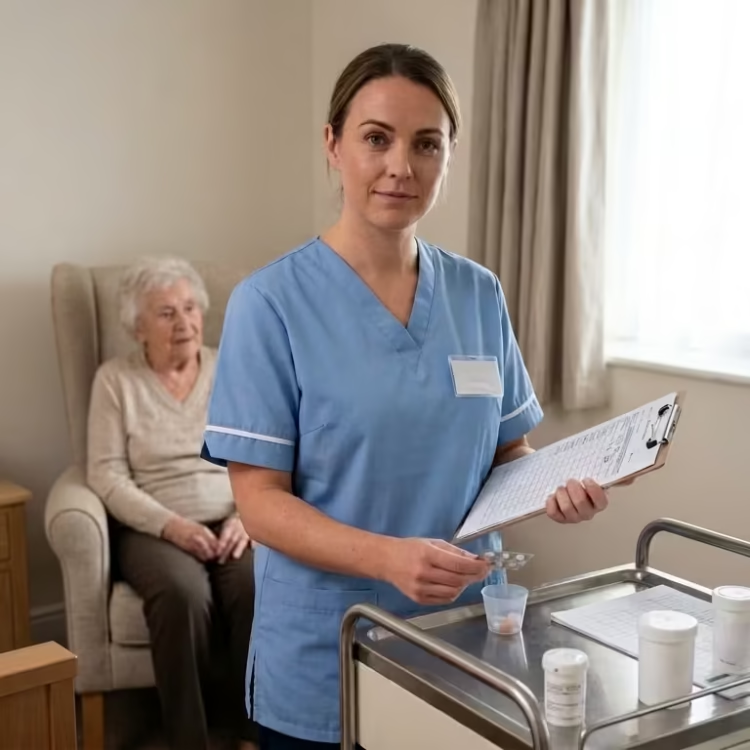



In the UK, one in four people experiences a mental health problem each year, creating a pressing need for skilled care professionals. The Mental Health Nursing Level 3 Diploma equips learners with essential knowledge to understand conditions, provide support, and respond effectively to mental health challenges across diverse settings.
Through a range of practical modules, the course explores psychiatric disorders, stress, anxiety, schizophrenia, and mood-related conditions. It also covers medication, therapy, workplace mental health, and crisis response techniques. Learners will gain a comprehensive understanding of both clinical approaches and the social aspects of mental health care.
As a CPD Accredited and Industry Standard qualification, this diploma enhances employability in nursing, community care, and mental health support roles. By completing the course, learners will be prepared to deliver safe, compassionate care and contribute to improving wellbeing at both individual and community levels.
Learning Outcomes of Mental Health Nursing Level 3 Diploma
- Understand core principles and concepts of mental health nursing.
- Recognise symptoms of common childhood and adolescent psychiatric disorders.
- Analyse causes and management of stress and anxiety disorders.
- Explore schizophrenia, personality, mood, and related mental disorders.
- Evaluate treatments, including medication and therapeutic interventions.
- Understand UK legislation and services supporting mental health care.
- Instantly accessible CPD-accredited certificate on successful completion of this course
- Get a free student ID card with the diploma
- 24/7 access to the course for 12 months
- Study at your own pace
- No hidden fees or exam charges
- Full Tutor support on weekdays (Monday – Friday)
- Efficient assessment and instant results
- Aspiring healthcare assistants or support workers in mental health.
- Care professionals seeking CPD-accredited training in mental health nursing.
- Teachers and youth workers supporting students with mental health needs.
- Workplace supervisors managing employee wellbeing and stress.
- Individuals interested in pursuing nursing or counselling careers.
CPD Certification
Upon successful completion of the final assessment, you will get a chance to order a CPD-accredited certificate confirming your achievement. This certificate is available in PDF as well as hard copy format, which will be ideal for adding to your professional portfolio or CV.
Order your certificate from here: Order Now!
Assessment
The CPD Certified course concludes with a multiple-choice quiz designed to test your knowledge from the modules. You’ll need to achieve at least 60% to pass. Once passed, you can instantly download your certificate. Optional written assignments are also provided to help reinforce key concepts, with expert tutor feedback available on submission.
FAQs
To become a mental health nurse, you need a Level 6 Bachelor’s degree in Mental Health Nursing approved by the Nursing and Midwifery Council (NMC) in the UK. Additional training in mental health assessment, patient care, and clinical placements is essential to register and practise professionally
Mental health nurses can work as clinical practitioners, community mental health nurses, crisis intervention specialists, psychiatric liaison nurses, or care coordinators. They may also advance into management, policy advisory roles, or specialised areas like substance misuse, dementia care, and mental health education and training.
A Level 3 diploma can provide foundational knowledge in health and social care, but to practise professionally as a mental health counsellor, further qualifications are required, such as Level 5 or 6 diplomas in counselling, psychotherapy, or mental health, along with supervised clinical experience and accreditation.
No, in the UK, you cannot register as a professional nurse with just a diploma. A nursing degree (Level 6) is required for registration with the NMC. Diplomas can support roles as healthcare assistants or support workers, but do not allow independent practice as a qualified nurse.
This Level 3 diploma qualification will prepare you for entry-level roles, patient care, and supervision, and can be a stepping stone to higher-level diplomas or degree programmes, but it won’t guarantee a job, as it depends solely on the employer as well as your skill level.
No, you cannot become a registered mental health nurse in the UK without a nursing degree. Degree-level training is mandatory to meet NMC standards. However, you can work in supporting roles such as a mental health support worker or assistant practitioner while completing your degree.
The fastest route is completing an accelerated diploma or degree in counselling, psychotherapy, or mental health, often lasting 1–2 years for prior-qualified students. Practical placements and accreditation with professional bodies, such as BACP or UKCP, allow you to practise legally as a counsellor in the UK.
The four main mental health services are:
- Primary care services, including GP and community support,
- Secondary care services, like psychiatric hospitals and community mental health teams,
- Tertiary services for specialised care such as complex therapies,
- Crisis services, offering urgent intervention for emergencies.
To become an NHS counsellor, complete a Level 6 degree or diploma in counselling or psychotherapy, gain supervised clinical experience, and register with a recognised professional body like BACP. NHS employment requires adherence to ethical standards, DBS clearance, and evidence of practical counselling competence in mental health settings.
Yes, a counsellor typically focuses on short-term support, coping strategies, and specific issues, while a therapist or psychotherapist may provide long-term psychological treatment, addressing deeper emotional or mental health problems. Both roles require professional training, accreditation, and practical experience, but therapy often involves more specialised techniques.
Curriculum
- 1 Section
- 15 Lessons
- Lifetime
- Mental Health Nursing Level 3 – CPD Accredited15
- 1.1Module 1: Introduction to Mental Health
- 1.2Module 2: Theoretical Frameworks of Mental Health
- 1.3Module 3: Mental Health Assessment and Diagnosis
- 1.4Module 4: Child and Adolescent Mental Health
- 1.5Module 5: Adult and Older Adult Mental Health
- 1.6Module 6: Schizophrenia
- 1.7Module 7: Personality Disorders
- 1.8Module 8: Mood & Anxiety Disorders
- 1.9Module 9: Eating DisorderModule 16: Legal and Ethical Issuess & Sleeping Disorders
- 1.10Module 10: Mental Health in the Workplace
- 1.11Module 11: Mental Health in Diverse Populations
- 1.12Module 12: Mental Health and Suicide
- 1.13Module 13: Substance Use and Mental Health
- 1.14Module 14: Therapeutic Approaches
- 1.15Module 15: Psychopharmacology