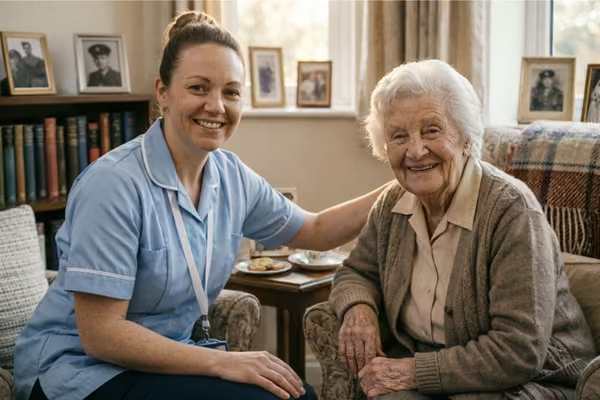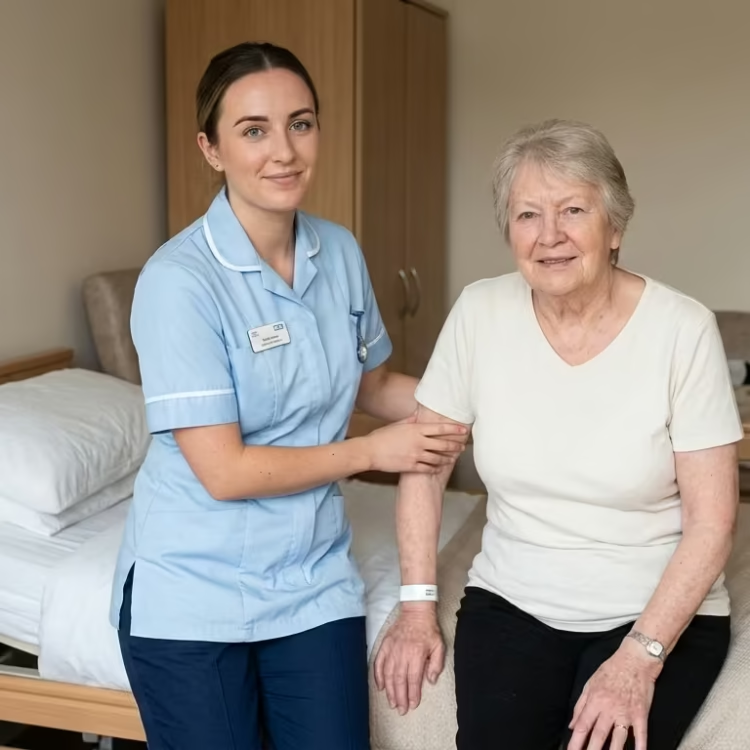



The UK’s health and social care sector is facing a critical workforce shortage, with Skills for Care reporting over 131,000 vacancies and a projected need for an additional 480,000 workers by 2035. This is why our Care Certificate course has been thoroughly designed to meet industry standards for all levels of professionals. The course is focused on core training and provides essential knowledge, aligning with NHS standards.
Through 16 structured standards, you’ll gain a deep understanding of vital topics, including effective communication, privacy and dignity, safeguarding, infection control, and person-centered care. You’ll also learn the practical and ethical responsibilities involved in your role, from managing health and safety to understanding the duty of care and your personal development.
This qualification will equip you to become a confident, compassionate professional. Enrol today and begin your journey toward making a genuine and lasting difference in the lives of others!
Key Learning Outcomes From Care Certificate Course
- Understand the principles of safeguarding and confidentiality.
- Communicate effectively with individuals and their families.
- Maintain a safe and healthy work environment.
- Promote dignity and respect for all individuals.
- Follow correct infection prevention and control procedures.
- Recognise and respond to your professional responsibilities.
Why Choose Our Care Certificate Course?
- Instantly accessible CPD-accredited certificate on successful completion of this course
- Get a free student ID card with the diploma
- 24/7 access to the course for 12 months
- Study at your own pace
- No hidden fees or exam charges
- Full Tutor support on weekdays (Monday – Friday)
- Efficient assessment and instant results
Who Is This Course For?
- Anyone looking to start a career in care.
- New healthcare assistants and support workers.
- Existing staff seeking to formalise their skills.
- Support workers who interact with service users.
- People transitioning to a new career in care.
- Students and volunteers needing foundational knowledge.
CPD Certification
Upon successful completion of the final assessment, you will get a chance to order a CPD-accredited certificate confirming your achievement. This certificate is available in PDF as well as hard copy format, which will be ideal for adding to your professional portfolio or CV.
Order your certificate from here: Order Now!
Assessment
The CPD Certified course concludes with a multiple-choice quiz designed to test your knowledge from the modules. You’ll need to achieve at least 60% to pass. Once passed, you can instantly download your certificate. Optional written assignments are also provided to help reinforce key concepts, with expert tutor feedback available on submission.
Career Opportunities in Health and Social Care UK
There are lots of job options for skilled Health and Social Care workers in the UK. You can work as a Care Assistant, Support Worker, Senior Care Worker, or in many other roles. As you gain more experience, you might also have the chance to move into leadership or management positions. The average salary for a Care Assistant in the UK is between £17,000 and £25,000 a year, depending on experience and where you work. If you take on a managerial role, your salary could range from £30,000 to £50,000 or even higher.
Care Assistant
Support individuals with daily tasks, ensuring their comfort, safety, and dignity in care settings
Salary: Based on UK standards (£19,000 – £24,000 annually).
Support Worker
Help people with physical, emotional, or learning needs in their homes or community environments.
Salary: Based on UK standards (£20,000 – £25,000 annually).
Healthcare Assistant
Work with healthcare teams to provide care, assist patients, and support daily medical tasks.
Salary: Based on UK standerds (£19,500 – £23,000 annually).
Home Care Worker
Provide care to individuals in their homes, helping them stay independent and well.
Salary: Based on UK standards (£19,000 – £22,000 annually).
Rehabilitation Assistant
Help people recover from illness or injury through personalised care and ongoing support.
Salary: Based on UK standards (£21,000 – £25,000 annually).
Mental Health Support Worker
Offer emotional and practical support to individuals with mental health challenges.
Salary: Based on UK standards (£20,500 – £26,000 annually).
Residential Care Worker
Care for and support residents in care homes, ensuring their safety and well-being.
Salary: Based on UK standards (£20,000 – £24,500 annually).
Learning Disability Support Worker
Help individuals with learning disabilities build life skills and achieve their personal goals.
Salary: Based on UK standards (£19,500 – £25,000 annually).
Domiciliary Care Worker
Provide essential care to individuals in their homes, supporting their daily needs and routines.
Salary: Based on UK standards (£18,500 – £22,000 annually).
Palliative Care Assistant
Offer end-of-life care with compassion, ensuring comfort and dignity for patients.
Salary: Based on UK standards (£21,000 – £27,000 annually).
Care Certificate Course Curriculum
Build a strong foundation for working in care with this comprehensive course, designed to equip you with essential skills, professional values, and the confidence to provide safe, person-centred support. Covering everything from safeguarding and communication to infection control and basic life support, this training ensures you’re ready to make a positive impact in any care setting.
Module 1: Understanding Your Role
Gain clarity on your responsibilities, boundaries, and professional standards to perform effectively in your care role.
Module 2: Your Personal Development
Learn how to reflect on your practice, identify skill gaps, and create a plan for ongoing professional growth.
Module 3: Duty of Care
Understand your legal and ethical duty to act in the best interests of those you support, balancing safety and independence.
Module 4: Awareness of Equality, Diversity, and Human Rights
Explore how to respect diversity, promote inclusion, and uphold the human rights of individuals in your care.
Module 5: Working in a Person-Centred Way
Discover how to tailor care and support to meet each person’s unique needs, values, and preferences.
Module 6: Communication
Develop effective verbal and non-verbal communication skills to build trust and understanding with service users and colleagues.
Module 7: Privacy and Dignity
Learn strategies to protect individuals’ privacy and dignity in all aspects of care provision.
Module 8: Fluids and Nutrition
Understand the importance of proper hydration and nutrition, and how to support healthy eating in different care situations.
Module 9: Mental Health, Dementia, and Learning Disabilities
Gain awareness of common mental health conditions, dementia, and learning disabilities, and how to provide appropriate support.
Module 10: Safeguarding Adults
Identify signs of abuse or neglect and follow safeguarding procedures to protect vulnerable adults.
Module 11: Safeguarding Children
Learn to recognise, report, and respond to child protection concerns in line with legal requirements.
Module 12: Basic Life Support
Acquire essential life-saving skills, including CPR and emergency response procedures.
Module 13: Health and Safety
Understand health and safety regulations, risk assessments, and safe working practices in care environments.
Module 14: Handling Information
Learn how to manage personal and sensitive information securely, in line with data protection laws.
Module 15: Infection Prevention and Control
Explore best practices for preventing the spread of infection and maintaining a hygienic care environment.
Module 16: Awareness of Learning Disability and Autism
Gain insight into the needs of individuals with learning disabilities and autism, promoting inclusion and understanding.
FAQs About Care Certificate Course – 15 Standards
What is the Care Certificate?
The Care Certificate is an entry-level qualification for health and social care workers in the UK, ensuring they meet national care standards. It covers essential topics like safeguarding, communication, and health and safety. It’s designed for new care workers to provide safe, compassionate, and high-quality support in care homes, hospitals, or community settings.
How many standards are there in the Care Certificate?
The Care Certificate has 16 standards set by Skills for Care, Health Education England, and Skills for Health. These include safeguarding, equality, infection prevention, and communication. Completing these standards ensures care workers have the essential skills, knowledge, and values to deliver safe, person-centred care in line with UK regulations and best practices.
Can the course be completed online?
Yes, the Care Certificate can be completed online through accredited providers. You’ll study theory modules digitally and then demonstrate your skills in a workplace setting. This flexible approach allows learners to complete the course at their own pace while meeting the assessment requirements for practical care competencies.
What is a Care Certificate in the UK?
Our Care Certificate course is a CPD Accredited program designed for health and social care workers in the UK. It provides essential training in safeguarding, dignity, equality, and person-centred care. It’s often required for new staff in care homes, the NHS, or community care roles to ensure they meet professional care standards.
What are the 9 pillars of care?
The 9 pillars of care are core principles guiding quality healthcare: dignity, compassion, respect, empathy, safety, competence, communication, confidentiality, and person-centred practice. These values ensure that individuals receive respectful, effective, and personalised support, forming the foundation for high-quality care in both health and social care settings.
What is the best job in healthcare?
The “best” job in healthcare depends on your skills and interests, but popular high-reward roles include Nurse Practitioner, Physiotherapist, and Care Home Manager. These positions offer strong salaries, job satisfaction, and career growth while allowing you to make a significant positive impact on patients’ and service users’ lives.
What are the 5 steps of care?
The 5 steps of care typically include: assessment, care planning, implementation, monitoring, and evaluation. This process ensures each individual receives personalised, safe, and effective support. Following these steps helps care workers meet professional standards and deliver consistent, high-quality care across healthcare and social care settings.
What are the 6 C’s of care?
The 6 C’s of care are compassion, care, competence, communication, courage, and commitment. These values underpin high-quality healthcare in the UK and guide professionals in delivering safe, respectful, and person-centred support, whether working in hospitals, community settings, or residential care environments.
What is the highest salary in healthcare?
In the UK, the highest healthcare salaries are typically earned by consultant doctors and specialist surgeons, often exceeding £100,000 annually. These roles require many years of study, advanced medical training, and extensive experience, and they carry significant responsibility for patient outcomes and care quality.
What are the 4 pillars of health?
The 4 pillars of health are nutrition, exercise, sleep, and mental wellbeing. Together, they form the foundation for a healthy lifestyle, supporting physical fitness, emotional balance, and disease prevention. Healthcare professionals often use these pillars to guide patient education and holistic wellness planning.
What are the 4 aspects of care?
The 4 aspects of care typically include physical, emotional, social, and spiritual support. Addressing all four ensures that care is holistic, meeting not just medical needs but also enhancing overall quality of life for individuals in healthcare and social care environments.
Curriculum
- 1 Section
- 15 Lessons
- Lifetime
- Care Certificate Standards (1 to 15)15
- 1.1Care Certificate Standard 1 – Understand Your Role
- 1.2Care Certificate Standard 2 – Your Personal Development
- 1.3Care Certificate Standard 3 – Duty of Care
- 1.4Care Certificate Standard 4 – Awareness of Equality, Diversity and Human Rights
- 1.5Care Certificate Standard 5 – Work In A Person Centred Way
- 1.6Care Certificate Standard 6 – Communication
- 1.7Care Certificate Standard 7 – Privacy and Dignity
- 1.8Care Certificate Standard 8 – Fluids and Nutrition
- 1.9Care Certificate Standard 9 – Mental Health, Dementia and Learning Disabilities
- 1.10Care Certificate Standard Number 10 – Safeguarding Adults
- 1.11Care Certificate Standard Number 11 – Safeguarding Children
- 1.12Care Certificate Standard Number 12 – Basic Life Support
- 1.13Care Certificate Standard Number 13 – Health and Safety
- 1.14Care Certificate Standard Number 14 – Handling Information (Information Governance)
- 1.15Care Certificate Standard Number 15 – Infection Prevention and Control