

1. Introduction Healthcare careers are growing rapidly, and phlebotomy is no exception. In the UK, the average phlebotomist salary is…
Healthcare careers are growing rapidly, and phlebotomy is no exception. In the UK, the average phlebotomist salary is around £26,000 per year, with entry-level roles starting from approximately £24,000 and experienced professionals earning up to £31,000 or more. With thousands of job openings across hospitals, clinics, and diagnostic labs, demand for skilled professionals in phlebotomist jobs continues to rise—making it a stable and accessible career choice.
If you’ve ever wondered what a phlebotomist is and how to enter the healthcare field without spending years in education, you’re in the right place. In this article, we will guide you step-by-step through everything you need to know—from phlebotomist training and courses to career opportunities—helping you start a rewarding healthcare career quickly while making a real difference in patient care.
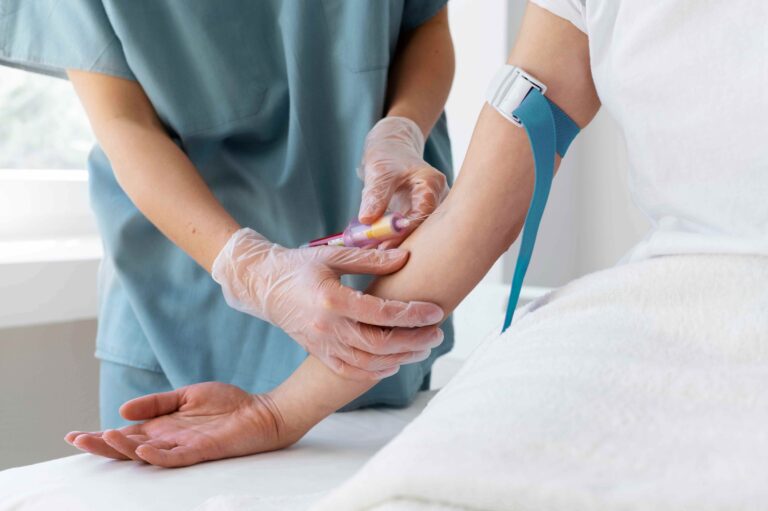
A phlebotomist is a trained healthcare professional responsible for drawing blood from patients for medical testing, transfusions, donations, or research. If you’re searching for a clear phlebotomist definition or wondering about the phlebotomist meaning, it simply refers to a specialist skilled in venepuncture—the process of safely collecting blood samples while ensuring patient comfort and care.
In day-to-day practice, phlebotomists play a vital role in the healthcare system. Their responsibilities go beyond just taking blood—they must correctly label samples, maintain hygiene standards, and reassure patients who may feel anxious. You’ll typically find phlebotomists working in hospitals, GP surgeries, private clinics, laboratories, and blood donation centres, making them an essential part of modern medical diagnostics and patient care.
A phlebotomist is a trained healthcare professional responsible for drawing blood from patients for medical testing, transfusions, donations, or research. If you’re searching for a clear phlebotomist definition or wondering about the phlebotomist meaning, it simply refers to a specialist skilled in venepuncture—the process of safely collecting blood samples while ensuring patient comfort and care.
In day-to-day practice, phlebotomists play a vital role in the healthcare system. Their responsibilities go beyond just taking blood—they must correctly label samples, maintain hygiene standards, and reassure patients who may feel anxious. You’ll typically find phlebotomists working in hospitals, GP surgeries, private clinics, laboratories, and blood donation centres, making them an essential part of modern medical diagnostics and patient care.
One of the biggest advantages of pursuing a career in phlebotomy is that the entry requirements are relatively accessible compared to other healthcare roles. In the UK, there are no strict mandatory qualifications to start applying for phlebotomist trainee jobs, but having a good standard of education—such as GCSEs (or equivalent) in English and Science—can significantly improve your chances of getting hired.
Most employers prefer candidates who have completed a recognised phlebotomist course or basic phlebotomist training. These courses equip you with essential knowledge such as anatomy, venepuncture techniques, infection control, and patient care. While some NHS roles offer on-the-job training, completing a course beforehand can give you a competitive edge in the job market and help you stand out when applying for phlebotomist jobs.
In addition to formal learning, employers highly value practical skills and personal qualities. Strong communication skills, attention to detail, and the ability to work calmly with patients are crucial in this role. Some positions may also require background checks (such as DBS in the UK) and proof of vaccinations, depending on the work environment.
Overall, while the barriers to entry are low, gaining the right training and demonstrating the right skills can fast-track your journey into a successful and rewarding phlebotomy career.

Enrolling in phlebotomist training is the most important step toward building a successful career in this field. Whether you choose an online or in-person phlebotomist course, the training is designed to equip you with both theoretical knowledge and practical skills required to perform blood collection safely and professionally.
During your training, you will cover essential topics such as human anatomy and physiology, understanding veins, venepuncture techniques, infection prevention and control, and health & safety procedures. You’ll also learn how to handle samples correctly, label them accurately, and maintain strict hygiene standards—skills that are critical in real-world healthcare settings. Many courses also include modules on patient communication, helping you confidently deal with nervous or anxious individuals.
A key part of phlebotomist training is practical learning. Some courses offer hands-on practice sessions, while others may require you to complete supervised clinical experience. This ensures you are fully prepared to apply your knowledge in real-life scenarios and meet employer expectations when applying for phlebotomist jobs.
Overall, phlebotomy training is typically short, focused, and career-oriented—
Choosing the right phlebotomist course is a crucial step in building a successful healthcare career, especially in a competitive UK job market. With many options available, it’s important to select a course that is recognised, flexible, and aligned with real industry standards. A high-quality course should not only teach theory but also prepare you for real-world clinical environments and future phlebotomist jobs.
For example, the Online Phlebotomy Course by EduXpress is designed to provide learners with a strong foundation in phlebotomy and venepuncture skills that meet UK healthcare expectations. It is structured to help beginners step confidently into the healthcare sector while building job-ready knowledge.
By enrolling in this phlebotomist training programme, learners will gain both theoretical understanding and practical awareness of key clinical procedures, including:
This combination of knowledge ensures learners are well-prepared for entry-level roles and phlebotomist trainee jobs, while also building confidence for real clinical settings.
One of the biggest advantages of this online phlebotomist course is flexibility. Learners can study at their own pace, access materials anytime, and complete training alongside other commitments. This makes it ideal for career changers or individuals looking to quickly enter the healthcare sector.
However, it is important to note that while this course builds essential theoretical knowledge, employers often look for practical experience as well. Combining this training with supervised practice or applying for phlebotomist trainee jobs can significantly improve employability.
In summary, the right course should be structured, accredited, and career-focused—giving you the knowledge, confidence, and direction needed to progress into a rewarding phlebotomy career.
Gain confidence in phlebotomy and venipuncture procedures while strengthening infection control, patient preparation, and laboratory knowledge. This flexible online course supports UK learners in building applied clinical understanding aligned with professional healthcare standards.
If you are wondering how to become a phlebotomist, the process is straightforward and designed to help beginners enter the healthcare sector quickly. Unlike many medical careers, you don’t need a university degree—just the right phlebotomist training, practical skills, and willingness to start at an entry-level position.
Below is a simple step-by-step pathway to help you understand the journey from beginner to working professional.
Step 1: Understand the Role
Start by learning what is a phlebotomist and what they do in real healthcare environments, including blood collection, patient care, and sample handling.
Step 2: Enrol in a Phlebotomist Course
Join a recognised phlebotomist course that covers anatomy, venepuncture, infection control, and safety procedures.
Step 3: Complete Phlebotomist Training
Gain theoretical knowledge and practical understanding through structured phlebotomist training programmes.
Step 4: Gain Practical Exposure
Apply your learning through supervised practice or clinical placements to build confidence.
Step 5: Apply for Phlebotomist Trainee Jobs
Start your career by applying for phlebotomist trainee jobs in hospitals, clinics, or laboratories.
Step 6: Progress Your Career
With experience, you can improve your phlebotomist salary, take on senior responsibilities, or move into broader healthcare roles.
The phlebotomist salary in the UK is considered a strong entry-level healthcare income, especially when compared to the short training period required to enter the profession. On average, a newly qualified phlebotomist can expect to earn between £24,000 and £26,000 per year, depending on location and employer. With experience, this can rise to around £28,000–£31,000+ annually, particularly within the NHS or private healthcare sectors.
For those starting out in phlebotomist trainee jobs, salaries typically begin at the lower end of the scale. However, these roles are an excellent way to gain hands-on experience while earning, which helps you progress quickly into higher-paying positions. In some cases, additional skills such as working in specialist clinics, night shifts, or private laboratories can further increase your phlebotomist pay.
Location also plays an important role in earnings. For example, phlebotomists working in London or major UK cities often receive higher salaries due to increased demand and cost of living adjustments. In contrast, rural or smaller healthcare settings may offer slightly lower pay but provide valuable experience and stable employment.
Overall, while phlebotomy is not the highest-paying medical profession, it offers excellent value considering the short training time, strong job demand, and clear career progression opportunities within the healthcare system.
£22,000 avg per year
Entry-level clinical support role£26,000 avg per year
Fast-track healthcare entry role£24,000 avg per year
Dental clinic support role£32,000 avg per year
Emergency response specialist£34,000 avg per year
Qualified clinical practitioner£36,000 avg per year
Specialist diagnostic imaging roleOnce you have completed your phlebotomist training, the next step is to enter the workforce through phlebotomist trainee jobs. These roles are designed for beginners who are new to the healthcare sector and provide the perfect opportunity to gain hands-on experience while working under supervision.
In the UK, trainee phlebotomy positions are commonly available in NHS hospitals, GP surgeries, private clinics, diagnostic laboratories, and blood donation centres. Employers often look for candidates who have completed a recognised phlebotomist course, even if they have no prior clinical experience. This makes phlebotomy one of the most accessible entry points into healthcare.
To increase your chances of securing a role, follow these key steps:
A phlebotomist trainee job involves working alongside experienced staff while gradually building confidence in clinical procedures. You will typically start by observing procedures, assisting senior phlebotomists, and then progressing to supervised blood collection. This structured learning environment ensures patient safety while helping you develop practical skills.
Starting as a trainee is often the first step toward a long-term healthcare career. With experience, you can progress to higher-paying phlebotomist jobs, increase your phlebotomist salary, or even move into advanced healthcare roles such as nursing, laboratory science, or clinical support specialties.
In short, trainee roles are the bridge between learning and becoming a fully qualified healthcare professional—making them a crucial step in your phlebotomy journey.
Trainee Phlebotomist → Qualified Phlebotomist → Senior Phlebotomist → Nursing / Lab Science / Clinical Specialist Roles
To build a successful career in phlebotomy, completing a phlebotomist course and phlebotomist training is only part of the journey. Employers in the UK also look for a strong set of practical and personal skills that ensure you can perform safely, confidently, and professionally in real healthcare environments.
One of the most important skills is communication. Phlebotomists work directly with patients every day, many of whom may feel nervous or anxious about blood tests. Being able to explain procedures clearly and reassure patients helps create a positive experience and builds trust.
Another essential requirement is attention to detail. In healthcare, even small mistakes can have serious consequences. From correctly identifying patients to accurately labelling blood samples, precision is critical in every step of the process. This is why phlebotomist jobs often require strong focus and responsibility.
You will also need good hand-eye coordination and manual dexterity, as venepuncture requires steady hands and careful technique. With practice during your phlebotomist training, these skills become more natural and refined over time.
Equally important is the ability to remain calm under pressure. In busy hospitals or clinical settings, phlebotomists may need to work quickly while maintaining accuracy and professionalism. Emotional resilience is especially valuable when dealing with patients who are unwell or distressed.
Finally, strong knowledge of health and safety procedures, including infection control, is essential. This ensures both patient and practitioner safety at all times and is a core part of all recognised phlebotomist courses.
In summary, phlebotomy is a skill-based profession where technical ability and personal qualities work together. Developing these skills not only improves job performance but also increases your chances of securing long-term phlebotomist jobs and progressing in your healthcare career.

The Complete Communication Skills Masterclass is designed to help learners develop strong communication abilities for both professional and personal settings.
Starting a career as a phlebotomist is often just the beginning of a wider journey in healthcare. Once you have completed your phlebotomist training and gained experience in phlebotomist jobs, there are several clear pathways for career growth and development within the medical sector.
At entry level, most professionals begin in phlebotomist trainee jobs, where they build confidence in venepuncture, patient care, and clinical procedures. With time and experience, you can progress into fully qualified phlebotomist roles with increased responsibilities and a higher phlebotomist salary, especially within the NHS or private healthcare organisations.
The healthcare sector in the UK is continuously growing, which means demand for skilled professionals is consistently high. Completing a recognised phlebotomist course not only helps you enter the field quickly but also opens doors to long-term career development.
In summary, phlebotomy is more than just an entry-level job—it is a flexible career pathway that offers stability, progression, and opportunities to move into advanced healthcare roles over time.
Starting as a phlebotomist is just the beginning. Explore your career growth opportunities below.
Begin your journey with trainee roles where you develop skills in venepuncture, patient care, and clinical procedures under supervision.
Progress into independent roles with higher responsibility, improved salary, and opportunities in NHS or private healthcare settings.
Take on leadership roles, supervise junior staff, manage teams, and perform more advanced procedures.
Specialise in areas such as pathology support, blood transfusion services, or outpatient care with additional training.
Use your experience as a stepping stone into nursing, midwifery, or advanced clinical roles.
Move into laboratory technician or biomedical science careers, supporting diagnostics and research.
Becoming a phlebotomist is one of the most accessible and practical ways to enter the UK healthcare sector. With the right phlebotomist course and structured phlebotomist training, you can quickly develop the skills needed to begin working in real clinical environments and apply for phlebotomist jobs with confidence.
From understanding what is a phlebotomist to exploring phlebotomist trainee jobs, salary expectations, and long-term career progression, this guide has shown that phlebotomy offers a clear and achievable pathway into healthcare. It is a role that combines patient care, technical skill, and job stability—making it ideal for both beginners and career changers.
With strong demand across hospitals, GP surgeries, and laboratories, now is a great time to start your journey. By choosing the right training and gaining practical experience, you can build a rewarding career that not only offers financial stability through competitive phlebotomist pay, but also allows you to make a real difference in people’s lives every day.
Added to cart
Check out our shop to see what's available